Band 5.5 IELTS Writing Task 1 Model Answer
Overall Band Score: 5.5 · IELTS Momentum Workout · 2026-11-24
IELTS Writing Task 1 question
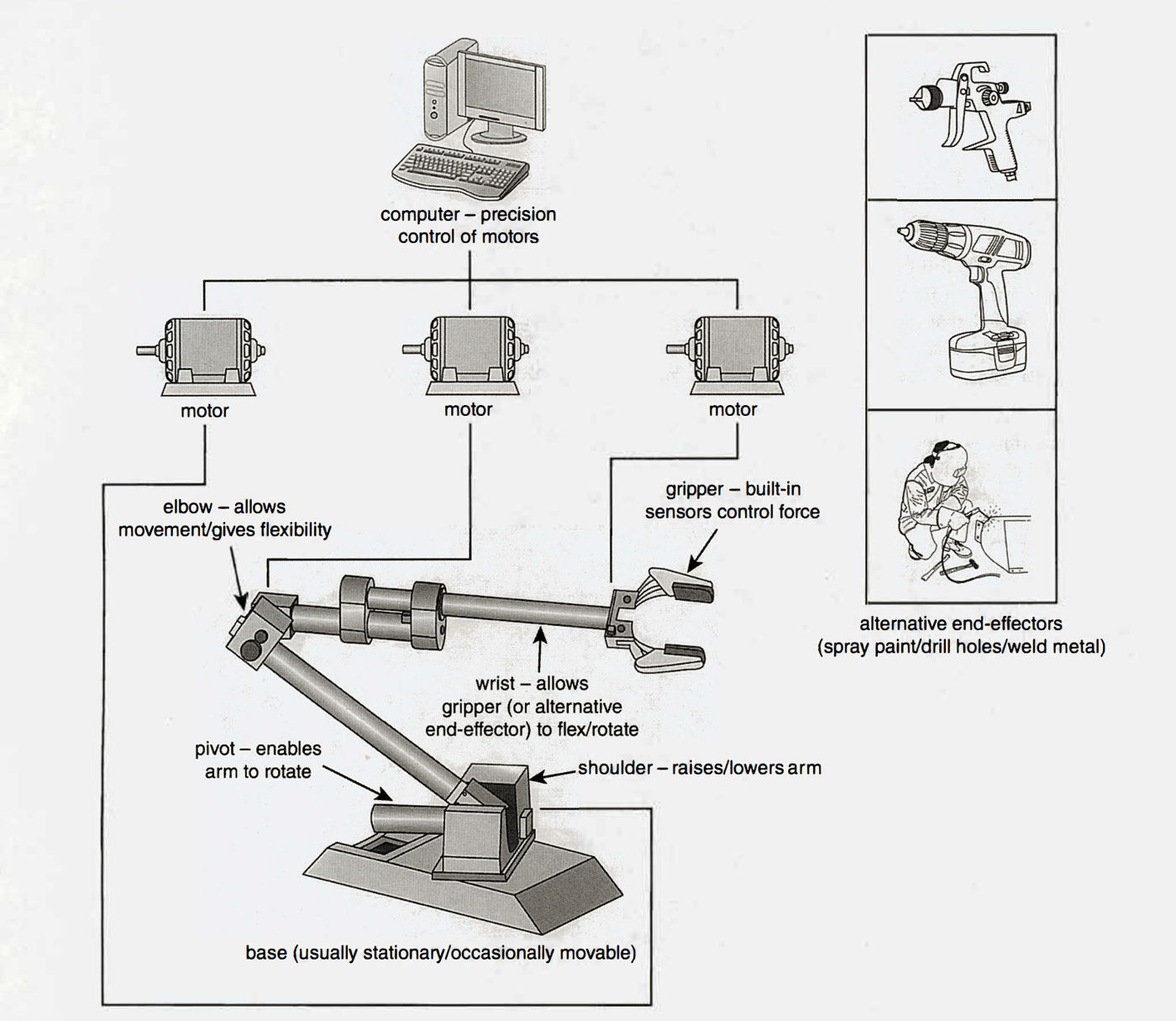
The diagram below shows how a mechanical arm works, and how the joints that make up the arm function in the same way as those in a human arm. Summarise the information by selecting and reporting the main features, and make comparisons where relevant.
Student answer (Band 5.5)
This Picture Demonstrate the Process the working and used of Mechical arm works and its functions also as campared to human arms.
In overview ,we have a computer that controls all the motors and there is a some alternative things like a spray,Drill for holes and weld metal and we see how it works like human arms.
The First step the computer which divided in to the three motors to make a mechnical arms.The first motor that is used for the shoulders to take it rise or down in the next part of the machine there is a pivot point that mamke easy and enables to rotate arm like humans .
The second motor is used in the center part of the machine that allow to move with flexibilty of the arms .
The last motor is used in the top it seems like a fingers of the humans that is gripper it is build for the control of the force of the sensors behind this is a long tube that is wrist which alllws the gripper to move or rotate .So,this is a mechnical arm who looks like human arms that is used for the special persons .
AI examiner evaluation
| Criterion | Band |
|---|---|
| Task Achievement / Task Response | 5.5 |
| Coherence and Cohesion | 5.5 |
| Lexical Resource | 5.0 |
| Grammatical Range and Accuracy | 5.0 |
| Overall | 5.5 |
Task Achievement / Task Response: Band 5.5
You identify the main components and give a basic account of the computer, motors, pivot, shoulder, wrist and gripper. You also mention the alternative tools, which is relevant. However, some relationships are unclear or inaccurate: the computer controls the motors rather than being “divided in to” them, and the first motor is not specifically described as operating the shoulder in the diagram. The overview says the arm works like a human arm, but the comparison is not developed, and the final claim that it is used “for the special persons” is unsupported. To make the summary more complete, explain the arm’s sequence and functions accurately, and distinguish the three motors’ connections from the joints they operate.
Coherence and Cohesion: Band 5.5
The response has a recognisable overall order: an introduction and overview are followed by descriptions of the motors and arm parts. Phrases such as “The First step,” “The second motor,” and “The last motor” help signal sequence. However, progression is not consistently clear because several components are introduced in confusing relationships, and the final sentence adds an unsupported point rather than concluding the description. Some linking is mechanical, while punctuation and spacing around transitions—for example, “So,this”—make the text harder to follow. Organise the body around the arm from base and shoulder through elbow to wrist and gripper, then describe the alternative end-effectors separately. Clearer references between parts would improve cohesion.
Lexical Resource: Band 5.0
You use some task-related vocabulary, including “motors,” “pivot,” “gripper,” “sensors,” and “flexibility,” so the reader can identify several components. However, the range is limited and some word choices or collocations make the meaning unclear, such as “the working and used of” and “take it rise or down.” There are also frequent spelling and word-form errors, including “Mechical,” “mechnical,” “flexibilty,” and “alllws.” These reduce precision in a diagram description. Aim to use accurate technical terms and natural verb phrases, such as describing a joint as allowing the arm to rotate or a shoulder as raising and lowering it. Proofreading spelling will also make your meaning easier to understand.
Grammatical Range and Accuracy: Band 5.0
You attempt both simple and longer sentences, but control is inconsistent, and errors sometimes make relationships difficult to understand. For example, “This Picture Demonstrate” has subject–verb agreement and article/capitalisation problems, while “The First step the computer which divided in to the three motors” lacks a clear main clause and uses an incorrect passive form. Articles and sentence boundaries are also unreliable in phrases such as “there is a some alternative things.” Most sentences contain grammatical or punctuation problems, and complex attempts are often faulty. Practise building complete sentences with a clear subject and verb, then check agreement, articles and verb forms. For example: “The computer controls three motors, each of which operates a different part of the arm.”
See this exact question answered at other band scores. The same prompt compared across bands.
Browse more IELTS Writing model answers or get your own writing scored by the same AI examiner.