Band 6.0 IELTS Writing Task 1 Model Answer
Overall Band Score: 6.0 · IELTS Momentum Workout · 2026-11-25
IELTS Writing Task 1 question
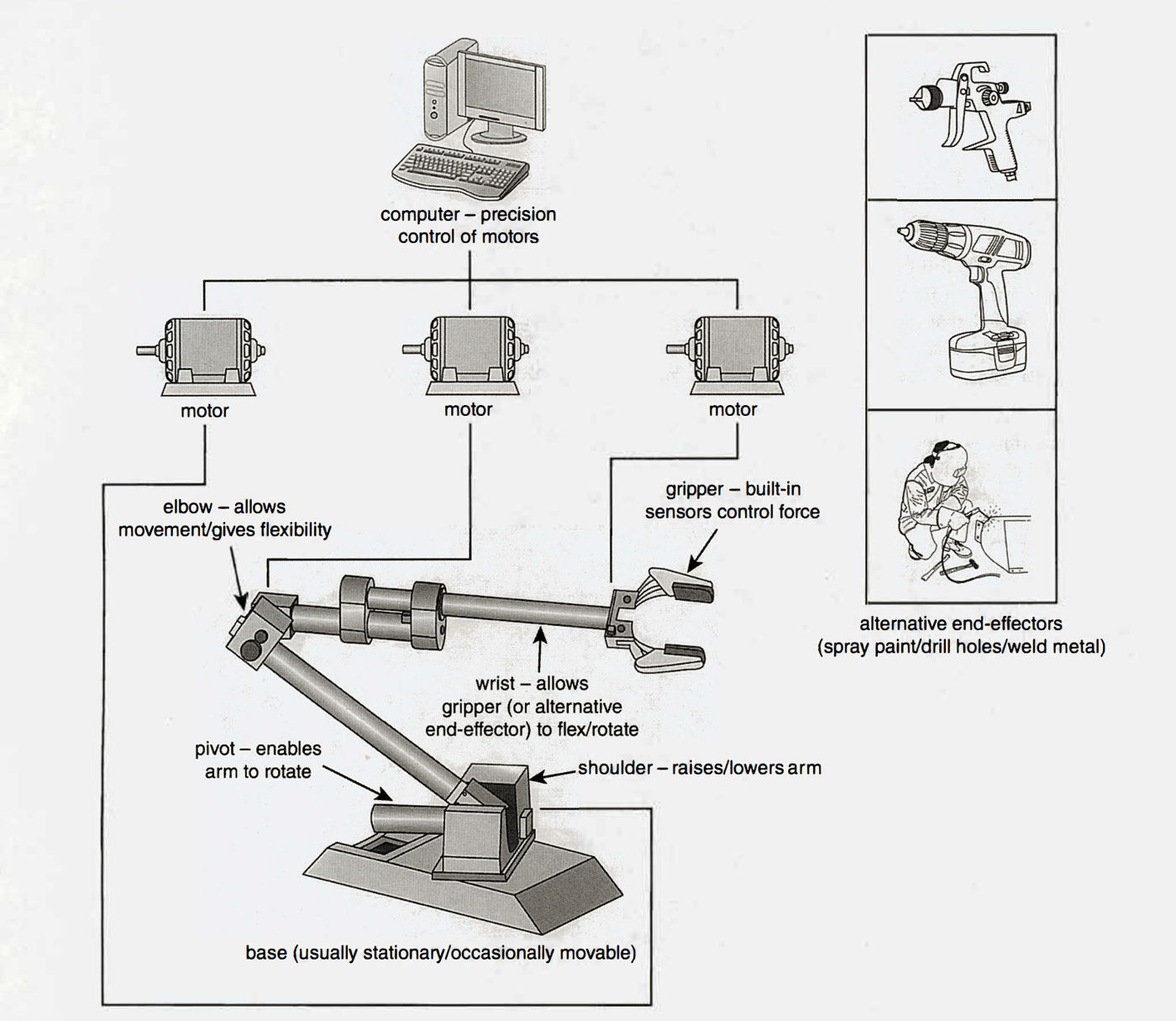
The diagram below shows how a mechanical arm works, and how the joints that make up the arm function in the same way as those in a human arm. Summarise the information by selecting and reporting the main features, and make comparisons where relevant.
Student answer (Band 6.0)
The diagram illustrates the functioning of a mechanical arm and displays its compatability in comparision of a human arm.
Overall, it is evident that there are 3 primary motors which are placed in the joints of the mechanical arm that supports the movemen. Moreover, it defines the real time use of the mechanical arm by replacing human work.
The mechanical arm has a three joint structure which is controlled by computer precised motors, the first motor is placed at the base of the machine, it helps in raising the lower arm functioning similar to our shoulder. The second motor is placed at the elbow joint which provides flexibility to the arm and is responsible for functioning the arm up and down movement of the arm.
The arm connected to the elbow has wrist which is controlled by the third motor that allows a rotating movement to the arm, a gripper is connected at the end which has built in sensors that functions as a hand and controls the force. The device can be used as an alternative to reduce human efforts and can be used for spray paint job, drilling and welding metals.
AI examiner evaluation
| Criterion | Band |
|---|---|
| Task Achievement / Task Response | 6.0 |
| Coherence and Cohesion | 6.0 |
| Lexical Resource | 5.5 |
| Grammatical Range and Accuracy | 5.5 |
| Overall | 6.0 |
Task Achievement / Task Response: Band 6.0
You identify the diagram’s main subject and describe several key functions: the shoulder raises and lowers the arm, the elbow provides flexibility, and the wrist and gripper enable movement and force control. You also mention the alternative uses shown—painting, drilling and welding. However, some details are mislocated: the first motor is not described as being at the base; the diagram shows three motors above the arm, with the shoulder and pivot above the base. The overview’s claim that the motors are “placed in the joints” is also imprecise. The comparison with a human arm is relevant, but the claim that the device replaces human work is broader than the diagram supports. Clarifying the arrangement and distinguishing the pivot from the shoulder would make the summary more complete and accurate.
Coherence and Cohesion: Band 6.0
The response has a clear overall structure: an introduction, an overview, and two paragraphs describing the arm and its uses. The sequence from shoulder and elbow to wrist and gripper is generally easy to follow, and “Moreover” and “The arm connected to the elbow” help link ideas. However, some connections are unclear or repetitive. For example, “the second motor … is responsible for functioning the arm up and down movement of the arm” repeats “arm” and makes the relationship between the motor and movement difficult to follow. The final paragraph also combines the wrist, gripper, human comparison and applications in one long sequence. Use clearer sentence boundaries and more precise references to each joint to improve progression.
Lexical Resource: Band 5.5
You use relevant task vocabulary, including “flexibility,” “rotating movement,” “built in sensors,” and “alternative,” which helps communicate the diagram’s functions. There is some range, but several word choices and collocations are inaccurate or awkward, such as “compatability in comparision of a human arm,” “computer precised motors,” and “real time use.” Spelling errors in “compatability,” “comparision,” and “movemen” also reduce accuracy. Some phrases are vague, particularly “reduce human efforts,” where the diagram instead shows specific alternative end-effectors and tasks. Aim for precise technical descriptions and check spelling and word forms; this would make the vocabulary more natural and exact.
Grammatical Range and Accuracy: Band 5.5
You attempt both simple and more complex sentence forms, including relative clauses such as “which provides flexibility” and “which has built in sensors.” The main ideas are usually understandable, but some grammatical errors and awkward constructions remain. For example, “the second motor … is responsible for functioning the arm up and down movement” lacks a clear grammatical structure, while “a gripper … has built in sensors that functions” has a subject–verb agreement error. The sentence beginning “The arm connected to the elbow has wrist” also needs an article and clearer clause structure. Try separating linked functions into shorter, complete sentences, and check agreement, articles and sentence boundaries while retaining some complex structures.
See this exact question answered at other band scores. The same prompt compared across bands.
Browse more IELTS Writing model answers or get your own writing scored by the same AI examiner.