Band 4.0 IELTS Writing Task 1 Model Answer
Overall Band Score: 4.0 · IELTS Momentum Workout · 2026-11-25
IELTS Writing Task 1 question
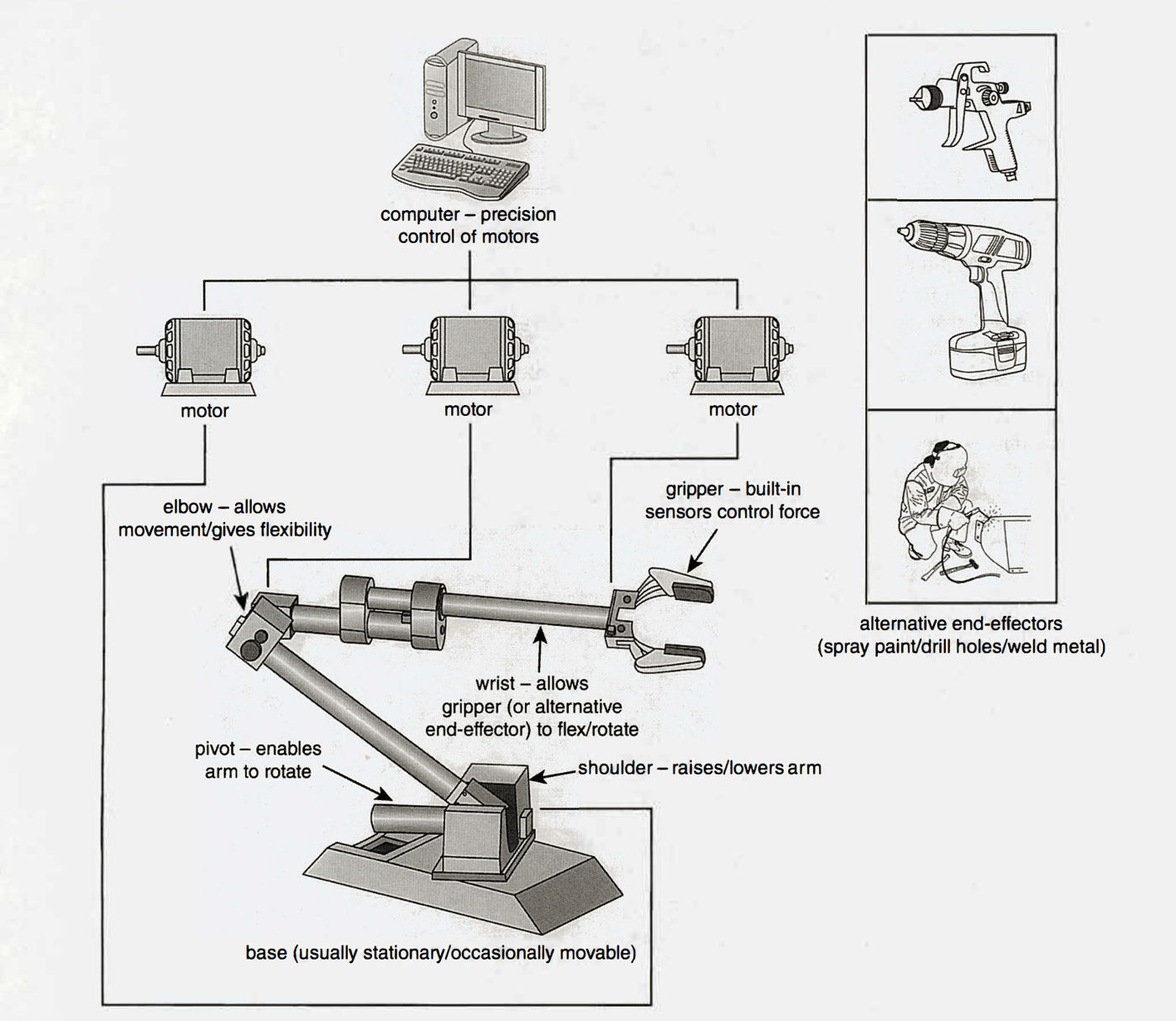
The diagram below shows how a mechanical arm works, and how the joints that make up the arm function in the same way as those in a human arm. Summarise the information by selecting and reporting the main features, and make comparisons where relevant.
Student answer (Band 4.0)
The diagram illustrate how a mechanical arm works and how the joints develope the function of arm likelly a human arm mechanisme.
overal,we can use the mechanical arm in many works in our life hows can take a place of humans.by precission controle motors we commande three motors how's moving parts of arm.
the computer has a precision controle of motors develope by humans generate a code give asignal to three motors who movesd the arm.the first one be actionnor to rotate the shoulder
AI examiner evaluation
| Criterion | Band |
|---|---|
| Task Achievement / Task Response | 3.5 |
| Coherence and Cohesion | 4.0 |
| Lexical Resource | 4.5 |
| Grammatical Range and Accuracy | 4.5 |
| Overall | 4.0 |
Task Achievement / Task Response: Band 3.5
The response identifies the subject as a mechanical arm and mentions the computer’s precision control and three motors, which are relevant features. However, it does not provide a clear overview of how the arm is assembled or functions, and it stops before describing key parts such as the pivot, shoulder, elbow, wrist and gripper. The claim that the arm can take the place of humans is not established by the diagram. The response is also substantially below the required 150 words: it contains 75 words, and nine words copied from the prompt were not counted. To improve, report the main components and their functions, explain how the motors connect to the arm, and include the alternative end-effectors shown.
Coherence and Cohesion: Band 4.0
There is a basic attempt to organise the response, beginning with an introduction and then moving to an overall statement and a detail about the computer and motors. The sequence is difficult to follow, however, because the description ends abruptly after “rotate the shoulder” and does not guide the reader through the arm from its base to its gripper. The transitions between ideas are limited, and the relationship between the computer, motors and arm parts is not made clear. Use separate paragraphs for an overview and the main details, then describe the components in a consistent order. Linking phrases such as “At the base,” “Above this,” and “At the end of the arm” would help clarify progression.
Lexical Resource: Band 4.5
The response attempts some task-related vocabulary, including “mechanical arm,” “precision control,” “motors” and “rotate,” so the topic is recognisable. However, the range is narrow and several spelling and word-choice errors make meaning harder to understand, for example “precission controle,” “actionnor” and “mechanisme.” Some expressions are also imprecise: “many works in our life” does not clearly describe the diagram, and “take a place of humans” is an unsupported generalisation. Build a more accurate set of terms from the labels, such as “pivot,” “elbow joint,” “wrist,” “gripper” and “alternative end-effector.” Check spelling and choose precise verbs to explain each component’s function.
Grammatical Range and Accuracy: Band 4.5
The response shows an attempt to form connected sentences, including a clause about the computer generating a code, but control of sentence structure is inconsistent. The opening, “The diagram illustrate how a mechanical arm works,” has subject–verb disagreement, while “how’s moving parts of arm” does not form a clear grammatical clause. Verb forms and agreement are also problematic in “three motors who movesd the arm,” and the final sentence is incomplete. Punctuation and sentence boundaries are not consistently controlled, which makes the relationships between ideas unclear. Practise complete simple sentences first, then add subordinate clauses accurately—for example, state that the computer controls three motors, each of which moves a particular part of the arm.
See this exact question answered at other band scores. The same prompt compared across bands.
Browse more IELTS Writing model answers or get your own writing scored by the same AI examiner.