Band 5.5 IELTS Writing Task 1 Model Answer
Overall Band Score: 5.5 · IELTS Momentum Workout · 2026-11-25
IELTS Writing Task 1 question
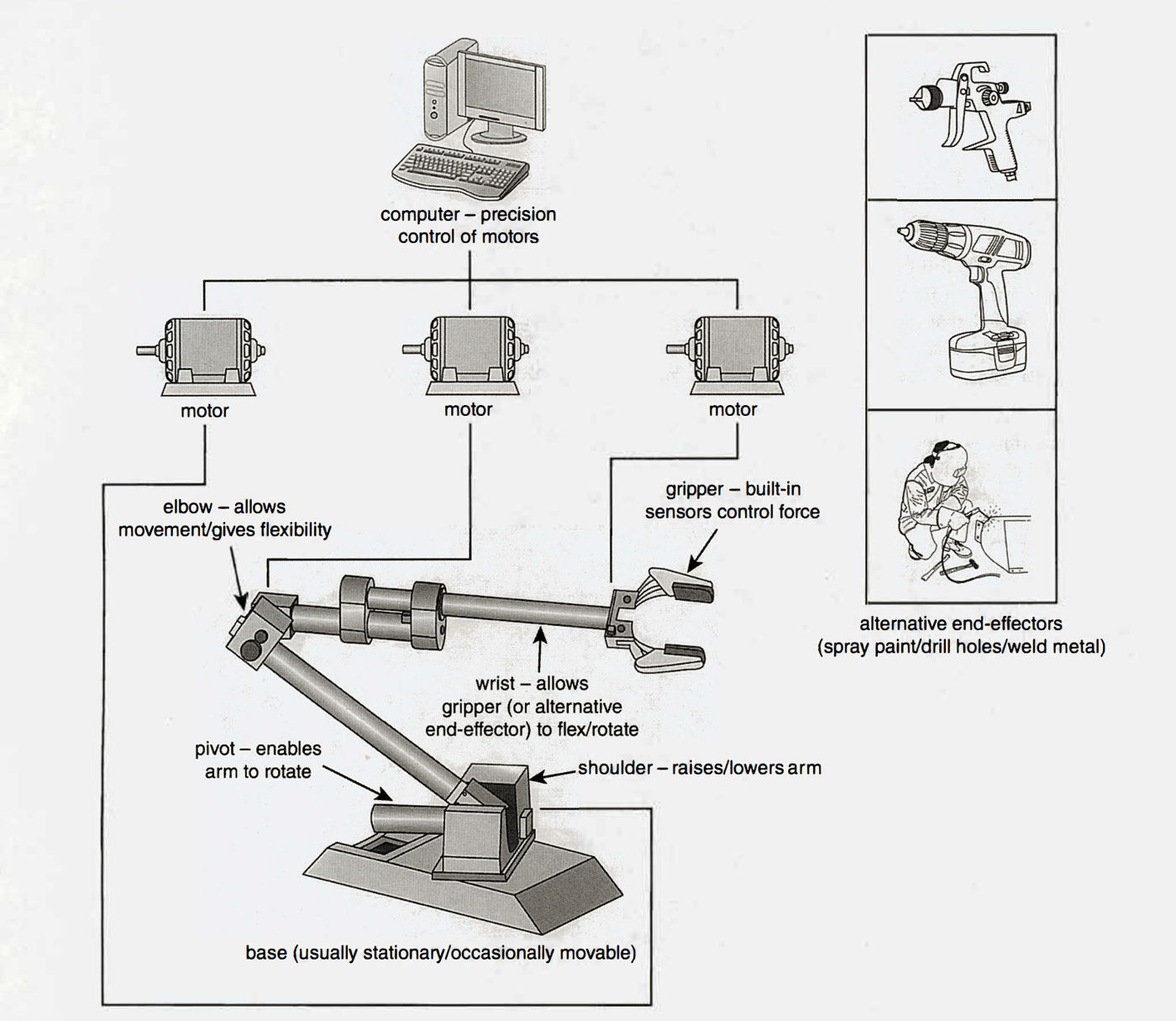
The diagram below shows how a mechanical arm works, and how the joints that make up the arm function in the same way as those in a human arm. Summarise the information by selecting and reporting the main features, and make comparisons where relevant.
Student answer (Band 5.5)
The given layout depicts the function of a mechanical arm,and how the components that make up the arm works in the exactly same way as in a human being arm.
Overall, mechanical arm consists of shoulder that helps to raise or lower arm, rotates by pivot point. Elbow that allows flexible movement and a gripper at the end act a control force for arm. Elbow, shoulder and gripper all have motors controlled by computer precision.Welding of arm performed at the end.
First of all, shoulder is placed at the base that is usually static and sometimes move. Following this, shoulder plays role to rise or lower the whole arm. There is a unique pivot point, that carry the whole rotation of arm. After that, elbow provide flexible movemant of arm.The connecting line between the elbow and gripper is the wrist that facilitate gripper to flex.
Finally there is a gripper, have built in sensors that act as a control force.
On the other hand, all of the components, gripper, elbow, and shoulder are attached with motors. These three motors are operated by the precision of computer. The end-effectors applied on the arm are spray paint, drill holes and weld metal to complete its look.
AI examiner evaluation
| Criterion | Band |
|---|---|
| Task Achievement / Task Response | 6.0 |
| Coherence and Cohesion | 5.5 |
| Lexical Resource | 5.5 |
| Grammatical Range and Accuracy | 5.0 |
| Overall | 5.5 |
Task Achievement / Task Response: Band 6.0
You cover the main components and their functions, including the base, pivot, shoulder, elbow, wrist, gripper and computer-controlled motors. The overview also identifies the arm’s movement and the end-effectors, so the response is relevant to the diagram. However, some details are unclear or inaccurate: the diagram shows three motors connected to different parts, but “Elbow, shoulder and gripper all have motors” oversimplifies their connections. “Welding of arm performed at the end” also misrepresents the separate examples of alternative end-effectors, which include spraying paint, drilling and welding. The comparison with a human arm is mentioned but not explained. To develop the response further, distinguish the arm’s structure and control system from the optional tools and describe their functions more precisely.
Coherence and Cohesion: Band 5.5
The response has an overall sequence, moving from a general description to the base and joints, then to the gripper and motors. Paragraph breaks help separate these points, and transitions such as “First of all” and “Finally” signal progression. However, the organisation is not consistently clear: the overview combines several functions in a compressed sentence, and “On the other hand” suggests a contrast that is not present. Some references are also difficult to follow, particularly “the connecting line between the elbow and gripper,” which is then identified as the wrist. Grouping the description into a clear account of the physical structure followed by the control system and alternative tools would make the progression more coherent and reduce abrupt shifts.
Lexical Resource: Band 5.5
You use relevant technical vocabulary, including “pivot point,” “built in sensors,” “motors,” “wrist” and “end-effectors,” which helps communicate the diagram’s subject. There are also attempts at more specific functional language, such as “raise or lower” and “flexible movement.” However, several word choices and collocations are inaccurate or awkward, including “act a control force,” “the precision of computer” and “complete its look.” Spelling errors such as “movemant” and “static” where “stationary” is intended also reduce precision. Aim to use the diagram’s functional terms directly—for example, sensors control the force applied by the gripper—and check spelling and natural combinations of words. This would make the technical description clearer and more precise.
Grammatical Range and Accuracy: Band 5.0
You attempt both simple and more extended sentence forms, and the meaning is generally recoverable. However, errors in agreement, articles and sentence construction occur across the response. For example, “the components … works” should use a plural verb, while “Elbow … provide” and “a gripper, have” also need agreement correction. Articles and possessives are missing or awkward in phrases such as “in a human being arm” and “precision of computer.” The overview sentence beginning “Overall” is a fragment-like sequence, and punctuation is inconsistent, including the missing space after “arm,” in the opening. Practise building complete sentences with a clear subject and verb, then check agreement and articles. More accurate control of these patterns would improve readability.
See this exact question answered at other band scores. The same prompt compared across bands.
Browse more IELTS Writing model answers or get your own writing scored by the same AI examiner.