Band 5.5 IELTS Writing Task 1 Model Answer
Overall Band Score: 5.5 · IELTS Momentum Workout · 2026-11-25
IELTS Writing Task 1 question
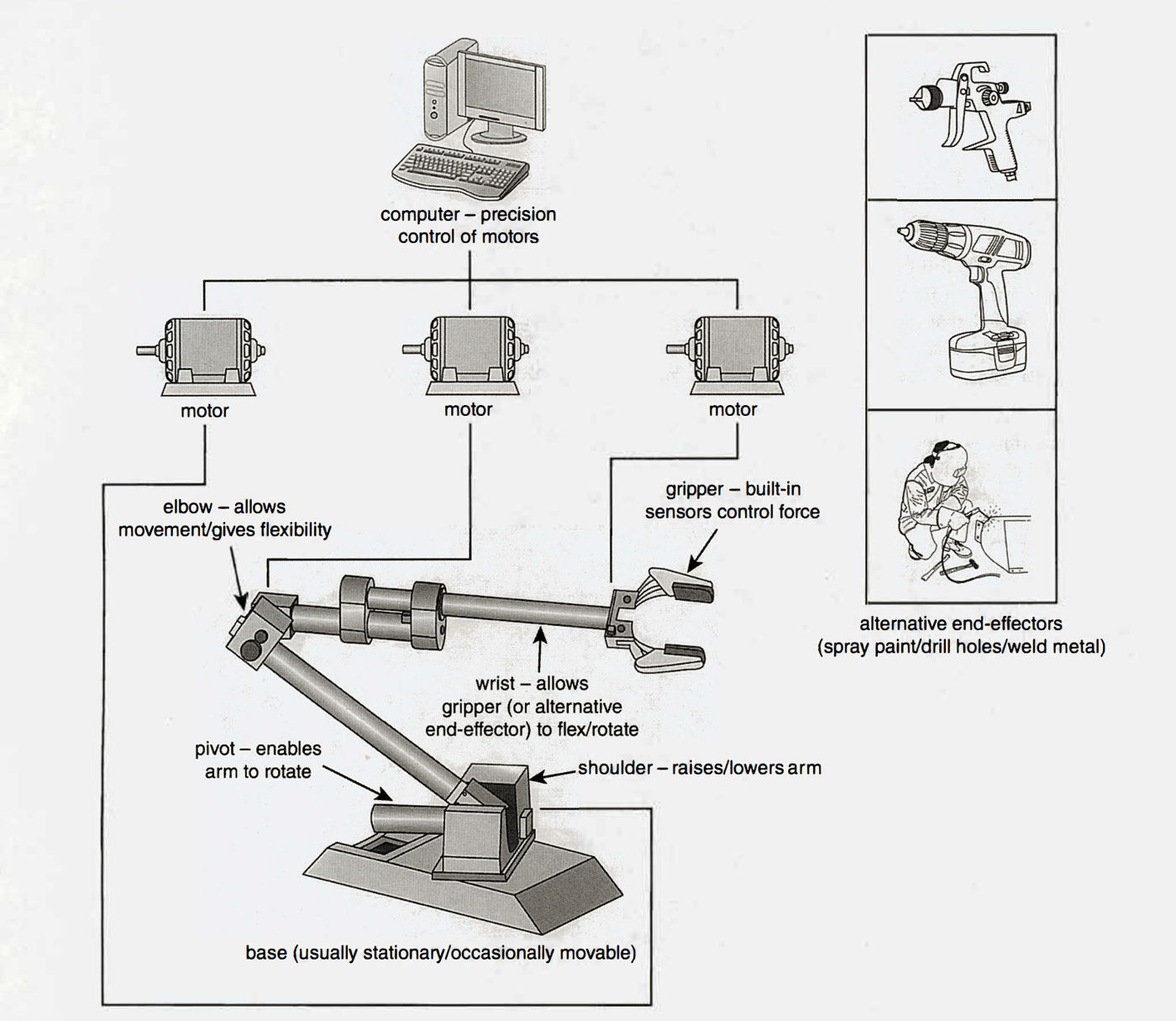
The diagram below shows how a mechanical arm works, and how the joints that make up the arm function in the same way as those in a human arm. Summarise the information by selecting and reporting the main features, and make comparisons where relevant.
Student answer (Band 5.5)
Mechanical arm and human arm work likewise. In the shown diagram computer work as a power unit or control unit in machines, whereas in humans, brain works as control unit.
Right above the base of the instrument there is a shoulder placed which foster the arm to move in upward and downward direction, in comparison to human body shoulders are attached to the upper part of the skeleton which helps the whole arm work in all diections.
Pivot enables arm to rotate properly. In humans it is placed right at the shoulder which give it enough suppourt to oparate.
Elbow of the human body allows it to move with immense flexibility and likewise in the shown instrument. Wrist in human body help it to carry things with grip, it provide the instrument with strength to carry on the work. Gripper provides sensors control force and in humans their hands provides control force to carry on daily life chores.
AI examiner evaluation
| Criterion | Band |
|---|---|
| Task Achievement / Task Response | 5.0 |
| Coherence and Cohesion | 5.5 |
| Lexical Resource | 5.5 |
| Grammatical Range and Accuracy | 5.5 |
| Overall | 5.5 |
Task Achievement / Task Response: Band 5.0
You identify several relevant parts—the computer, shoulder, pivot, elbow, wrist and gripper—and make comparisons with the human arm. However, the response only partially summarises the diagram: it focuses mainly on human-body analogies and gives little account of how the mechanical arm is arranged or operates as a whole. The overview is not clear, and important features such as the motors, base and alternative end-effectors (spraying, drilling and welding) are omitted. Some comparisons are also inaccurate or unclear: the diagram says the wrist lets the gripper flex or rotate, not that it provides strength to carry out work. To improve, give a concise overview of the control system and arm structure, then describe the main joints and the interchangeable tools using only information shown.
Coherence and Cohesion: Band 5.5
The response has a basic sequence, moving from the computer and base through the shoulder, pivot, elbow, wrist and gripper. This gives the reader some sense of the parts being discussed, and comparison phrases such as “whereas” and “likewise” help connect the two arms. However, the ideas are presented as one continuous block, without a clear overview or paragraphing to distinguish the system description from the comparisons. Several transitions feel abrupt, and repeated references to “in humans” make the progression mechanical. Some references are also difficult to follow, particularly “it” in the sentence about the wrist and strength. Group the information into a short overview and a logically ordered description, using clearer links and specific nouns instead of repeated or ambiguous pronouns.
Lexical Resource: Band 5.5
You use relevant topic vocabulary, including “power unit,” “control unit,” “pivot,” “flexibility” and “sensors,” and you attempt to describe functions rather than simply list labels. However, the range is limited and several word choices or collocations are inaccurate, which sometimes makes the meaning unclear. For example, “foster the arm to move” is not a natural way to describe the shoulder’s function, while “carry on the work” and “carry on daily life chores” are vague. There are also spelling errors such as “diections,” “suppourt” and “oparate.” Use the diagram’s precise functional language—such as “raises and lowers,” “allows rotation” and “controls gripping force”—and check spelling and word forms carefully.
Grammatical Range and Accuracy: Band 5.5
You attempt both simple statements and longer comparisons, for example, “computer work as a power unit … whereas … brain works as control unit.” This shows some effort to vary sentence structure, and the general meaning is usually recoverable. However, errors in agreement, articles and sentence construction recur: “shoulder … foster,” “Pivot … which give it,” and “Wrist … help it” do not maintain correct subject–verb agreement. Articles are also missing in phrases such as “as control unit” and “in shown instrument,” and the sentence about the wrist and strength joins ideas in a confusing way. These errors reduce accuracy even though they do not consistently prevent understanding. Practise checking each sentence’s subject and verb, and use shorter, clearly structured comparisons before adding complex clauses.
See this exact question answered at other band scores. The same prompt compared across bands.
Browse more IELTS Writing model answers or get your own writing scored by the same AI examiner.