Band 5.5 IELTS Writing Task 1 Model Answer
Overall Band Score: 5.5 · IELTS Momentum Workout · 2026-11-26
IELTS Writing Task 1 question
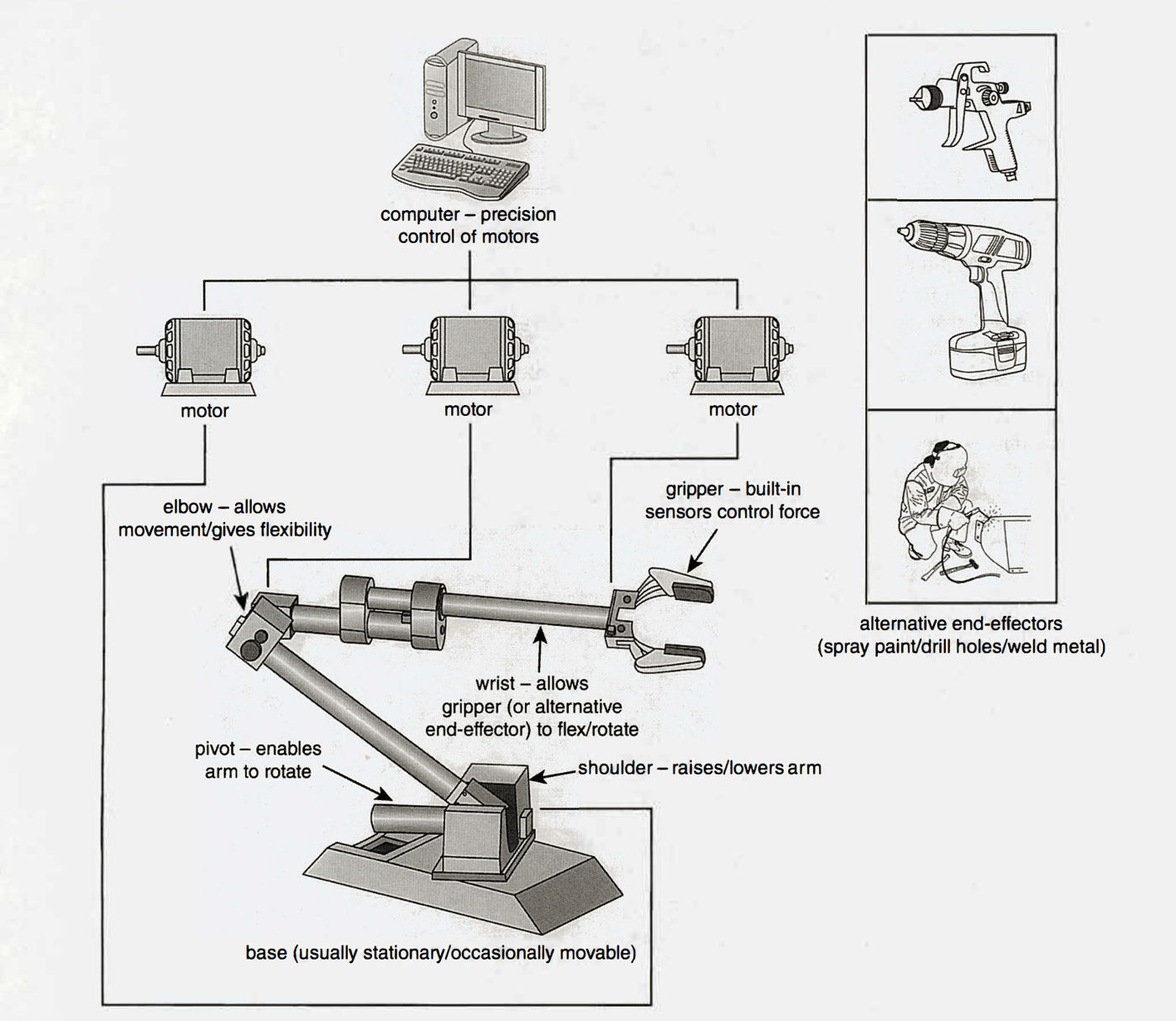
The diagram below shows how a mechanical arm works, and how the joints that make up the arm function in the same way as those in a human arm. Summarise the information by selecting and reporting the main features, and make comparisons where relevant.
Student answer (Band 5.5)
The diagram shows how a mechanical arm works , and how the its functions show resemblance to a human arm's characteristics .
Overall , the the diagram shows specific detail of a machine in stages ,moreover it also depicts detail about how the machine is controlled .
First of all , the machine have three particular joints just like human arm ,shoulder , elbow and wrist joint .In contrast , at joints there are three supervised motors ,which are precisely controlled by computer .First joint that resemble hand is a gripper attached with wrist , which inlude sensors to control force while wrist make it rotateable . Afterthat ,Seond joint depicts elbow joint which leads to flexibility of machine . At last , shoulder joint which is attached with base ( body ) to maintain balance and on the other side pivot is attached to make moveable and rotateable .
Finally , the alternatives that can be use instead of this human like machine are spray paint , drill holes or weld ,metal etc but all these appliances need human presence .
AI examiner evaluation
| Criterion | Band |
|---|---|
| Task Achievement / Task Response | 5.5 |
| Coherence and Cohesion | 5.5 |
| Lexical Resource | 5.5 |
| Grammatical Range and Accuracy | 5.0 |
| Overall | 5.5 |
Task Achievement / Task Response: Band 5.5
You identify several relevant components, including the computer-controlled motors, gripper sensors, wrist, elbow, shoulder, pivot and base, and you mention the three alternative uses. However, the account only partly explains how the arm operates: the three motors’ connections and the arm’s sequence of movement are not clearly reported. Some details are inaccurate or unsupported, such as describing the gripper as resembling a hand joint and saying the alternatives all need human presence. The overview says the diagram shows the machine “in stages,” although it is a labelled mechanism rather than a staged process. To strengthen the response, give a concise overview of the control system and the arm’s main joints, then describe their functions accurately without adding assumptions.
Coherence and Cohesion: Band 5.5
The response has a basic paragraph structure, moving from an introduction and overview to component details and alternative end-effectors. Sequencing phrases such as “First of all,” “Afterthat,” and “At last” help signal progression. However, the progression is not consistently logical: the gripper is called the “First joint,” and the description then moves between the wrist, elbow, shoulder, base and pivot without a clear account of how these parts connect. Some linking is mechanical, while the final paragraph introduces alternatives without smoothly relating them to the arm’s function. Organise the body from the base upwards along the arm, and use clear references such as “this joint” only when the component is unmistakable.
Lexical Resource: Band 5.5
You use some task-relevant vocabulary, including “gripper,” “sensors,” “force,” “flexibility,” “pivot” and “rotateable,” showing an attempt to describe the mechanism rather than relying only on general terms. However, the range is limited and several choices are inaccurate or unnatural, which sometimes makes the intended meaning unclear. For example, “three supervised motors” does not convey that the computer controls them precisely, and “human like machine” is imprecise for a mechanical arm. There are also noticeable spelling and word-form errors, including “inlude,” “Seond” and “moveable.” Build a more precise set of verbs for the functions shown, and check spelling and collocations before submitting.
Grammatical Range and Accuracy: Band 5.0
You attempt both simple statements and longer sentences, including a contrast introduced by “In contrast” and a relative clause in “which leads to flexibility.” However, the range is limited, and errors occur frequently enough to make some relationships difficult to follow. Examples include “the machine have,” “how the its functions,” and “wrist make it rotateable,” where agreement, word order or sentence construction is faulty. Several sentences also lack clear boundaries or use commas where full stops would improve control, as in the long description beginning “First of all.” Practise accurate subject–verb agreement and build shorter, complete sentences before combining ideas with relative clauses. Careful punctuation would make the component descriptions easier to understand.
See this exact question answered at other band scores. The same prompt compared across bands.
Browse more IELTS Writing model answers or get your own writing scored by the same AI examiner.