Band 5.0 IELTS Writing Task 1 Model Answer
Overall Band Score: 5.0 · IELTS Momentum Workout · 2026-11-26
IELTS Writing Task 1 question
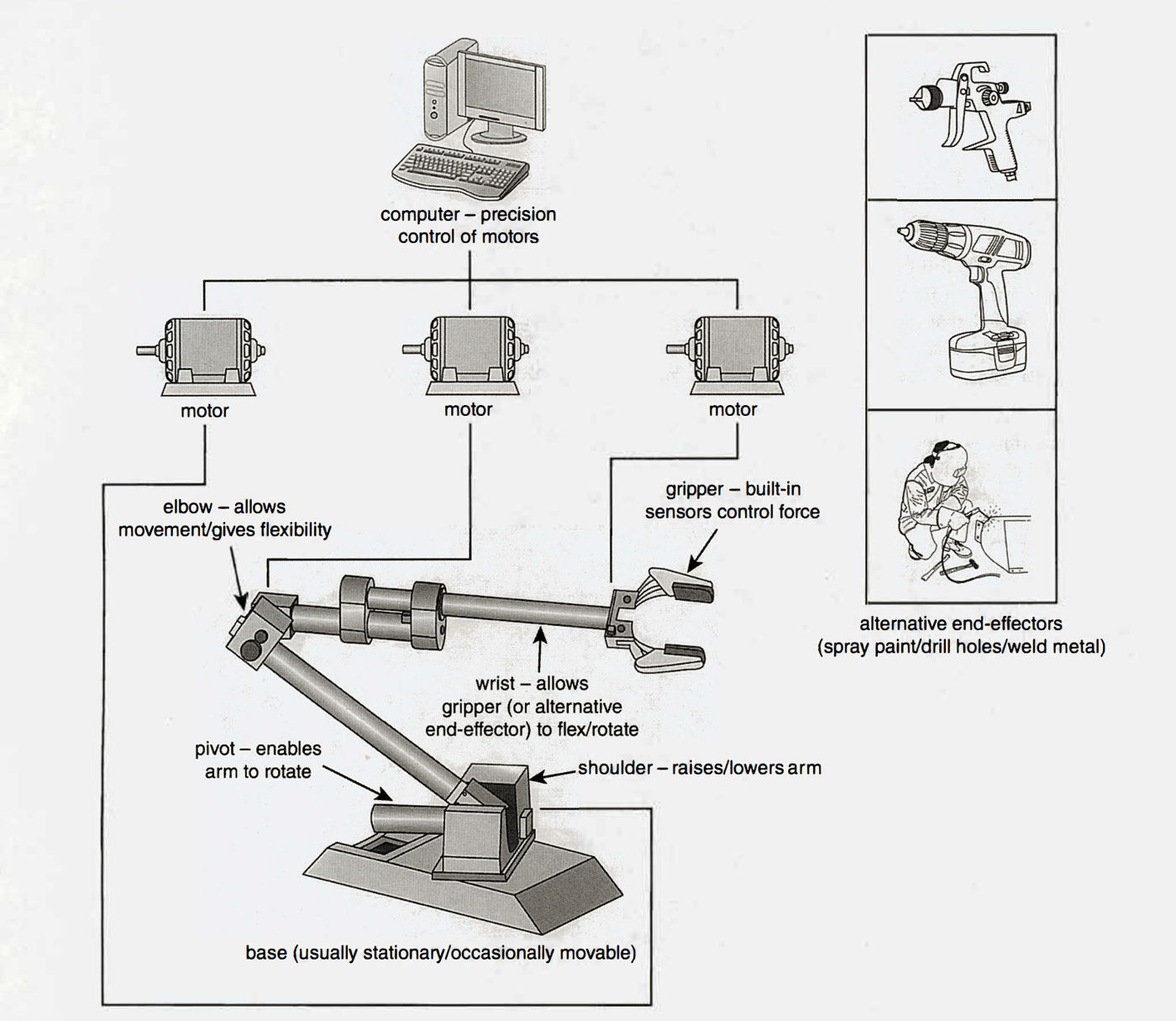
The diagram below shows how a mechanical arm works, and how the joints that make up the arm function in the same way as those in a human arm. Summarise the information by selecting and reporting the main features, and make comparisons where relevant.
Student answer (Band 5.0)
The given diagram ilustrates that how a mechanical arm works and the diagram also shows that how the joints that make the arm fuction in the same way.
Overall,the diagram shows that there are several joints of mechanical arm that shows shows that how they are connected and whats the use in it.The diagram shows that several parts for example the motors,elbow and the gripper etc.
In this diagram we can see the several parts first of all it shows that there are 3 motors which are used in mechanical arm and it works in it.And the next part is elbow which the diagram shows that it can move the mechanical arm and the next one is gripper which grips the several things and there is a built in sensors control force and the third one is shoulder which is connected with the base of mechanical arm.
There are also alternatives are given in the next diagrams for example spray paint,drill holes and the last one is weld metal.
AI examiner evaluation
| Criterion | Band |
|---|---|
| Task Achievement / Task Response | 5.0 |
| Coherence and Cohesion | 4.5 |
| Lexical Resource | 5.0 |
| Grammatical Range and Accuracy | 5.0 |
| Overall | 5.0 |
Task Achievement / Task Response: Band 5.0
You identify the diagram’s general subject and report some relevant features, including the three motors, the elbow, the gripper’s sensors, and the alternative uses. However, the account only partially covers how the arm works: key functions of the pivot, shoulder, and wrist are omitted, and the comparison with human joints mentioned in the prompt is not explained. Some descriptions are also unclear or inaccurate, such as saying the motors “are used in mechanical arm and it works in it,” without explaining their control role. To strengthen the response, give a concise overview of the control system and the arm’s main movements, then describe the joints and end-effectors using the labels and functions shown.
Coherence and Cohesion: Band 4.5
The response has a basic paragraph structure, moving from an introduction and overview to component details and alternative uses. This gives the reader some sense of organisation. However, progression within the body is weak: “the next part,” “the next one,” and “the third one” do not clearly guide the reader through the diagram, and the order does not consistently follow the arm from its base to its end. The overview also repeats the idea that the diagram shows several parts without summarising their overall relationship. Use clearer sequencing, such as describing the computer and motors first, then tracing the arm from base through shoulder, elbow, wrist, and gripper. Avoid repeated linking phrases.
Lexical Resource: Band 5.0
You use some relevant task vocabulary, including “motors,” “elbow,” “gripper,” “built in sensors,” and “alternatives,” so the topic is generally recognisable. However, the range is limited and several phrases are repetitive or imprecise, such as “the next part” and “several things.” There are also noticeable spelling and word-form errors, including “ilustrates,” “fuction,” and “whats,” which reduce accuracy. Aim to use the diagram’s specific terms and verbs for functions, such as “rotate,” “raise,” “flex,” and “control,” rather than relying on general wording. Check spelling and use natural collocations when describing what each component does.
Grammatical Range and Accuracy: Band 5.0
The response attempts some longer sentences, but these are often faulty, and most sentence patterns are simple or repetitive. For example, “The given diagram ilustrates that how…” uses an unnecessary “that,” while “there is a built in sensors control force” has problems with article use, number agreement, and sentence structure. Other sentences join several ideas with “and” without clear grammatical relationships, making the description difficult to follow. There are also punctuation and spacing problems, such as missing spaces after commas and “Overall,the.” Practise forming clear subject–verb sentences, for example, “The gripper has built-in sensors that control the force,” and use a wider range of accurate sentence structures.
See this exact question answered at other band scores. The same prompt compared across bands.
Browse more IELTS Writing model answers or get your own writing scored by the same AI examiner.