Band 4.0 IELTS Writing Task 1 Model Answer
Overall Band Score: 4.0 · IELTS Momentum Workout · 2026-11-27
IELTS Writing Task 1 question
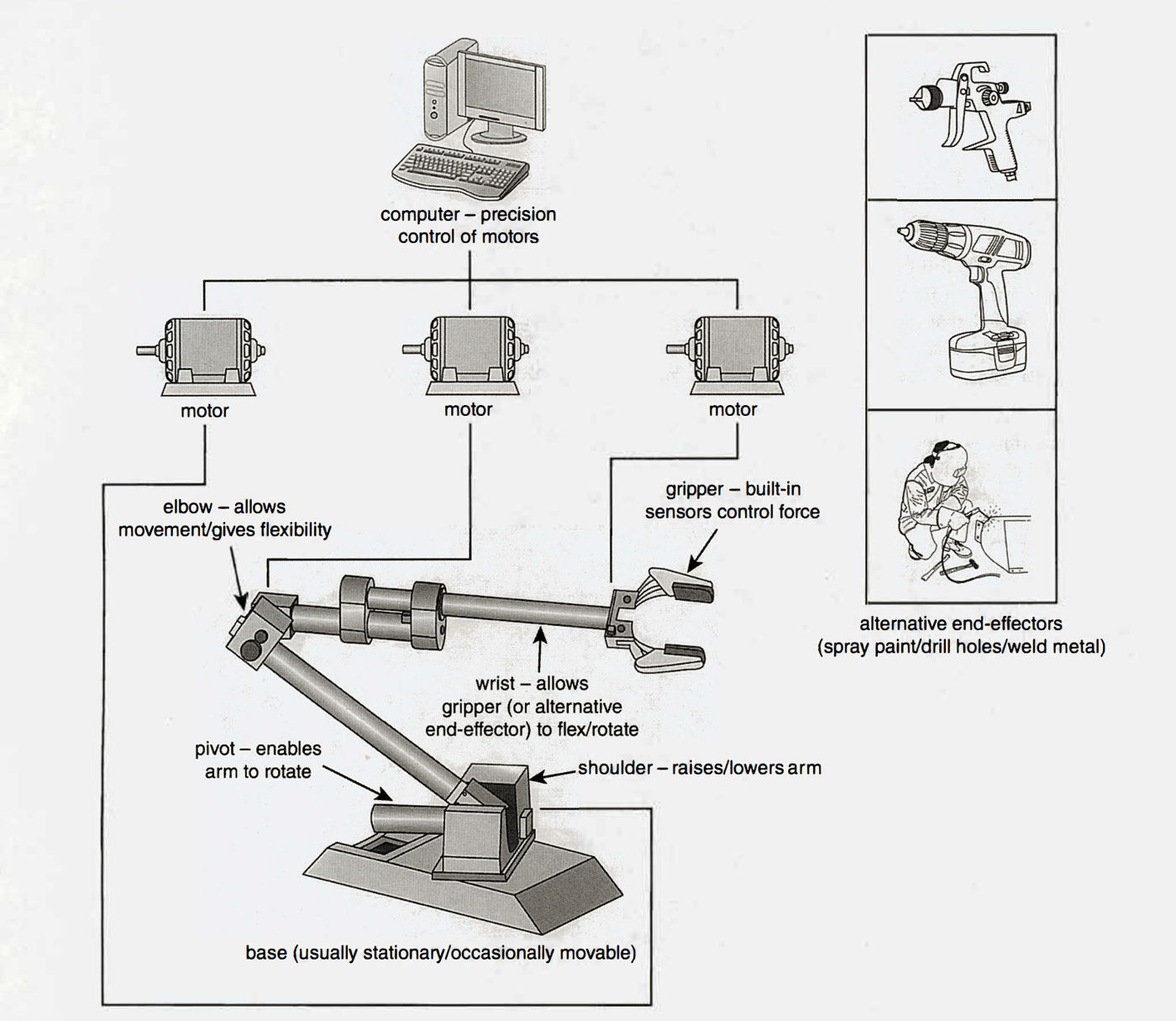
The diagram below shows how a mechanical arm works, and how the joints that make up the arm function in the same way as those in a human arm. Summarise the information by selecting and reporting the main features, and make comparisons where relevant.
Student answer (Band 4.0)
The pictures shows electrical gadgets how to work. and how arm work and features as like a human arm .
Overall, the chart illustrate about different parts of computer. Top of the picture is computer-precision control of motors and then some types of computer have three motors.And first motor of computer is gripper-built-in sensors control force. Furthermore, is elbow-allows movement flexbility. Moreover, about to wrist allows gripper to rotate and pivot enables arm to rotate. And last one funtion about base usually stationnry movable.
The diaghram gives about information how to work parts of mechenical macheins .
different albow work for complet the computer, and motor and gripper to support to mechanical arms . different machienery work propally for all.
AI examiner evaluation
| Criterion | Band |
|---|---|
| Task Achievement / Task Response | 3.5 |
| Coherence and Cohesion | 3.5 |
| Lexical Resource | 4.5 |
| Grammatical Range and Accuracy | 4.5 |
| Overall | 4.0 |
Task Achievement / Task Response: Band 3.5
The response recognises that the diagram concerns a mechanical arm and mentions several relevant labels, including the computer, motors, elbow, wrist, pivot and base. However, the description is very limited and includes a key misreading: it says the first motor is the gripper, whereas the diagram connects the motors to different parts and places the gripper at the arm’s end. The shoulder’s role and the alternative end-effectors are omitted, and there is no clear, accurate account of how the parts work together or how the arm resembles a human arm. The overview is vague rather than summarising the main features. The response is also 30 words below the required minimum, leaving too little space to report the diagram adequately.
Coherence and Cohesion: Band 3.5
There is an attempt to organise the response with an opening, an overview-like paragraph and a closing statement. Some linking expressions, such as “Overall,” “Furthermore” and “Moreover,” show an effort to connect ideas. However, the information does not progress in a clear sequence: parts are listed in a confusing order, and the relationship between the computer, motors and arm components is difficult to follow. Several sentences are fragments or loosely joined statements, while repeated references to “different” parts and machinery do not develop the description. Use separate paragraphs for an overview and the arm’s structure and functions, then describe the components in physical order from the base to the gripper.
Lexical Resource: Band 4.5
The response uses some task-related vocabulary, including “motors,” “gripper,” “sensors,” “elbow,” “wrist” and “pivot,” so the reader can identify the general subject. However, the range is narrow and several words are repeated without precise explanation. Phrases such as “electrical gadgets,” “different parts of computer” and “different machinery” are vague or inaccurate for this diagram. Spelling errors, including “flexbility,” “stationnry” and “diaghram,” also reduce clarity. Aim to use accurate process-description terms and collocations, such as “is connected to,” “controls the movement of” and “is mounted on,” while checking spelling and avoiding broad labels that do not identify a component.
Grammatical Range and Accuracy: Band 4.5
The response attempts both simple statements and longer sentences, and some basic meaning can be understood. However, sentence control is inconsistent. For example, “The pictures shows” has subject–verb disagreement, while “Overall, the chart illustrate” repeats this problem. The opening also contains a sentence fragment after “and,” and “Furthermore, is elbow…” lacks a clear subject and verb structure. Articles, plurals and punctuation are also unreliable, making the relationships between components hard to interpret. Practise writing complete sentences with a clear subject and verb, such as “The computer controls three motors” and “The elbow allows the arm to move.” Then combine these accurately using clauses to explain how the parts function.
See this exact question answered at other band scores. The same prompt compared across bands.
Browse more IELTS Writing model answers or get your own writing scored by the same AI examiner.