Band 5.0 IELTS Writing Task 1 Model Answer
Overall Band Score: 5.0 · IELTS Momentum Workout · 2026-11-27
IELTS Writing Task 1 question
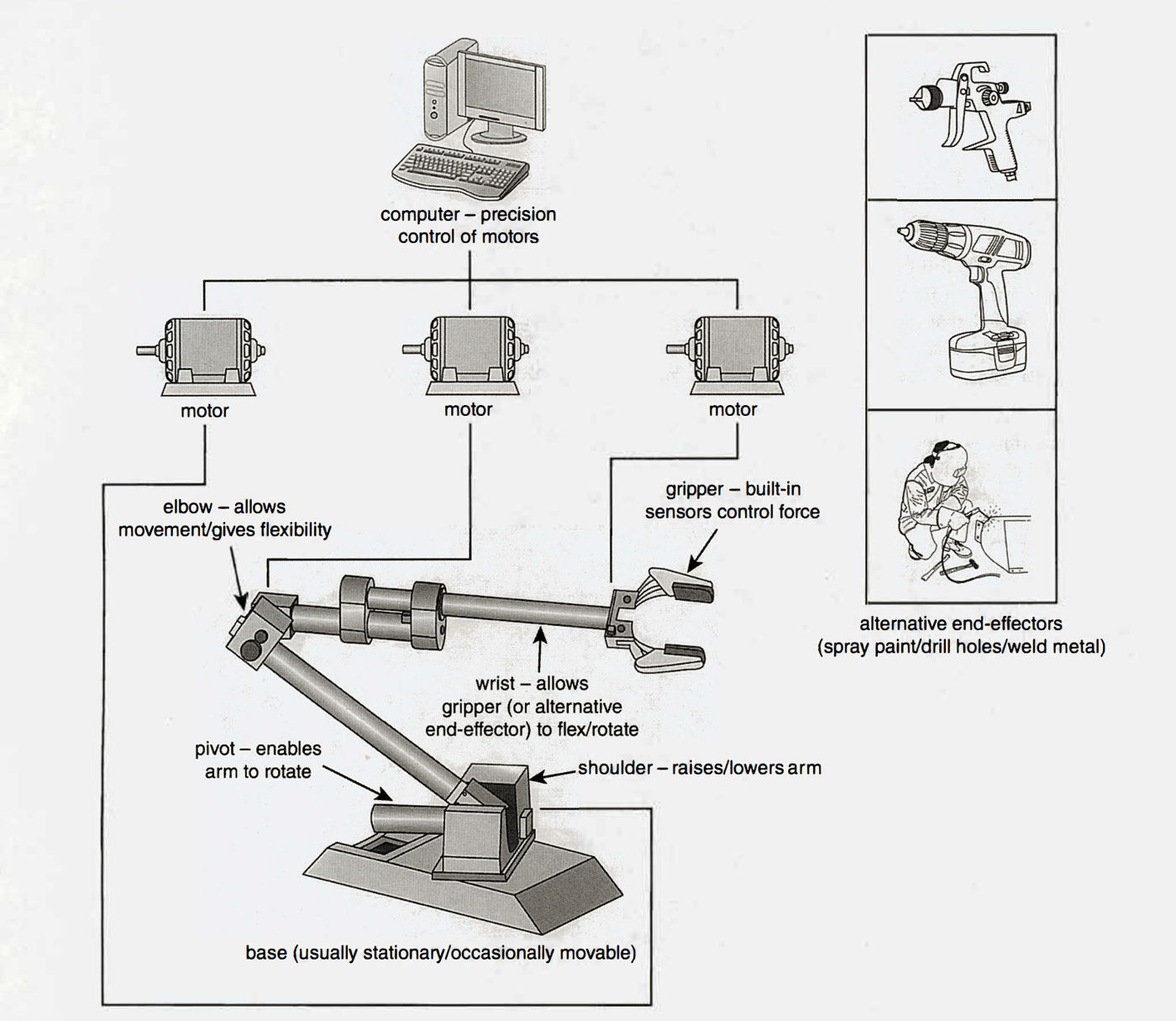
The diagram below shows how a mechanical arm works, and how the joints that make up the arm function in the same way as those in a human arm. Summarise the information by selecting and reporting the main features, and make comparisons where relevant.
Student answer (Band 5.0)
The given picture represents how a mechanical arm works and how the joints can help the arm perform its various functions as similar to human hand.
A mechanical arm can help a person to perform various tasks such as drilling holes or some other objects, can be effective in spraying paint and also weld metals, and many more such works.
The diagram below shows how a mechanical arm is installed by following particular steps. Firstly the precision control of three different motors on computer is performed. All the three different motors are placed on their areas and have their own functions. The first one is added near the wrist that allows grip and helps in rotating it also has a built in sensors control force.
The second motor is attached near the elbow that allows movements and give the arm flexibility. The final motor is joined on the shoulder side that allows the mechanical arm to raise the hand and lower the arm. A Pivot is also attached near the shoulder that enables the arm to rotate. The diagram also shows a base on which the arm is bulit which is usually stationary and occasionally movable.
AI examiner evaluation
| Criterion | Band |
|---|---|
| Task Achievement / Task Response | 5.0 |
| Coherence and Cohesion | 5.0 |
| Lexical Resource | 5.5 |
| Grammatical Range and Accuracy | 5.0 |
| Overall | 5.0 |
Task Achievement / Task Response: Band 5.0
You identify the diagram’s general subject and include several relevant functions, such as the elbow providing flexibility, the shoulder raising and lowering the arm, and the base being usually stationary but sometimes movable. However, the account only partially covers the visual: it does not explain the pivot’s position in relation to the base, the wrist’s role in allowing the gripper or another tool to flex or rotate, or the alternative end-effectors shown. There is also a significant misreading of the motor connections: the first motor is not described as being near the wrist, and the gripper’s sensors are not the wrist’s function. The opening mentions applications, but a clearer overview of the arm’s main components and how they work together would make the summary more complete.
Coherence and Cohesion: Band 5.0
The response has a basic structure, moving from an introduction and examples of applications to a description of the components. Sequencing words such as “Firstly,” “The second motor,” and “The final motor” help the reader follow the account. However, the progression is not consistently clear because the motor descriptions do not match the diagram’s connections, and the paragraph shifts between component functions without explaining how the arm is arranged from its base to its gripper. The opening application examples also interrupt the focus on describing the diagram. Organise the body in physical order—from base and pivot, through shoulder and elbow, to wrist and gripper—and use linking phrases to show how each part relates to the next.
Lexical Resource: Band 5.5
You use relevant technical vocabulary, including “precision control,” “motors,” “flexibility,” “pivot,” and “stationary,” which helps communicate the subject. There is some variety in how you describe functions, but several phrases are imprecise or awkward, such as “perform various tasks,” “on their areas,” and “raise the hand and lower the arm.” “Built in sensors control force” is also unclear as phrased. Spelling errors such as “bulit” are noticeable, and “some other objects” does not clearly name an application. Choose precise terms from the diagram and use natural collocations, for example, “the arm is mounted on a base” and “the gripper’s sensors regulate gripping force.”
Grammatical Range and Accuracy: Band 5.0
The response attempts both simple and more extended sentences, including clauses describing what each joint allows the arm to do. However, errors are frequent enough to make some sentences awkward or unclear. For example, “as similar to human hand” lacks a correct comparison structure and article, while “The second motor is attached near the elbow that allows movements and give the arm flexibility” has an unclear relative clause and subject–verb disagreement. The opening sentence also combines several ideas without a clear grammatical structure. Work on articles, agreement, and clause construction, and separate long descriptions into complete sentences. More accurate patterns such as “The elbow allows movement and gives the arm flexibility” would improve clarity.
See this exact question answered at other band scores. The same prompt compared across bands.
Browse more IELTS Writing model answers or get your own writing scored by the same AI examiner.