Band 6.0 IELTS Writing Task 1 Model Answer
Overall Band Score: 6.0 · IELTS Complete Catalyst · 2026-11-09
IELTS Writing Task 1 question
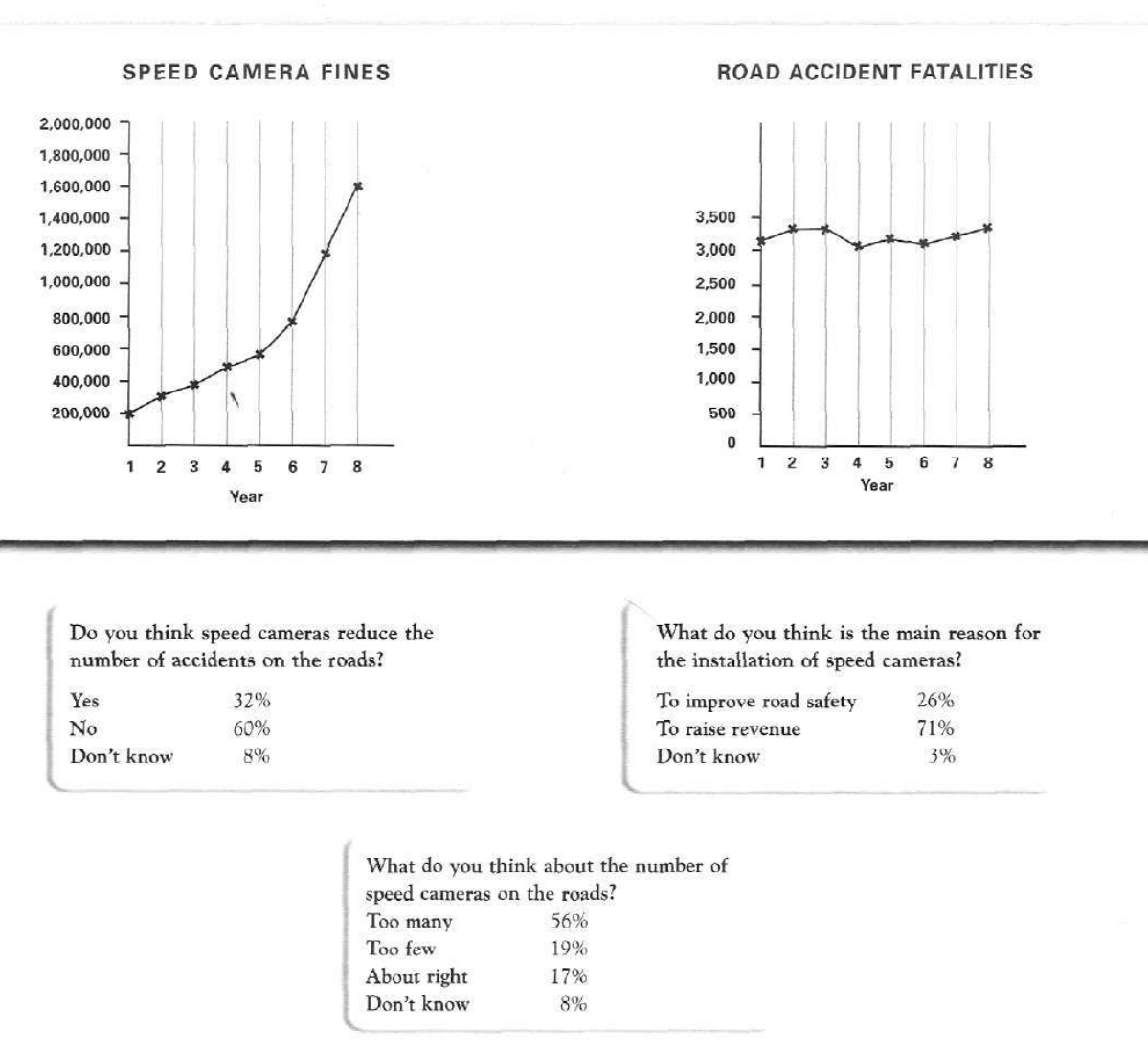
The graphs below show the number of drivers in Britain who have been caught driving too fast by speed cameras placed on roads, and the number of people killed in road accidents, over an eight-year period since the introduction of speed cameras. The tables show the results of a survey on people's opinions on speed cameras.
Write a report for a university lecturer describing the information below.
SPEED CAMERA FINES and ROAD ACCIDENT FATALITIES
Student answer (Band 6.0)
The line graph tracks the information regarding the number of individuals caught overspeed with the help of speed cameras and number of deaths due to road accidensts in eight years since cameras are installed in Britain. Moreover, table chart provide the data about the summary of a survey conducted by cities regarding speed cameras.
Overall, fine charge for overspeeding have been raised alot within the given period. However, number of accidents remain constant. Moreover, according to survey majority of people are not satisfy with the results of speed cameras.
In the begaining when speed cameras were installed 2,00,000 fine was charged and with the passage of time it increased upto 6,00,000 with in five years and rise upto 16,00,000 by eight years. While, on first year around 3,000 road accident case were noted which remain constant with very little changes with in eight years.
On the other hand, during survey the question is aked regarding the reduction in number of road accidents and 60% of people gave negative feed back. In addition, next question was regrding the reason for installation of cameras and 71% of citizens said it is to raise revenue and after that a next question was regarding number of speed cameras, 56% of people said they are too many and 19% said its too few and 17% replyed about right.
AI examiner evaluation
| Criterion | Band |
|---|---|
| Task Achievement / Task Response | 6.5 |
| Coherence and Cohesion | 6.5 |
| Lexical Resource | 5.0 |
| Grammatical Range and Accuracy | 5.0 |
| Overall | 6.0 |
Task Achievement / Task Response: Band 6.5
You cover both the graphs and the survey, and your overview identifies the main contrast: fines rose substantially while fatalities changed little. You also report several key survey findings accurately, including the 60% who said cameras do not reduce accidents and the 71% who thought revenue was the main purpose. Some details, however, are imprecise: fines reached about 580,000 by year five, not 600,000, and fatalities fluctuated rather than remaining entirely constant. The survey overview that most people were “not satisfy with the results” is also broader than the data supports, since the questions measure different opinions. To strengthen the report, describe the fluctuations and include the 32% who answered yes or the 8% who were unsure.
Coherence and Cohesion: Band 6.5
The response has a clear overall arrangement: an introduction, an overview, a paragraph on the graphs and a final paragraph on the survey. This gives the reader a generally logical route through the information, and linking phrases such as “Overall,” “Moreover” and “On the other hand” help signal relationships. However, some transitions are mechanical or do not express the relationship precisely; “On the other hand” introduces survey details rather than a direct contrast. The final paragraph also strings several survey results together in one long sentence, making the sequence harder to follow. Use separate sentences to group each survey question with its results, and make links between paragraphs more specific to the information being compared.
Lexical Resource: Band 5.0
You use some relevant task vocabulary, including “speed cameras,” “overspeeding,” “road accidents,” “installation” and “raise revenue,” so the topic remains understandable. However, the range and control are limited, with several awkward or inaccurate expressions that make the report less natural: “fine charge … have been raised,” “road accident case,” and “negative feed back.” Spelling errors such as “accidensts,” “begaining,” “aked” and “replyed” are noticeable, as are informal forms such as “alot.” Aim for precise chart-reporting collocations and check spelling carefully. For example, describe the number of fines as having “increased” and refer to “fatalities” or “people killed” rather than “road accident cases.”
Grammatical Range and Accuracy: Band 5.0
You attempt both simple and more complex sentences, including clauses introduced by “when,” “while” and “and,” and the main meaning is usually recoverable. However, errors occur frequently enough to affect fluency and sometimes make relationships unclear. Examples include “table chart provide” and “fine charge … have been raised,” where subject–verb agreement is faulty, and “majority of people are not satisfy,” where the adjective form and sentence construction are incorrect. Articles and number forms also need attention, as in “on first year” and “number of road accident case.” Some sentences are overloaded with clauses, particularly the final survey sentence. Practise accurate agreement, articles and plural forms, and divide long sentences into shorter, controlled statements.
See this exact question answered at other band scores. The same prompt compared across bands.
Browse more IELTS Writing model answers or get your own writing scored by the same AI examiner.