Band 4.0 IELTS Writing Task 1 Model Answer
Overall Band Score: 4.0 · IELTS Complete Catalyst · 2026-11-25
IELTS Writing Task 1 question
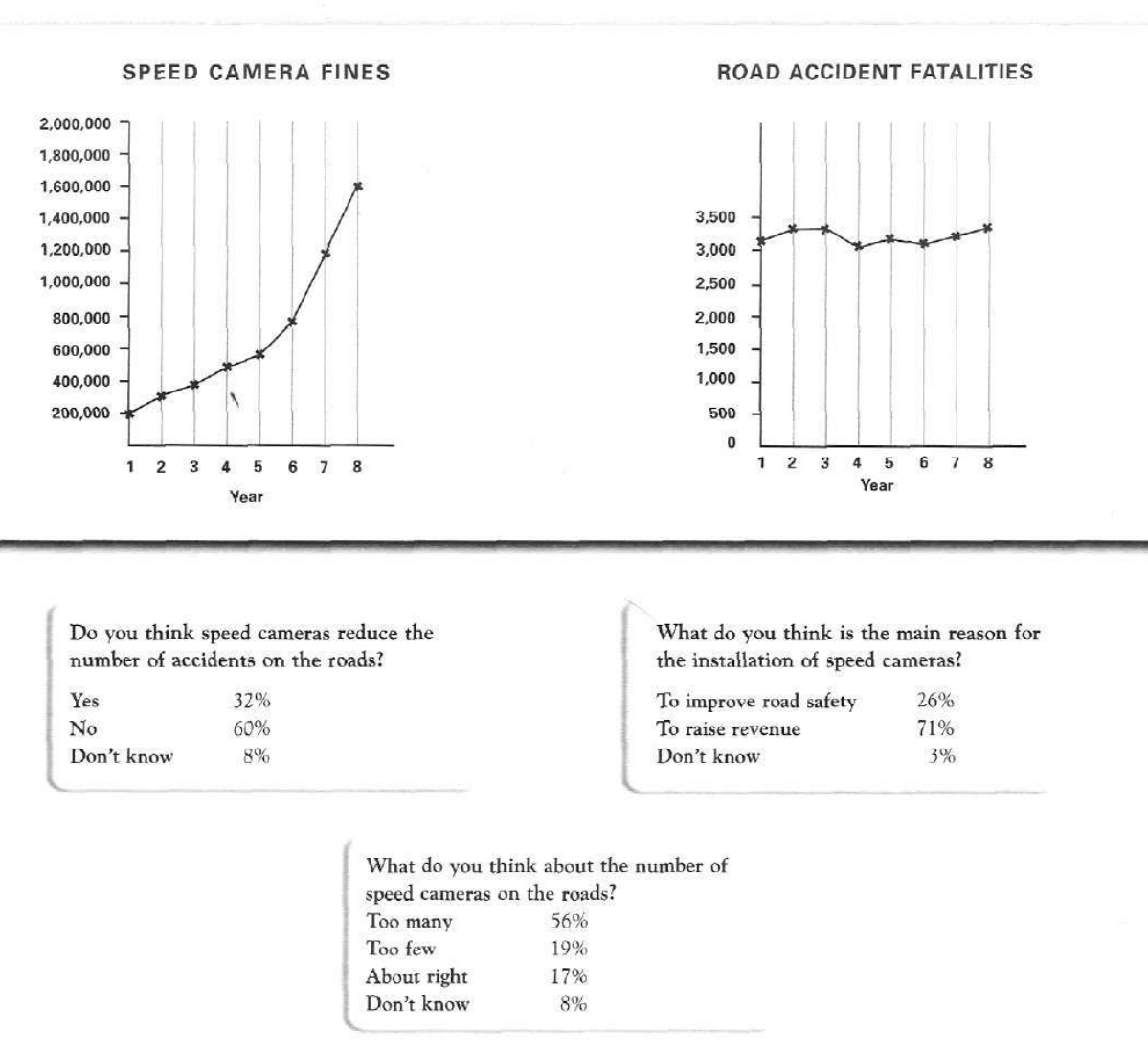
The graphs below show the number of drivers in Britain who have been caught driving too fast by speed cameras placed on roads, and the number of people killed in road accidents, over an eight-year period since the introduction of speed cameras. The tables show the results of a survey on people's opinions on speed cameras.
Write a report for a university lecturer describing the information below.
SPEED CAMERA FINES and ROAD ACCIDENT FATALITIES
Student answer (Band 4.0)
in this illestration we discuse caught driving too fast by speed cameras placed on roads, and the number of people killed in road accidents, over an eight-year period since the starting era of speed cameras.
overal, thes graphs show the ratio of speed camera and road accidenst in 2001 to 2008.
camera introduse in 2001 and the speed is fine to watch the movment of vihicals other side we see the road accidents and send the immediatly rescue
32 persent pepole thing speed camers reduse the number of accidents but 60 persent human disagree.26 persent humans thing its install for safty pourpose but most of human 71 persant papoulatin told its only for ganrat revenue only not for safty.
56 persant thing too many camera install in road but some ofthing its alright not to many or not few of them. its important to safe the road accidentts anf watch speed limets of vichals.
AI examiner evaluation
| Criterion | Band |
|---|---|
| Task Achievement / Task Response | 3.5 |
| Coherence and Cohesion | 3.5 |
| Lexical Resource | 4.5 |
| Grammatical Range and Accuracy | 4.5 |
| Overall | 4.0 |
Task Achievement / Task Response: Band 3.5
The response recognises the topic and includes some survey figures, such as 32% believing cameras reduce accidents, 60% disagreeing, and 71% thinking they are installed to raise revenue. However, it does not adequately describe the main chart data: the sharp rise in fines from about 200,000 to 1.6 million and the broadly stable fatalities are omitted. The overview is unclear, and the report adds unsupported details about cameras being introduced in 2001 and sending immediate rescue. The third survey result is only partly covered, with no clear account of the 19%, 17% and 8% responses. The response is 129 words, 21 short of the 150-word minimum. Include a clear overview and select key figures from both charts and all tables.
Coherence and Cohesion: Band 3.5
There is a basic attempt to organise the response: an opening, a brief overview, and a paragraph containing survey information. This gives the reader some sense of the topic, and words such as “but” signal contrast. However, the progression is difficult to follow because the two charts and the survey results are mixed together without clear grouping. The sentence beginning “camera introduse in 2001” shifts between unrelated points, while the final sentence introduces advice rather than reporting the data. Several ideas are joined in long, loosely punctuated strings. Use separate paragraphs for the charts and survey, and connect each comparison explicitly so the report develops in a clear order.
Lexical Resource: Band 4.5
The response uses some task-related vocabulary, including “speed cameras,” “road accidents,” “revenue,” and “safety,” so the subject is generally recognisable. There are also attempts to express comparisons, for example “most of human” and “but.” However, spelling errors are frequent and sometimes make words difficult to identify, as in “illestration,” “accidenst,” “persant,” and “vichals.” Several expressions are inaccurate or unnatural, including “the ratio of speed camera and road accidents” and “the speed is fine.” Repetition of “thing” and “human” also limits precision. Build a small set of accurate chart-reporting phrases, such as “the number of fines rose” and “fatalities fluctuated,” and check spelling carefully.
Grammatical Range and Accuracy: Band 4.5
The response attempts both simple statements and longer sentences, and the contrast in “32 persent … but 60 persent …” shows an effort to combine related information. Nevertheless, sentence structures are often incomplete or difficult to interpret. For example, “camera introduse in 2001 and the speed is fine to watch the movment” lacks clear grammatical relationships, and “56 persant thing too many camera install in road” is missing necessary sentence structure and articles. Verb forms and agreement are also unreliable, as in “camera introduse” and “people … disagree.” Punctuation and capitalisation are inconsistent, making sentence boundaries unclear. Practise complete subject–verb sentences and use straightforward past-tense reporting structures before attempting longer combinations.
See this exact question answered at other band scores. The same prompt compared across bands.
Browse more IELTS Writing model answers or get your own writing scored by the same AI examiner.