Band 4.5 IELTS Writing Task 1 Model Answer
Overall Band Score: 4.5 · IELTS Complete Catalyst · 2026-11-08
IELTS Writing Task 1 question
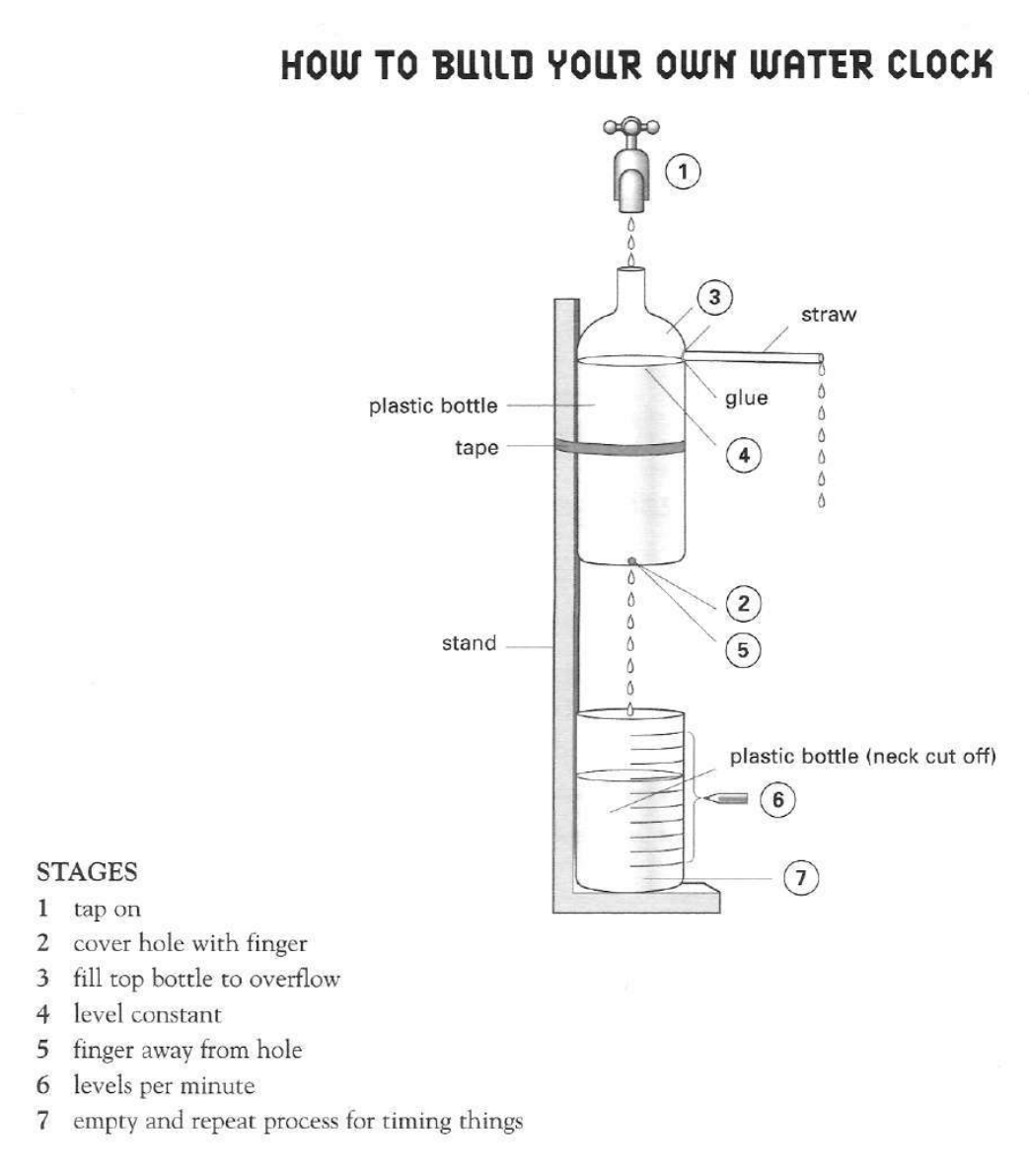
The diagram below shows the process for making a water clock.
Write a report for a university lecturer describing the information below.
HOW TO BUILD YOUR OWN WATER CLOCK
Student answer (Band 4.5)
The diagram illustratesthe process of making own water clock .
Overall it contains seven steps starting from tap on to end at empty and repeat process for timing things.
Firstly we tie the bottle with satnd from upperside by using tap,first step tap on here we fill water by using null next we do a hole at a lower of bottle and will cover hole with help of finger third step will fill water until flow by using straw we will keep its level constant then we remove finger away from the hole at level six which where we need to levels per minutes
AI examiner evaluation
| Criterion | Band |
|---|---|
| Task Achievement / Task Response | 4.0 |
| Coherence and Cohesion | 5.0 |
| Lexical Resource | 4.5 |
| Grammatical Range and Accuracy | 4.5 |
| Overall | 4.5 |
Task Achievement / Task Response: Band 4.0
You identify the diagram as a water-clock process and give the broad sequence, including turning on the tap and repeating the process for timing. However, the account is only a minimal description of the stages and omits important construction details, such as attaching the upper bottle to the stand, the straw’s overflow function, and water collecting in the lower bottle. Some steps are also confused: the hole is already part of the apparatus, rather than something made during the process, and the finger is removed before the water level is observed. The response is 104 words, below the required 150, which further limits the coverage. Describe the apparatus and all seven stages accurately and include a clear overview of how it measures time.
Coherence and Cohesion: Band 5.0
There is a basic sense of sequence: you use “Overall,” “Firstly,” “next,” and “then,” and the reader can recognise that the process moves from setting up the water to observing levels. This gives the response some organisation. However, most of the information is compressed into one long paragraph, and the stages run together, especially in the sentence beginning “third step will fill water.” The sequence is not consistently clear, and “at level six” does not clearly connect to the earlier steps. Use separate sentences for each stage, with clear sequencing phrases such as “After this” and “Finally,” and group the apparatus description separately from the operating instructions.
Lexical Resource: Band 4.5
Your vocabulary includes relevant task words such as “bottle,” “straw,” “hole,” “finger,” and “level,” so the basic subject is identifiable. However, the range is limited and several choices or spellings make the description difficult to follow: “upperside,” “null,” and “levels per minutes” are unclear or inaccurate in context. “Tie the bottle with stand” also does not precisely describe how the bottle is attached. Aim for accurate process vocabulary and natural collocations, for example “secure the bottle to the stand,” “overflow,” and “water level.” Check spelling and use the diagram’s labels where appropriate; this will make the account more precise without requiring unnecessarily advanced words.
Grammatical Range and Accuracy: Band 4.5
The response attempts to show sequence and cause using forms such as “starting from” and “until,” but sentence structures are mostly simple or joined together without clear boundaries. Errors are frequent and sometimes obscure the intended meaning. For example, “The diagram illustratesthe process” has a missing space and article, while “we will cover hole” lacks an article and “which where we need to levels” is not a complete grammatical clause. Verb forms and sentence punctuation also need attention. Practise writing one complete sentence for each stage, using consistent present simple passive forms where suitable, such as “The upper bottle is attached to the stand,” and check articles, plurals, and full stops.
See this exact question answered at other band scores. The same prompt compared across bands.
Browse more IELTS Writing model answers or get your own writing scored by the same AI examiner.