Band 5.0 IELTS Writing Task 1 Model Answer
Overall Band Score: 5.0 · IELTS Complete Catalyst · 2026-11-10
IELTS Writing Task 1 question
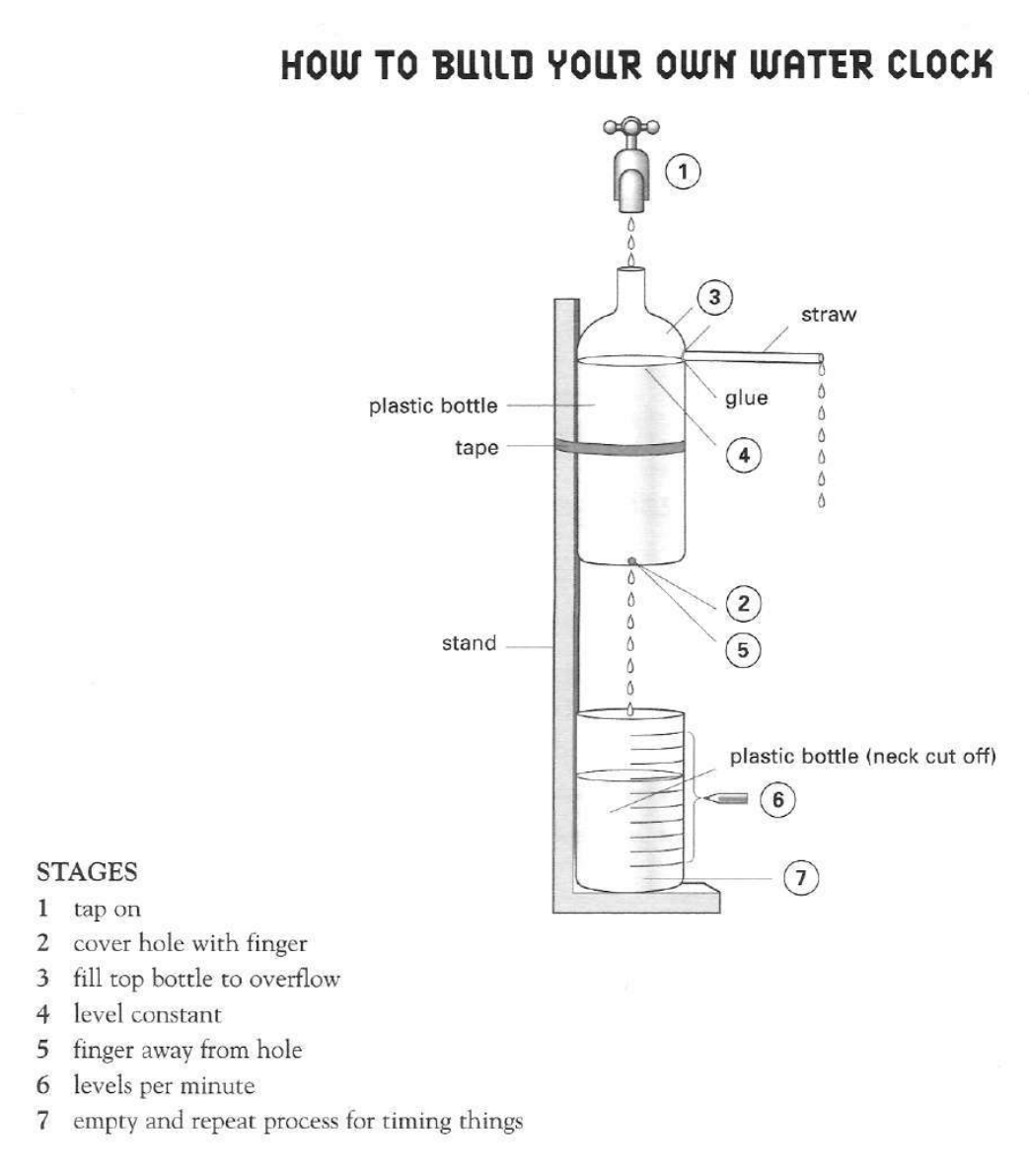
The diagram below shows the process for making a water clock.
Write a report for a university lecturer describing the information below.
HOW TO BUILD YOUR OWN WATER CLOCK
Student answer (Band 5.0)
The given diagram illustrats how to process for making a water clock used by water.
Overall, it is clear that the process consists of 7 main stages, beginning with tap on and ending withempty and repeat process for timing things.
Initally, tap on the water in a small bottle takes place. Following this,cover hole with finger is carried out. After that, fill top bottle to overflow water in a bottle occurs. once this sttage is completed and then level constant in a stant in upper sidre of the stand and then transferred to another bottle like neck cut off and then palced it.
In the next stage fingure away from hole with the help of sharp materials like pencil. Subsequentely, levels per minute measured and the process comes to an end with time clock and watch the time.
AI examiner evaluation
| Criterion | Band |
|---|---|
| Task Achievement / Task Response | 5.0 |
| Coherence and Cohesion | 5.5 |
| Lexical Resource | 5.0 |
| Grammatical Range and Accuracy | 5.0 |
| Overall | 5.0 |
Task Achievement / Task Response: Band 5.0
You identify the diagram as a seven-stage process and give its broad direction, from turning on the tap to repeating the process for timing. However, the description only partially reports how the clock is assembled and used. Important details are missing or unclear, including the upper bottle fixed to a stand, the straw used for overflow, water dripping through a hole into the lower bottle, and the calibration marks. Some stages are also misinterpreted: “level constant in a stant” does not explain the constant water level, while the pencil is for marking the lower bottle, not for moving a finger away from the hole. The response is also below the required 150 words. Include the key construction features and explain the stages accurately and in sufficient detail.
Coherence and Cohesion: Band 5.5
There is a basic sense of sequence, supported by “Overall” and transitions such as “Following this,” “After that,” and “In the next stage.” The overview also gives the start and end points, which helps orient the reader. However, the stages are compressed into one long body paragraph, and several transitions connect ideas without making their relationship clear—for example, “once this stage is completed and then level constant … and then transferred.” The final sentence introduces measuring levels and timing without clearly linking these actions to the diagram’s numbered stages. Use separate paragraphs for the overview and process, and describe each stage in order with clear references to the upper and lower bottles.
Lexical Resource: Band 5.0
The response uses some relevant process vocabulary, including “tap,” “bottle,” “overflow,” “hole,” and “levels per minute,” so the reader can recognise the general subject. However, the range is limited and several word choices or forms make the meaning difficult to follow. “Process for making a water clock used by water” is awkward, while “sharp materials” does not accurately describe the pencil or its purpose. There are also spelling errors such as “illustrats,” “Initally,” “sttage,” and “Subsequentely.” Choose precise terms from the diagram, such as “attach,” “drip,” “calibration marks,” and “lower bottle,” and check spelling and collocations before submitting.
Grammatical Range and Accuracy: Band 5.0
You attempt to connect stages using longer structures, but sentence control is inconsistent, and errors often make the process hard to understand. For example, “Following this, cover hole with finger is carried out” lacks a clear grammatical subject and article, while “After that, fill top bottle to overflow water in a bottle occurs” combines incompatible structures. The sentence beginning “once this stage is completed” also has unclear clause connections and does not form a controlled sequence. Most descriptions would be clearer with a consistent passive form, such as “The hole is covered with a finger” and “The upper bottle is filled until water overflows.” Use full stops to separate stages and check articles, verb forms, and sentence boundaries.
See this exact question answered at other band scores. The same prompt compared across bands.
Browse more IELTS Writing model answers or get your own writing scored by the same AI examiner.