Band 5.0 IELTS Writing Task 1 Model Answer
Overall Band Score: 5.0 · IELTS Complete Catalyst · 2026-11-11
IELTS Writing Task 1 question
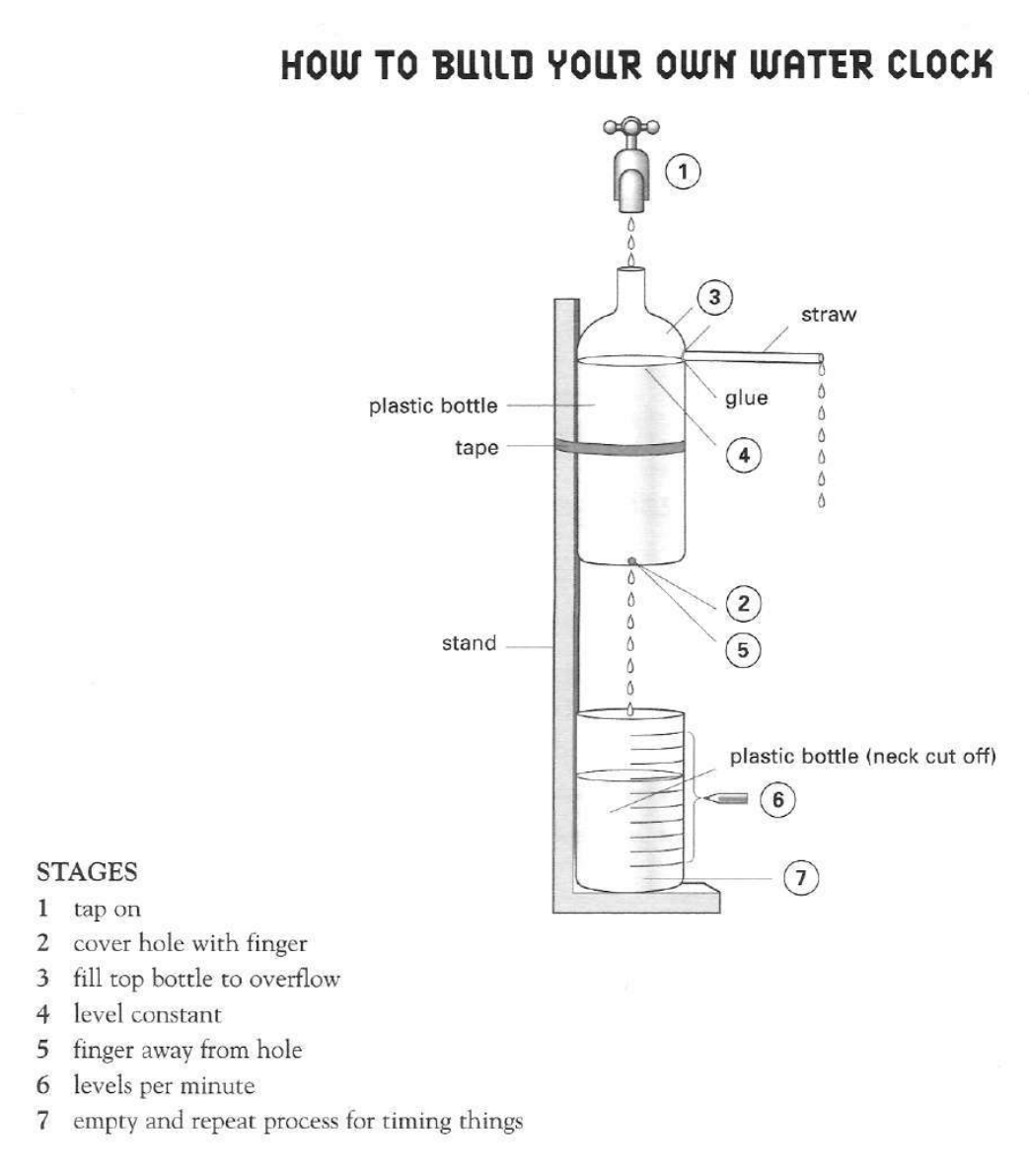
The diagram below shows the process for making a water clock.
Write a report for a university lecturer describing the information below.
HOW TO BUILD YOUR OWN WATER CLOCK
Student answer (Band 5.0)
Tthe provided desing describe the steps for create water clock.
Overall, by carefully obesderving the diagrame that, there are multiple changes took given diagram. It involve multiple steps, It around 7.
Firstley, It importante to water supply this were first step for building water clock.Take plastic bottle, tape, straw, one standand and plastic bottle with cut off to neck. Furthermore, Second steps were cover the hall with finger due to not flow extra water. On 3rd step place one water battle and filled with water till bottle was overflow. Further more, 4th step was maintain the level of water, It should be not more or less water to create water clock.
On the other hand, 5th steps was take finger away from the hall to flow water. On 6th step set the levels of water per minutues, It should be maintained. And reached to the last step was plastic bottle empty and repear process for timing thins. Here we created water tank.
AI examiner evaluation
| Criterion | Band |
|---|---|
| Task Achievement / Task Response | 5.5 |
| Coherence and Cohesion | 5.5 |
| Lexical Resource | 4.5 |
| Grammatical Range and Accuracy | 4.5 |
| Overall | 5.0 |
Task Achievement / Task Response: Band 5.5
The response identifies the diagram as a process for making a water clock and follows the seven numbered stages in broadly correct order, including covering the hole, filling the upper bottle, removing the finger, marking levels per minute, and repeating the process. This gives the reader a relevant outline of the procedure. However, some important construction details are missing or unclear: the upper bottle is attached to a stand, the straw acts as an overflow drain, and water drips into the lower bottle, where calibration marks are made. The overview that there are “multiple changes” is vague and does not summarise how the apparatus works. Some stage explanations, such as keeping the water level constant, are also imprecise. Include a clearer overview and describe the equipment’s arrangement and function more accurately.
Coherence and Cohesion: Band 5.5
The response has a basic paragraph structure: an introduction and overview, followed by the earlier and later stages. The numbered sequence and transitions such as “Firstley,” “On the other hand,” and “On 6th step” help signal movement through the process. However, progression is not consistently smooth. The overview repeats that there are multiple steps without explaining the process, and some transitions are inaccurate or mechanical; “On the other hand” suggests a contrast that is not present. Several sentences run together or contain unclear references, as in “It importante to water supply this were first step.” Group the equipment description and stages more clearly, use transitions that express sequence, and make each sentence’s subject explicit.
Lexical Resource: Band 4.5
The response uses some task-related vocabulary, including “plastic bottle,” “stand,” “straw,” “overflow,” and “levels,” so the basic subject is recognisable. However, the range is limited and several word choices or forms make the meaning difficult to follow. For example, “water battle” appears to mean “water bottle,” “water tank” is not an accurate name for the finished device, and “multiple changes” does not describe a sequence of construction stages precisely. Spelling errors such as “desing,” “diagrame,” “obesderving,” and “repear” are also noticeable. Build a more accurate process vocabulary and check spelling; useful terms include “assemble,” “attach,” “drip,” “container,” and “calibration marks.”
Grammatical Range and Accuracy: Band 4.5
The response attempts both simple statements and some longer constructions, and the numbered stages provide a basic framework for describing actions. However, grammatical control is weak: errors in sentence formation, verb forms, articles, agreement, and punctuation occur frequently and sometimes obscure meaning. Examples include “The provided desing describe,” “steps for create,” and “On 3rd step place one water battle and filled with water.” The sentence “It around 7” is also incomplete, while several clauses are joined without clear punctuation. Practise forming complete sentences with a clear subject and verb, and use consistent passive or imperative forms for process descriptions—for example, “The upper bottle is filled until the water overflows.”
See this exact question answered at other band scores. The same prompt compared across bands.
Browse more IELTS Writing model answers or get your own writing scored by the same AI examiner.