Band 4.5 IELTS Writing Task 1 Model Answer
Overall Band Score: 4.5 · IELTS Complete Catalyst · 2026-11-11
IELTS Writing Task 1 question
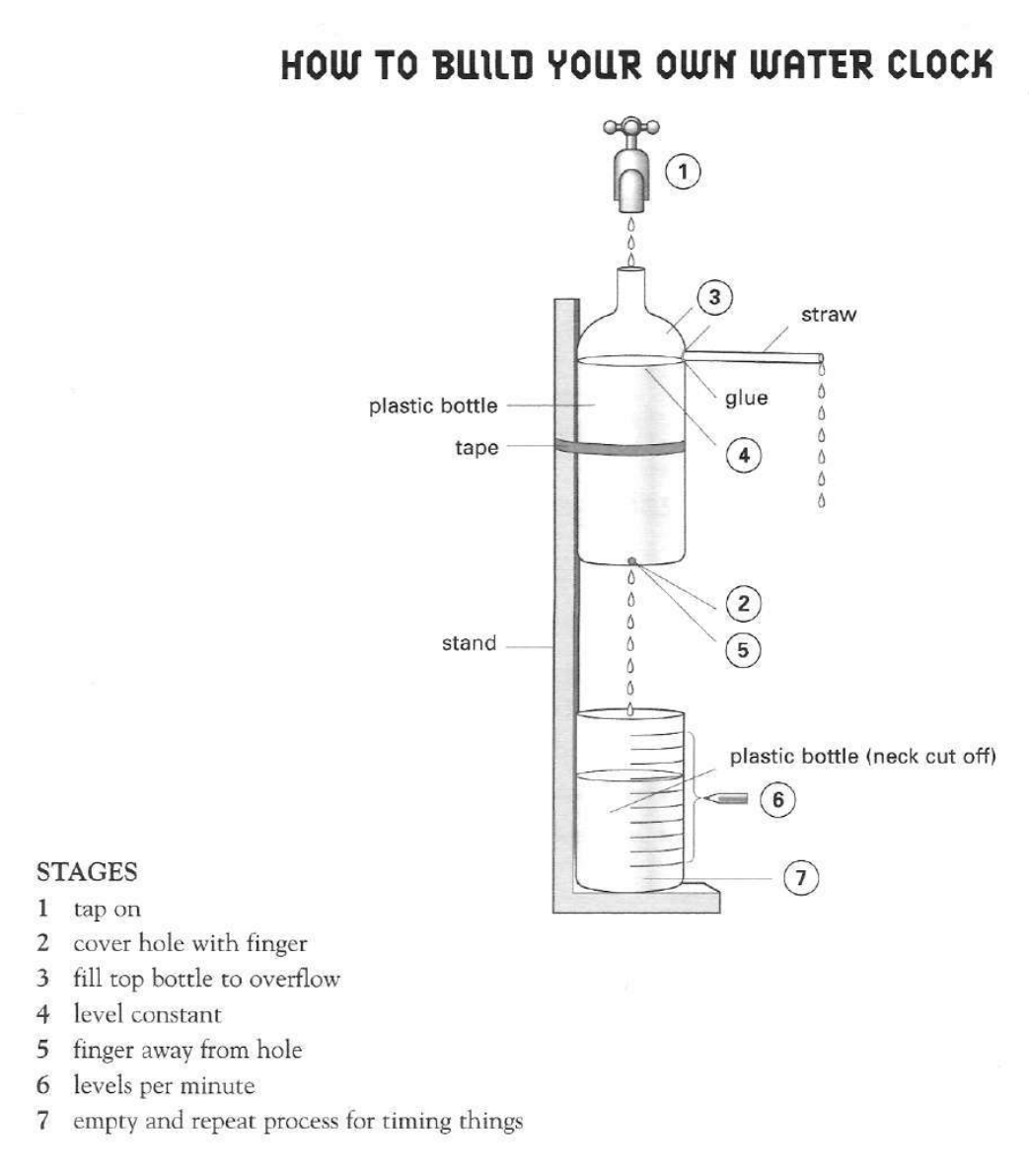
The diagram below shows the process for making a water clock.
Write a report for a university lecturer describing the information below.
HOW TO BUILD YOUR OWN WATER CLOCK
Student answer (Band 4.5)
The diagram illustrates how to making a water clock .Overall, It is clear that the diagram consists of seven different stages and a number of different tools and infrastructures from tap on and empty and repeat process for timing things.
At the first stage of the process is tap on the plastic bottle against the stick .After that a has fulled by water at the bottom of the water has glue. then it falls little by little into the another plastic bottles. After cover hole with finger. then level constant. In the next step is finger away from hole , and levels per minutes and also empty and repeat process for timing things. All kind of process are to prepare a water clock. This have a many kind of process . Many process are very difficult but every day people make this and they always try their best for make it.
AI examiner evaluation
| Criterion | Band |
|---|---|
| Task Achievement / Task Response | 4.5 |
| Coherence and Cohesion | 4.5 |
| Lexical Resource | 4.5 |
| Grammatical Range and Accuracy | 4.5 |
| Overall | 4.5 |
Task Achievement / Task Response: Band 4.5
You identify that the diagram has seven stages and mention several relevant actions, including covering the hole, allowing water to flow, and repeating the process for timing. However, the account only minimally describes how the apparatus is built and how the stages work. Important details are missing or unclear: for example, the upper bottle is fixed to a stand, a straw provides an overflow outlet, and the lower bottle is used to mark water levels. The sequence is also confused: you place covering the hole after filling, whereas the diagram shows it happens before the upper bottle is filled to overflow. The comments about people trying their best are not supported by the diagram. Focus on accurately describing the equipment and ordered stages.
Coherence and Cohesion: Band 4.5
There is a basic attempt to organise the report around an overview and a description of the process, and phrases such as “At the first stage” and “After that” signal sequence. However, the progression is difficult to follow because the stages are not presented in the diagram’s order, and several short fragments interrupt the account: “After cover hole with finger. then level constant.” Connections between the apparatus and the process are also unclear. The final sentences about people making the clock do not develop the description and weaken the ending. Group the construction details together, then describe the numbered stages in order, using clear links such as “Once the bottle is full” and “Finally.”
Lexical Resource: Band 4.5
The response uses a small set of task-related words, including “plastic bottle,” “tap,” “hole,” and “levels,” so the reader can recognise the general subject. However, vocabulary is basic and often imprecise or incorrectly combined, which strains understanding. For instance, “infrastructures” does not describe the clock’s components, and “a has fulled by water at the bottom of the water has glue” makes the equipment and actions hard to identify. Repetition of “process” and “many kind” also limits the description. Use precise terms for the parts and actions shown, such as “stand,” “overflow straw,” “attach,” and “water level,” and avoid adding vague comments unrelated to the diagram.
Grammatical Range and Accuracy: Band 4.5
You attempt an overview and some sequencing clauses, but the range of sentence structures is very limited and frequent errors often obscure the intended meaning. Examples include “how to making,” “At the first stage of the process is tap on,” and “This have a many kind of process.” Verb forms, articles, agreement, and sentence construction are repeatedly inaccurate. Several fragments, including “After cover hole with finger,” are not complete sentences, while punctuation and spacing are inconsistent. Build clear sentences with a subject and verb, for example, “First, the tap is turned on” and “The upper bottle is filled until water flows out of the straw.” Practising passive forms would be especially useful for describing this process.
See this exact question answered at other band scores. The same prompt compared across bands.
Browse more IELTS Writing model answers or get your own writing scored by the same AI examiner.