Band 5.0 IELTS Writing Task 1 Model Answer
Overall Band Score: 5.0 · IELTS Complete Catalyst · 2026-11-11
IELTS Writing Task 1 question
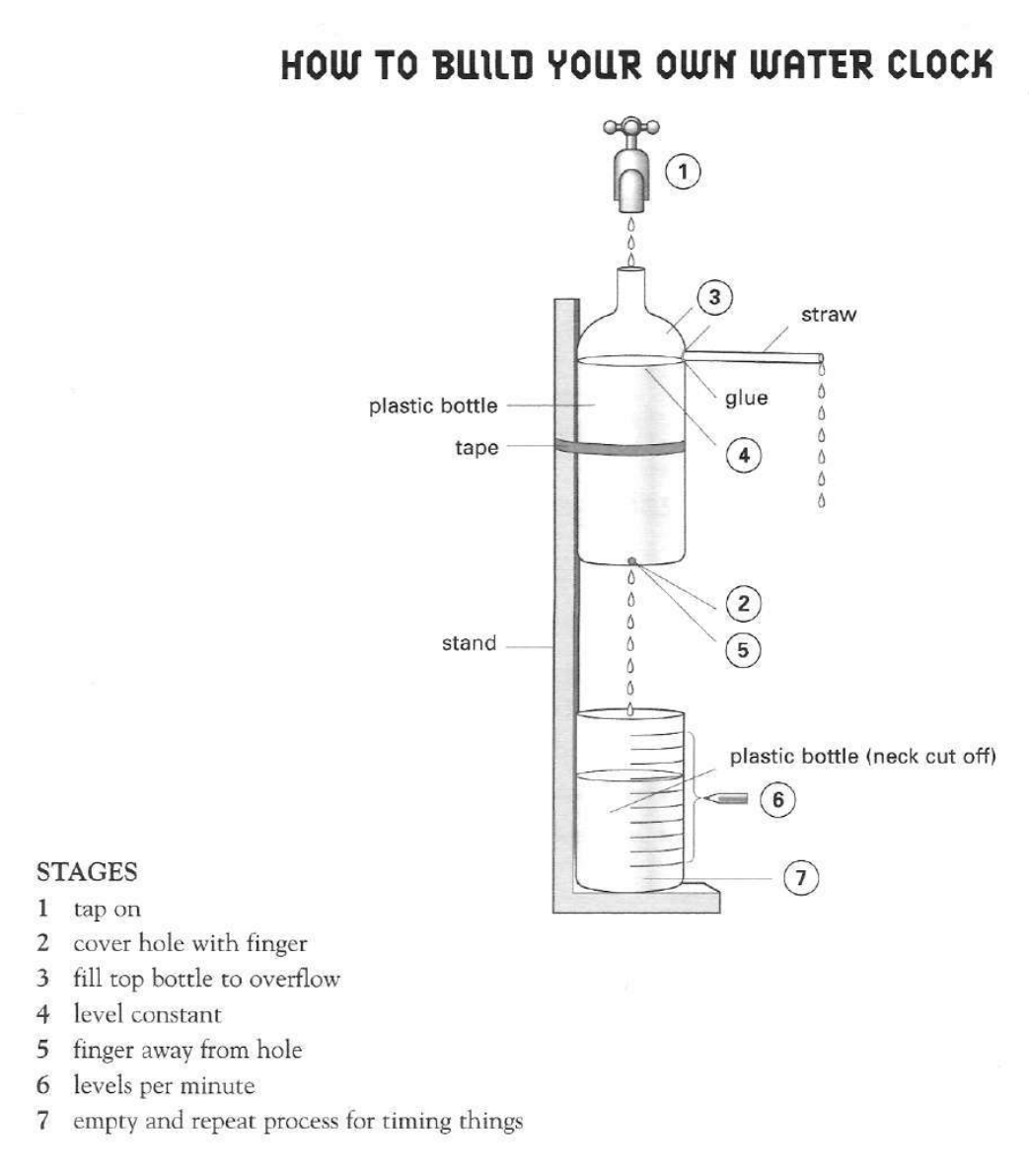
The diagram below shows the process for making a water clock.
Write a report for a university lecturer describing the information below.
HOW TO BUILD YOUR OWN WATER CLOCK
Student answer (Band 5.0)
The diagram represents the process for making a water clock divided into seven stages use of plasitc bottle.
Overall, there are total seven stages, starting from the fill the water into bottle and make the hole on bottom side. After that attach one straw on right top corner to remove unwanter water in bottle. The level assume the per minute as clock time.
According to the given data, attach the bottle with stand using tape and put the another empty pastic bottle below the bottle. After that make the hole at bottom side to remove water. In addition, attach one straw on top of right corner to removing extra water from the bottle.
Fit the straw using glue and put the finger on bottom hole after start the filling water into bottle. In contrast, Fill the water to top and wait for the removing water by straw. After that remove the finger from the hole also water falling into plastic bottle process start. The process become empty after repeat whole process for timing things.
AI examiner evaluation
| Criterion | Band |
|---|---|
| Task Achievement / Task Response | 5.5 |
| Coherence and Cohesion | 4.5 |
| Lexical Resource | 5.0 |
| Grammatical Range and Accuracy | 5.0 |
| Overall | 5.0 |
Task Achievement / Task Response: Band 5.5
You identify the diagram as a seven-stage process and include several relevant components, such as the stand, tape, straw, two bottles and the final repeated use for timing. However, the account only partly describes the sequence accurately. The stages begin by turning on the tap, covering the hole, and filling the upper bottle until water overflows; your overview instead says filling comes first and that a hole is made, although the diagram presents the hole as part of the apparatus. You also omit the constant water level and the calibration marks that show levels per minute. To strengthen the report, give a clear overview of how water flows through the apparatus and describe the numbered stages in their correct order.
Coherence and Cohesion: Band 4.5
The response has an introduction, an overview and two body paragraphs, and it uses sequencing expressions such as “After that” and “In addition.” These features provide some organisation, but the progression is difficult to follow because the construction details and operating stages are repeated and mixed together. For example, the straw and stand are described in more than one paragraph, while the sequence of covering the hole, filling the bottle and releasing the water is not presented consistently. Some linking phrases are also unsuitable: “In contrast” does not express a contrast here. Organise the report into construction and operation, then use a small number of accurate sequence markers to guide the reader through each stage.
Lexical Resource: Band 5.0
You use some task-related vocabulary, including “stand,” “tape,” “straw,” “hole” and “timing,” so the reader can recognise the general subject. However, the range is limited and several word choices or collocations make the description unclear, such as “the level assume the per minute,” “unwanter water” and “water falling into plastic bottle process start.” Spelling errors such as “plas itc” (written as “plas itc” in the response’s misspelled forms “plas itc”/“pastic”) and “unwanter” also reduce precision. Aim for accurate process vocabulary and natural combinations, for example “water overflows,” “water drips into the lower bottle” and “mark the water level.” Proofreading spelling and word forms would make your meaning easier to understand.
Grammatical Range and Accuracy: Band 5.0
You attempt both simple sentences and longer sequences, using forms such as “After that…” and “In addition…,” but control is inconsistent. Several sentences lack a complete or correctly formed clause: “Overall, there are total seven stages” needs an article, while “The level assume the per minute as clock time” has an unclear subject–verb structure. Infinitives and verb forms are also often inaccurate, as in “starting from the fill” and “to removing extra water.” Capitalisation is inconsistent in “Fill,” and some sentences join several actions without clear grammatical boundaries. Practise writing one complete sentence for each stage, checking articles, subject–verb agreement and verb patterns; then combine selected steps with accurate clauses such as “Once the hole is covered, fill the upper bottle.”
See this exact question answered at other band scores. The same prompt compared across bands.
Browse more IELTS Writing model answers or get your own writing scored by the same AI examiner.