Band 5.5 IELTS Writing Task 1 Model Answer
Overall Band Score: 5.5 · IELTS Complete Catalyst · 2026-11-12
IELTS Writing Task 1 question
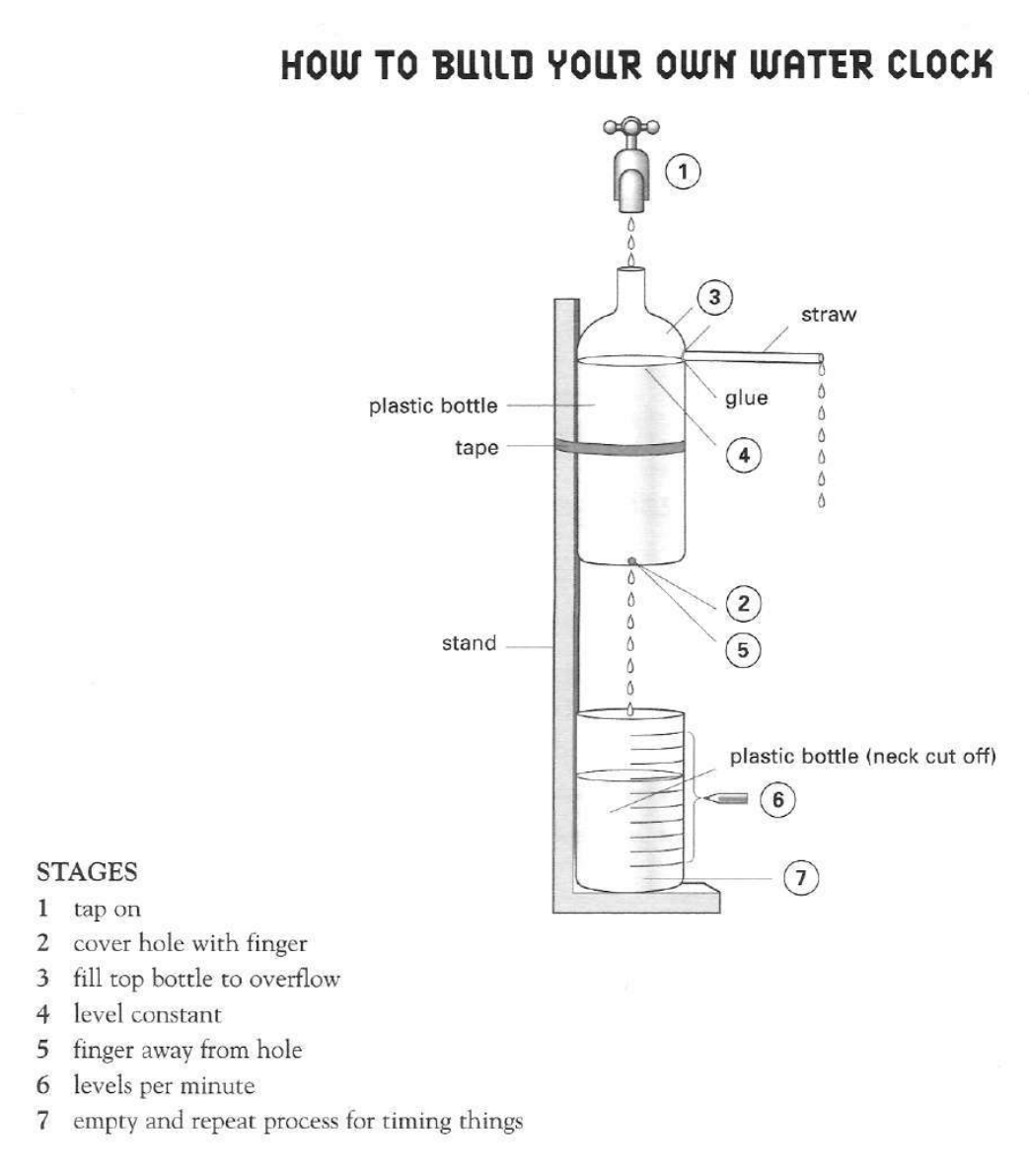
The diagram below shows the process for making a water clock.
Write a report for a university lecturer describing the information below.
HOW TO BUILD YOUR OWN WATER CLOCK
Student answer (Band 5.5)
The diagram explains the step by step procedure of the formation of water clock
Overall,the process is divided into 7 distinct steps which includes opening of tap water,covering the hole and repitition of same process several times to get the correct timings.
The process commences with the opening of tap water that fills the first plastic bottle attached with the tape on a stand.In the second step,cover the hole on the end of the bottle with your finger.Fill the bottle to the top till it overflows from the connected straw.Make sure the level of water inside the bottle remains constant.
Now remove the finger from the hole and count levels per minute while the water is dripping drop by drop into the second plastic bottle which is placed at the bottom of the stand(neck cut off) .When the first bottle becomes empty repeat the same process sometimes to obtain the accurate timings for certain things.
AI examiner evaluation
| Criterion | Band |
|---|---|
| Task Achievement / Task Response | 5.5 |
| Coherence and Cohesion | 6.0 |
| Lexical Resource | 5.5 |
| Grammatical Range and Accuracy | 5.5 |
| Overall | 5.5 |
Task Achievement / Task Response: Band 5.5
The report identifies the main sequence and includes several important stages: filling the upper bottle until it overflows, keeping the water level constant, releasing the hole, and using the lower bottle to observe levels per minute. The overview also recognises that the process has seven steps. However, some details are incomplete or unclear. For example, “repeat the same process sometimes” does not clearly convey the instruction to empty the bottle and repeat it for timing things, and the calibration of the lower bottle is not explained. The opening description also says the tap “fills the first plastic bottle” without clearly distinguishing the apparatus and its overflow straw. A more precise overview and fuller explanation of the final timing stage would make the account more complete.
Coherence and Cohesion: Band 6.0
The response follows the process in a generally logical order, moving from opening the tap through to repeating the procedure. The paragraph break between the overview and the detailed stages helps the reader distinguish the summary from the sequence. However, the stages are compressed into two long paragraphs, and transitions such as “In the second step” and “Now” do not consistently make the numbered progression explicit. The shift from instructions (“cover the hole”) to descriptions of what happens (“the water is dripping”) also makes the account less consistent. Organising the details into clearer stages and using linking phrases that show cause and sequence would improve progression and make references such as “the bottle” easier to follow.
Lexical Resource: Band 5.5
The response uses relevant process vocabulary, including “overflows,” “constant,” “dripping,” and “neck cut off,” so the main actions and equipment are usually understandable. However, some word choices and collocations are imprecise or unnatural: “formation of water clock” does not describe a construction process naturally, “opening of tap water” is unclear, and “correct timings” is less suitable than a reference to measuring time. There are also spelling errors, including “repitition,” which reduce accuracy. Aim for precise terms for the apparatus and stages, and check spelling carefully. For example, “construction of a water clock” and “turning on the tap” would express the opening more naturally.
Grammatical Range and Accuracy: Band 5.5
The response attempts both simple and more extended sentence forms, and the sequence can generally be understood. Some grammatical errors remain, particularly in articles, agreement, and sentence construction. In “the process is divided into 7 distinct steps which includes,” the plural subject requires “include”; “attached with the tape on a stand” also uses an awkward grammatical pattern. The instruction-like phrase “In the second step, cover the hole” shifts from the report’s descriptive style, while “When the first bottle becomes empty repeat” needs a comma after the introductory clause. Punctuation spacing is inconsistent, and the opening sentence lacks a full stop. More consistent use of passive or present-simple descriptions, with careful checking of articles and punctuation, would improve control.
See this exact question answered at other band scores. The same prompt compared across bands.
Browse more IELTS Writing model answers or get your own writing scored by the same AI examiner.