Band 4.5 IELTS Writing Task 1 Model Answer
Overall Band Score: 4.5 · IELTS Complete Catalyst · 2026-11-13
IELTS Writing Task 1 question
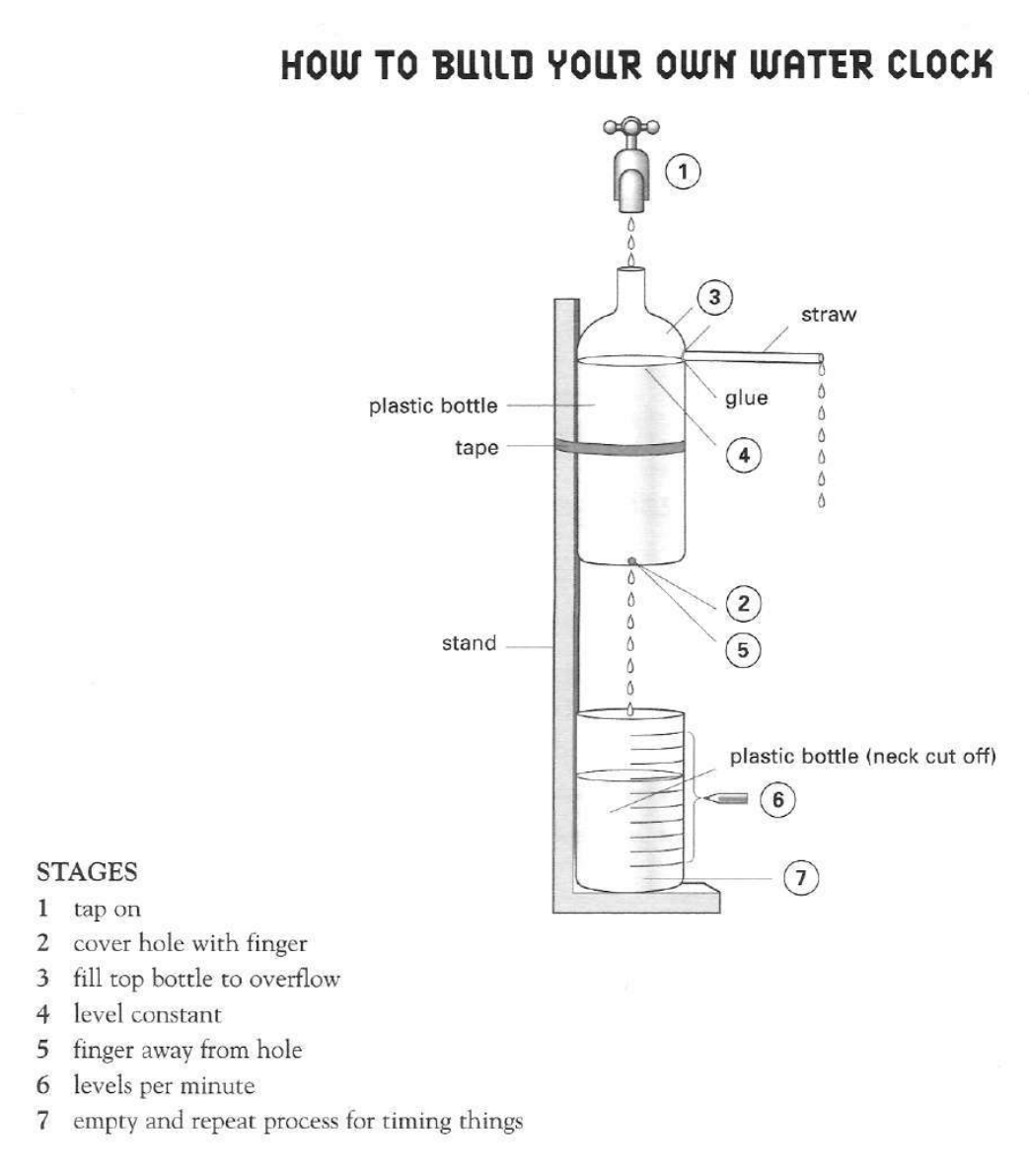
The diagram below shows the process for making a water clock.
Write a report for a university lecturer describing the information below.
HOW TO BUILD YOUR OWN WATER CLOCK
Student answer (Band 4.5)
The diagram illustrates seven sequenial stages for making an own water clock.
Overall, the process begins with a water tap and continues with some important instructions until getting the satisfied result. However, to continue all the process, two plastic bottles, a straw, tape and a stand are needed.
At the beginning, two plastic bottles have to be tied with stand with tape. for the tieing process, one bottle should place upper side of the stand and the another bottles should place just after the first bottle. Then maintaining the water flow by controling the tap and straw should attach with the primary bottles with glue to measure the water level.
There are a hole in the upper flow. When tap opens, the should be col
AI examiner evaluation
| Criterion | Band |
|---|---|
| Task Achievement / Task Response | 3.5 |
| Coherence and Cohesion | 4.5 |
| Lexical Resource | 5.0 |
| Grammatical Range and Accuracy | 5.0 |
| Overall | 4.5 |
Task Achievement / Task Response: Band 3.5
The response identifies the diagram as a process and mentions several relevant materials, including bottles, a stand, tape, a straw and glue. However, it does not adequately describe the stages shown: the instructions to cover the hole, fill the upper bottle until water overflows, remove the finger, mark levels per minute, and empty and repeat are missing or left unfinished. The account also misstates the arrangement by saying the second bottle is placed “just after” the first, rather than describing the lower bottle beneath the upper one. The final sentence breaks off, so the process is not completed. In addition, the response is 25 words below the required minimum. To improve, give a clear overview and report the full sequence accurately, including how the clock is calibrated and used.
Coherence and Cohesion: Band 4.5
There is a basic attempt to organise the report, with an introduction, an overview and a paragraph beginning “At the beginning.” The use of sequence markers such as “Overall” and “At the beginning” gives the reader some sense of order. However, progression is difficult to follow because the description jumps between assembling the apparatus and operating it, and the stages are not presented in the diagram’s sequence. References such as “the first bottle” and “the primary bottles” are unclear, while the final sentence ends abruptly. The overview also promises instructions but does not lead into a complete account. Group the construction details first, then describe the operating stages in order, using clear references and complete paragraphs.
Lexical Resource: Band 5.0
The response uses some task-relevant vocabulary, including “water clock,” “water flow,” “water level,” “stand,” and “glue,” so the reader can identify the general subject. However, the range is limited, and several word choices or collocations are inaccurate or unclear, such as “getting the satisfied result,” “tied with stand,” and “just after the first bottle.” Spelling errors, including “sequenial,” “tieing,” and “controling,” also reduce accuracy. More precise process vocabulary would help distinguish the apparatus and its operation—for example, “attach,” “position beneath,” “overflow,” “drip,” and “calibration marks.” Aim to use standard collocations and check spelling, especially for key terms.
Grammatical Range and Accuracy: Band 5.0
The response attempts a few longer structures, including “However, to continue all the process…” and “When tap opens…,” but control is inconsistent and the range remains limited. Errors in sentence structure and agreement include “two plastic bottles have to be tied with stand,” “one bottle should place,” and “There are a hole.” Articles and verb forms are also frequently missing or incorrect, as in “When tap opens,” while the final clause is incomplete (“the should be col…”). Capitalisation after the full stop in “for the tieing process” is another punctuation issue. These errors sometimes make the intended relationships difficult to understand. Practise complete passive constructions and accurate articles, agreement and verb forms, then proofread each sentence for completeness.
See this exact question answered at other band scores. The same prompt compared across bands.
Browse more IELTS Writing model answers or get your own writing scored by the same AI examiner.