Band 5.0 IELTS Writing Task 1 Model Answer
Overall Band Score: 5.0 · IELTS Complete Catalyst · 2026-11-15
IELTS Writing Task 1 question
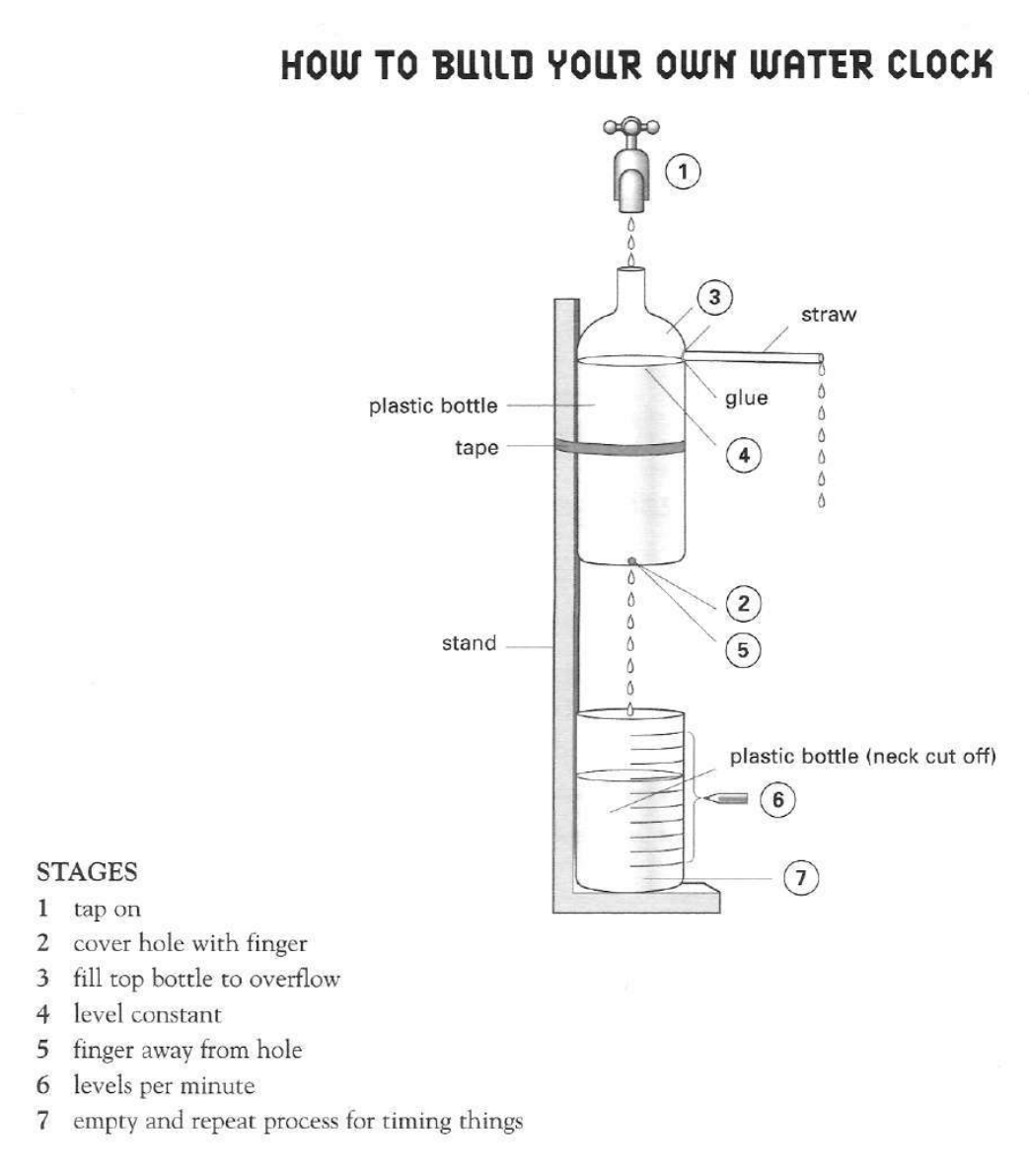
The diagram below shows the process for making a water clock.
Write a report for a university lecturer describing the information below.
HOW TO BUILD YOUR OWN WATER CLOCK
Student answer (Band 5.0)
The diagram illustrates that the process for manufacture a water clock.
Overall,it is evident from the diagram that how to build your own water clock.there are whole seven steps to contruct your own water cycle.
In detail,there are seven stages,the first step is open the tap afterthat,the water gradually down to the plastic bottle.Moreover,when the entire bottle are fullfilled by water then they have also a straw and its built through glue.The straw is used to excludes the excessive amount of water.there is a small hole in the end of bottle which the water move down to the another neck cut off.The neck cut off have a line on the surface of bottle which demonstrates the ratio of water.this overall cycle is adjusted through a stand and also with tape.
AI examiner evaluation
| Criterion | Band |
|---|---|
| Task Achievement / Task Response | 5.0 |
| Coherence and Cohesion | 5.5 |
| Lexical Resource | 5.0 |
| Grammatical Range and Accuracy | 5.0 |
| Overall | 5.0 |
Task Achievement / Task Response: Band 5.0
The response identifies the process as making a water clock and mentions several relevant components, including the tap, straw, glue, hole, lower bottle, markings and stand. However, it only partially describes the sequence: it omits key stages such as covering the hole while filling the upper bottle to the overflow level, keeping the water level constant, removing the finger, and emptying and repeating the process to time events. Some details are also inaccurate or unclear, such as saying the straw is added when the bottle is full. The overview mainly repeats that there are seven stages rather than summarising how the apparatus works. The response is 20 words below the required minimum; develop the stages more fully to meet the task requirements.
Coherence and Cohesion: Band 5.5
There is a basic attempt to organise the report, with an opening, an overview and a paragraph beginning “In detail”. The reader can also follow a rough movement from the tap and upper bottle to the lower container. However, the progression is incomplete and sometimes difficult to follow because several stages are compressed into one long sequence. Linking expressions such as “Moreover” and “then” do not always show the actual relationship between steps, and the overview repeats the task rather than guiding the reader through the process. Punctuation and spacing also weaken the flow, for example “Overall,it” and “afterthat,the”. Use separate, clearly sequenced sentences for the preparation, water flow and timing stages, with accurate transitions.
Lexical Resource: Band 5.0
The response uses some relevant process vocabulary, including “straw”, “excessive amount of water”, “hole”, “surface” and “stand”, so the topic is generally recognisable. However, the range is limited and several word choices or forms are inaccurate, which makes parts of the description unclear. For example, “manufacture” is not the natural verb for describing this process, “water cycle” refers to a different concept, and “excludes” is an awkward choice for the straw’s function. “The ratio of water” does not clearly describe the calibration lines. Spelling errors such as “contruct” and “fullfilled” are also noticeable. Choose precise process terms such as “construct”, “overflow”, “water level” and “graduation marks” to describe the apparatus and its function.
Grammatical Range and Accuracy: Band 5.0
The response attempts a few longer structures, including “when the entire bottle are fullfilled by water” and “which the water move down”, but these are often faulty. Errors in verb forms and agreement occur frequently: “for manufacture” should use an appropriate infinitive or gerund, “there are whole seven steps” needs a different construction, and “the water move” requires subject–verb agreement. Articles and sentence boundaries are also problematic, as in “to the another neck cut off” and the run-on sequence after “afterthat”. The opening overview contains a sentence fragment-like construction: “it is evident from the diagram that how to build…”. Use mostly clear, complete sentences, check singular and plural agreement, and punctuate each stage separately before attempting more complex clauses.
See this exact question answered at other band scores. The same prompt compared across bands.
Browse more IELTS Writing model answers or get your own writing scored by the same AI examiner.