Band 4.5 IELTS Writing Task 1 Model Answer
Overall Band Score: 4.5 · IELTS Complete Catalyst · 2026-11-18
IELTS Writing Task 1 question
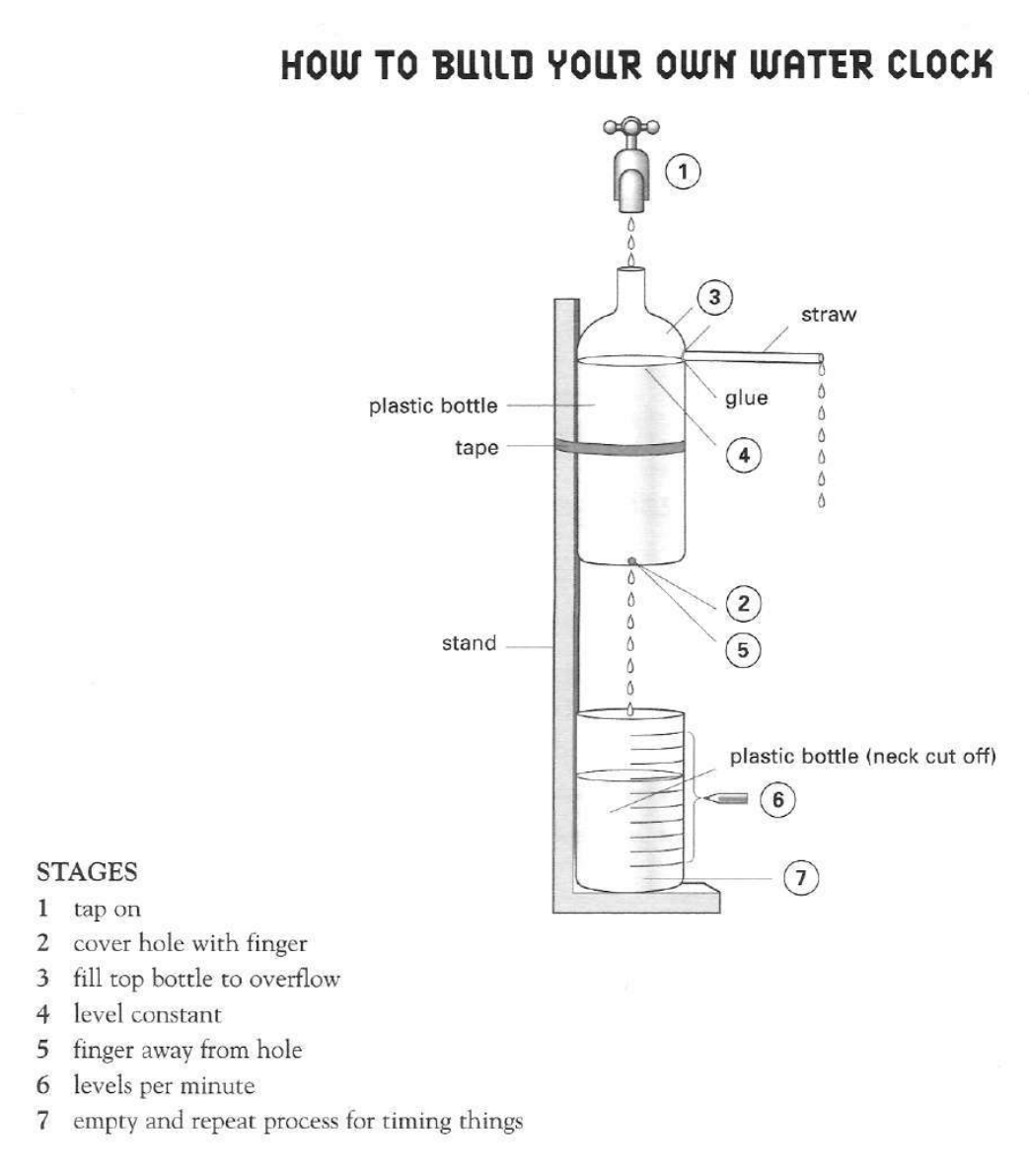
The diagram below shows the process for making a water clock.
Write a report for a university lecturer describing the information below.
HOW TO BUILD YOUR OWN WATER CLOCK
Student answer (Band 4.5)
The diagram illustrate the process for making a water clock.
Overall it is clear that the process of making a water clock in 7 steps.
Fetiching into details in step 1 water tape into the bottle followed by tape water cover in hole with finger in step 2 after that next thw water which cover in hole in last 2nd step it goes fill top bottle to overflow. and next when it come on the step 4 in step 4 it goes to level constant.
Considiring the remaining details and when its come on step 5 then the finger away from hole and next in step 6it drop in plastic bottle levels per minute. and in the last step 7 it is empty and repeat process for timing things. and it competely build a water clock.
AI examiner evaluation
| Criterion | Band |
|---|---|
| Task Achievement / Task Response | 4.5 |
| Coherence and Cohesion | 5.0 |
| Lexical Resource | 4.5 |
| Grammatical Range and Accuracy | 4.5 |
| Overall | 4.5 |
Task Achievement / Task Response: Band 4.5
You identify the subject and give a basic overview that the clock is made in seven steps, then mention the sequence from turning on the tap to repeating the process. However, the description is incomplete and some stages are difficult to interpret: “water tape into the bottle” does not clearly report turning on the tap, and the explanation of filling the upper bottle to overflow is confused. Important construction details, such as the two bottles, the straw, and how the lower bottle is marked, are omitted. The final claim that the clock is “completely build” is not a clear description of the diagram. The response is also 14 words below the required minimum. Add accurate details about the apparatus and explain the stages more fully.
Coherence and Cohesion: Band 5.0
There is a basic attempt to organise the report in sequence: you introduce the diagram, provide an overview, and then refer to steps 1 through 7. This gives the reader a general sense of the process. However, the body is presented as two long, loosely connected sentences, and progression is weakened by repeated or inaccurate links such as “followed by,” “after that next,” and “and next.” The phrase “last 2nd step” also makes the order unclear. Use separate paragraphs for the overview and process, and describe each stage in a clear sequence with simple, accurate connectors such as “first,” “then,” and “finally.”
Lexical Resource: Band 4.5
Your vocabulary includes several relevant process terms, including “overflow,” “level constant,” “finger away from hole,” and “repeat process for timing things.” These show an attempt to use the diagram’s labels. However, the range is basic and repetitive, and frequent spelling and word-choice problems make parts hard to understand. For example, “Fetiching” and “Considiring” appear to be attempts at “focusing” and “considering,” while “water tape” does not express the intended action. Some phrases also need more natural wording, such as “it drop in plastic bottle.” Use precise terms for the equipment and actions, and check spelling before finishing. A wider set of accurate process verbs would make the report clearer.
Grammatical Range and Accuracy: Band 4.5
You attempt to connect stages in longer sentences, but grammatical control is weak and errors frequently obscure the intended meaning. For example, “The diagram illustrate” has incorrect subject–verb agreement, and “it is clear that the process … in 7 steps” is missing a verb such as “consists.” The sentence beginning “Fetiching into details” has an incomplete opening and several clauses joined without clear grammatical structure. In “when its come on the step 5,” the verb form and sentence pattern are faulty. Most sentences rely on simple present forms, with little accurate variety. Build shorter, complete sentences first, checking agreement, verb forms, articles, and punctuation; then add a few correctly formed clauses to show sequence.
See this exact question answered at other band scores. The same prompt compared across bands.
Browse more IELTS Writing model answers or get your own writing scored by the same AI examiner.