Band 4.5 IELTS Writing Task 1 Model Answer
Overall Band Score: 4.5 · IELTS Complete Catalyst · 2026-11-18
IELTS Writing Task 1 question
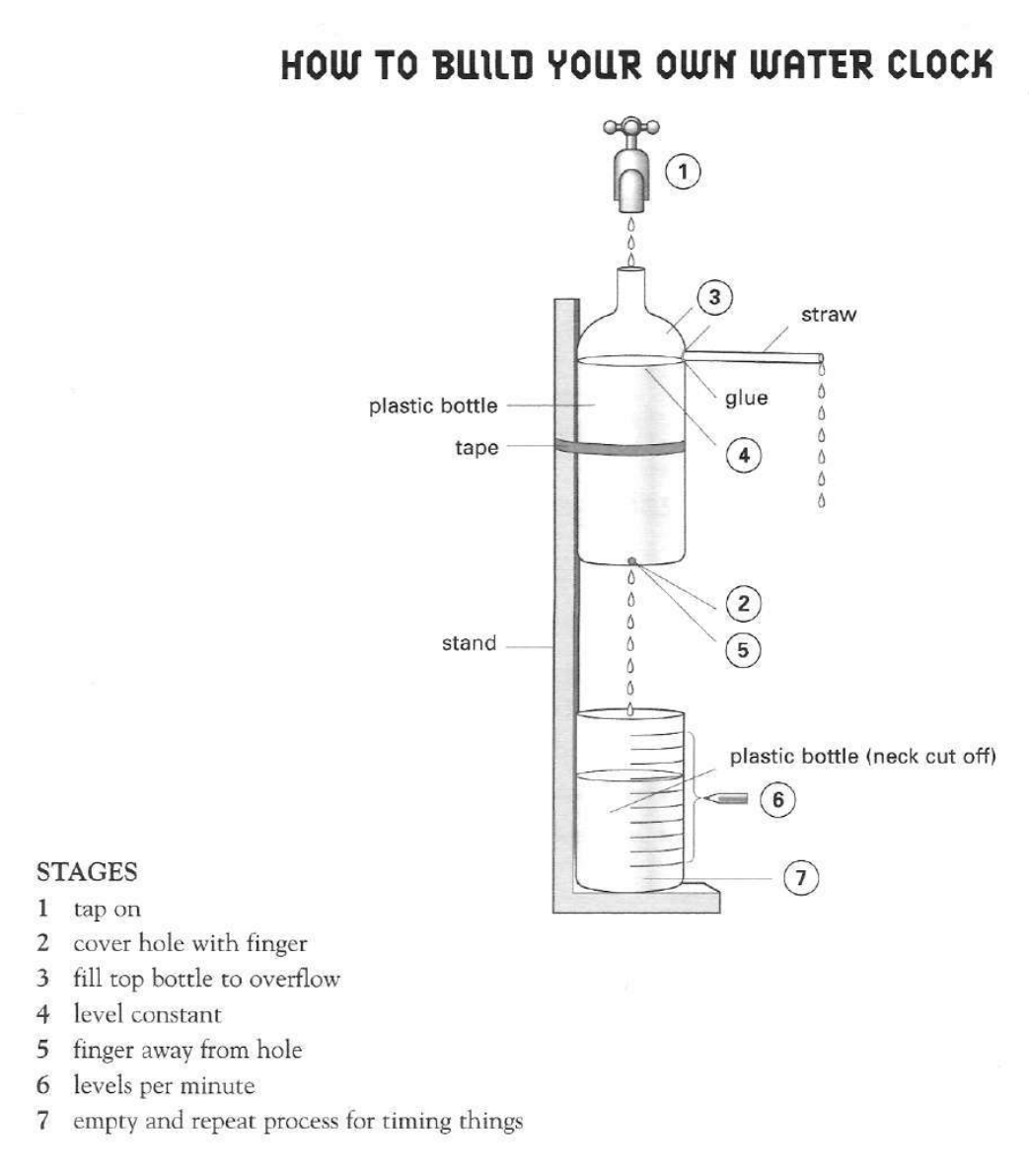
The diagram below shows the process for making a water clock.
Write a report for a university lecturer describing the information below.
HOW TO BUILD YOUR OWN WATER CLOCK
Student answer (Band 4.5)
The diagram shows the process making a water clock. How to make a build your personal water clock say that all the steps and process all point show that in diagram, all the process and view the all component step by step. How to adjust and view stages show.
Overall, how to make water clock point by point, first of all need one null for water and a plastic bottle, all step view 1 to 7 are all step include some components for making a water clock all main steps give and make a clock.
Firstly, needed a water null for water, next one plastic bottle and a straw, and one tape more component one glue, move the next stage hired one steel stand for grouping the all components. water bottle attached the stand with tape and straw attached the bottle with glue.
Secondly, one more needed plastic bottle cut out the head, other hand a pencil, first bottle leak the down side water fall on second bottle, with pencil marking on bottle.
AI examiner evaluation
| Criterion | Band |
|---|---|
| Task Achievement / Task Response | 4.0 |
| Coherence and Cohesion | 4.5 |
| Lexical Resource | 4.5 |
| Grammatical Range and Accuracy | 4.5 |
| Overall | 4.5 |
Task Achievement / Task Response: Band 4.0
The response recognises that the diagram presents a water-clock process and includes some relevant construction details: the upper bottle is attached to a stand with tape, a straw is fixed with glue, and water falls into a second bottle where marks are made. However, the report only minimally describes the process itself. It does not clearly explain the numbered stages, including turning on the tap, covering the hole, filling the upper bottle until water overflows, allowing the level to remain constant, then removing the finger and using the marks to measure time. The claim that a “water null” is needed is unclear, and the purpose of emptying and repeating the process is omitted. Focus on accurately describing the sequence and how the clock is used, rather than repeating general statements about the diagram.
Coherence and Cohesion: Band 4.5
There is a basic attempt to organise the response into an introduction, an overview, and two body paragraphs, and sequencing words such as “Firstly” and “Secondly” help signal order. However, progression is difficult to follow because the opening repeats the same general idea several times (“all the steps and process” and “all main steps”), while the body shifts between materials, assembly, and operation without a clear sequence. Some links are also unclear, as in “other hand a pencil” and “first bottle leak the down side.” Group the construction details together, then describe the numbered operating stages in order, using clear references such as “the upper bottle” and “the lower container.”
Lexical Resource: Band 4.5
The response uses a small set of relevant words, including “plastic bottle,” “straw,” “tape,” “glue,” “stand,” and “pencil,” so the reader can identify several components. However, vocabulary is basic and repetitive, and some inaccurate or unclear expressions make the description hard to understand. “Water null” does not communicate the intended item, while “grouping the all components” and “bottle leak the down side” are not natural descriptions of assembly or water flow. Use precise process vocabulary and avoid repeating broad phrases such as “all the steps.” Terms such as “attach,” “overflow,” “drip,” “mark,” and “measure” would help explain both how the apparatus is built and how it functions.
Grammatical Range and Accuracy: Band 4.5
The response attempts a few longer sentences and uses basic sequencing clauses, but sentence structures are generally incomplete or difficult to interpret. For example, “The diagram shows the process making a water clock” lacks a grammatical link between “process” and “making,” and “water bottle attached the stand with tape” has no clear subject–verb structure. Articles and verb forms are also often missing or inaccurate, as in “first bottle leak the down side water fall on second bottle.” These errors frequently obscure relationships between the parts and actions. Build clear simple sentences first, with a subject and verb—for example, “The upper bottle is attached to the stand with tape”—then add accurate sequencing clauses such as “After the bottle is filled, water drips into the lower container.”
See this exact question answered at other band scores. The same prompt compared across bands.
Browse more IELTS Writing model answers or get your own writing scored by the same AI examiner.