Band 4.5 IELTS Writing Task 1 Model Answer
Overall Band Score: 4.5 · IELTS Complete Catalyst · 2026-11-18
IELTS Writing Task 1 question
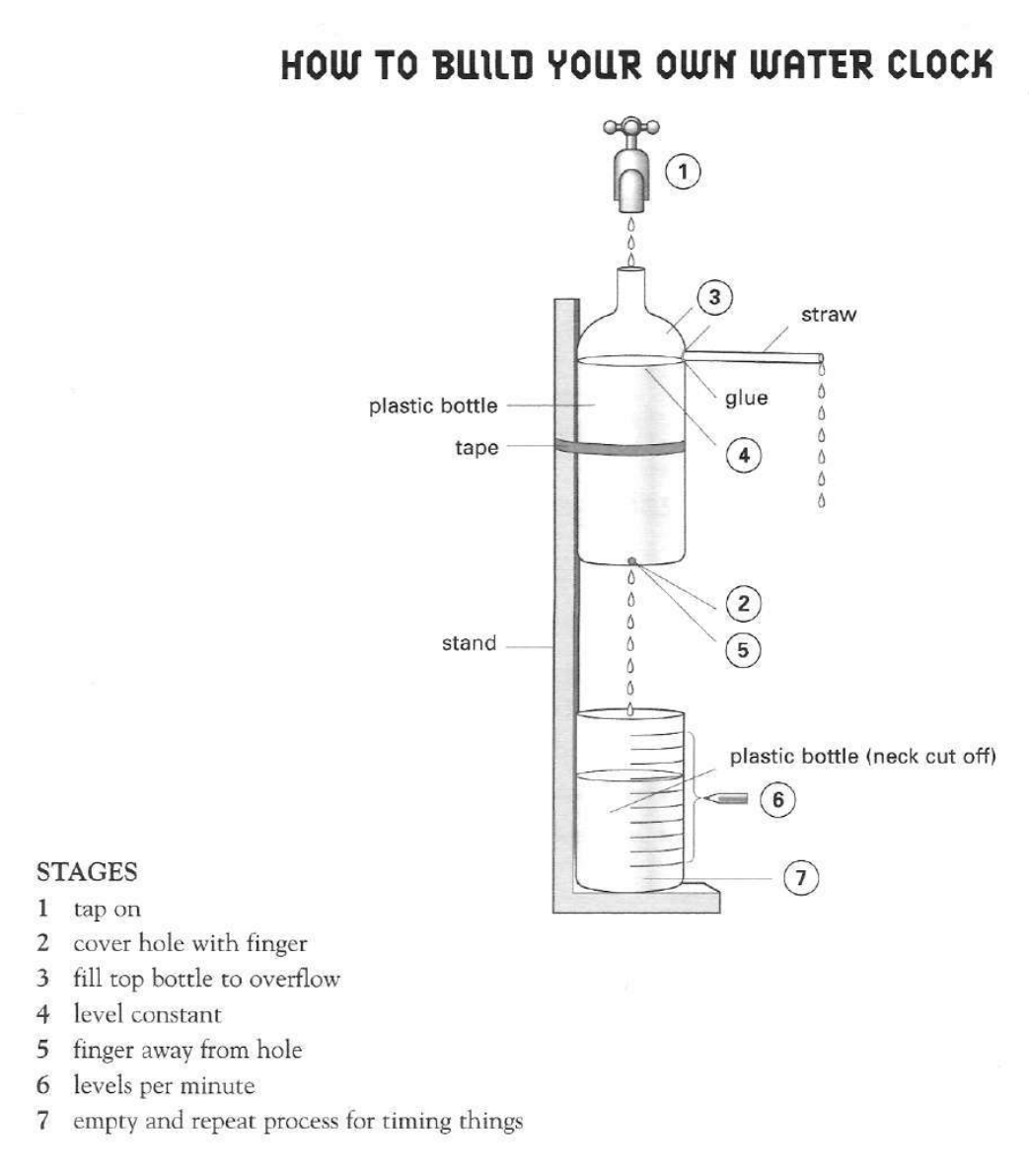
The diagram below shows the process for making a water clock.
Write a report for a university lecturer describing the information below.
HOW TO BUILD YOUR OWN WATER CLOCK
Student answer (Band 4.5)
The diagram illustrates the process of building a water clock on your own. It explains all the details you need to know to make a water clock by yourself.
It consists of 7 stages of building a water clock, the stage one is to open the tap which is given on the top, then put a finger as a cover to stop the water flow so that the first bottle can fill up and the level becomes constant than remove the finger and let it overflow into to the next bottle bellow,
AI examiner evaluation
| Criterion | Band |
|---|---|
| Task Achievement / Task Response | 4.0 |
| Coherence and Cohesion | 4.5 |
| Lexical Resource | 5.0 |
| Grammatical Range and Accuracy | 5.0 |
| Overall | 4.5 |
Task Achievement / Task Response: Band 4.0
You identify the subject and mention several early stages, including turning on the tap, covering the hole, filling the upper bottle and removing the finger. However, the report is incomplete and addresses the diagram only minimally: it stops before explaining the water’s flow into the lower bottle, the calibration marks, or the final instruction to empty and repeat the process for timing. It also gives no clear overview of how the apparatus works, and the description of the water overflowing into the next bottle is not quite accurate: the straw drains excess water, while water drips through the hole at the base. The response is also below the required 150 words. To improve, describe the equipment and complete all seven stages, including the clock’s use.
Coherence and Cohesion: Band 4.5
The response has a basic sequence, moving from the tap to filling the upper bottle and then removing the finger, so the reader can follow part of the process. However, the ideas are not developed into a complete, clearly organised report. The second paragraph is one long sentence joined mainly by “then,” and it ends abruptly, leaving the later stages unexplained. The opening repeats the idea of making a water clock without providing a useful overview. Use separate paragraphs for the apparatus and the stages, and connect each step with clear sequencing language such as “Once the water reaches the straw…” and “Finally…”. This would create a more coherent progression and make the relationships between steps easier to follow.
Lexical Resource: Band 5.0
You use some relevant vocabulary, including “stages,” “tap,” “water flow,” “finger,” and “bottle,” and the general topic is understandable. However, the range is limited and several expressions are imprecise or repetitive, such as “building a water clock on your own” and “by yourself.” “Put a finger as a cover” is an awkward description of blocking the hole, while “overflow into to the next bottle” does not distinguish the straw’s overflow function from the water dripping through the base. More precise process vocabulary would help you describe the equipment and its operation accurately. Aim to use terms such as “secure,” “calibrate,” “drip,” and “container” where appropriate, and avoid repeating the same idea in the introduction.
Grammatical Range and Accuracy: Band 5.0
The response attempts a longer sentence to connect several stages, but the range of sentence structures is limited and the extended sentence is difficult to control. For example, “the stage one is to open the tap … then put a finger … so that … than remove the finger” contains a faulty construction and unclear links between clauses. The final sentence also ends without completing the description. There are errors in articles and sentence formation, as in “the stage one,” and punctuation is insufficient where the sequence should be divided into separate steps. Practise writing clear simple sentences first, then combine them with accurate time clauses such as “After the hole is covered, the upper bottle is filled.” Check each sentence for a complete main clause and appropriate punctuation.
See this exact question answered at other band scores. The same prompt compared across bands.
Browse more IELTS Writing model answers or get your own writing scored by the same AI examiner.