Band 5.0 IELTS Writing Task 1 Model Answer
Overall Band Score: 5.0 · IELTS Complete Catalyst · 2026-11-20
IELTS Writing Task 1 question
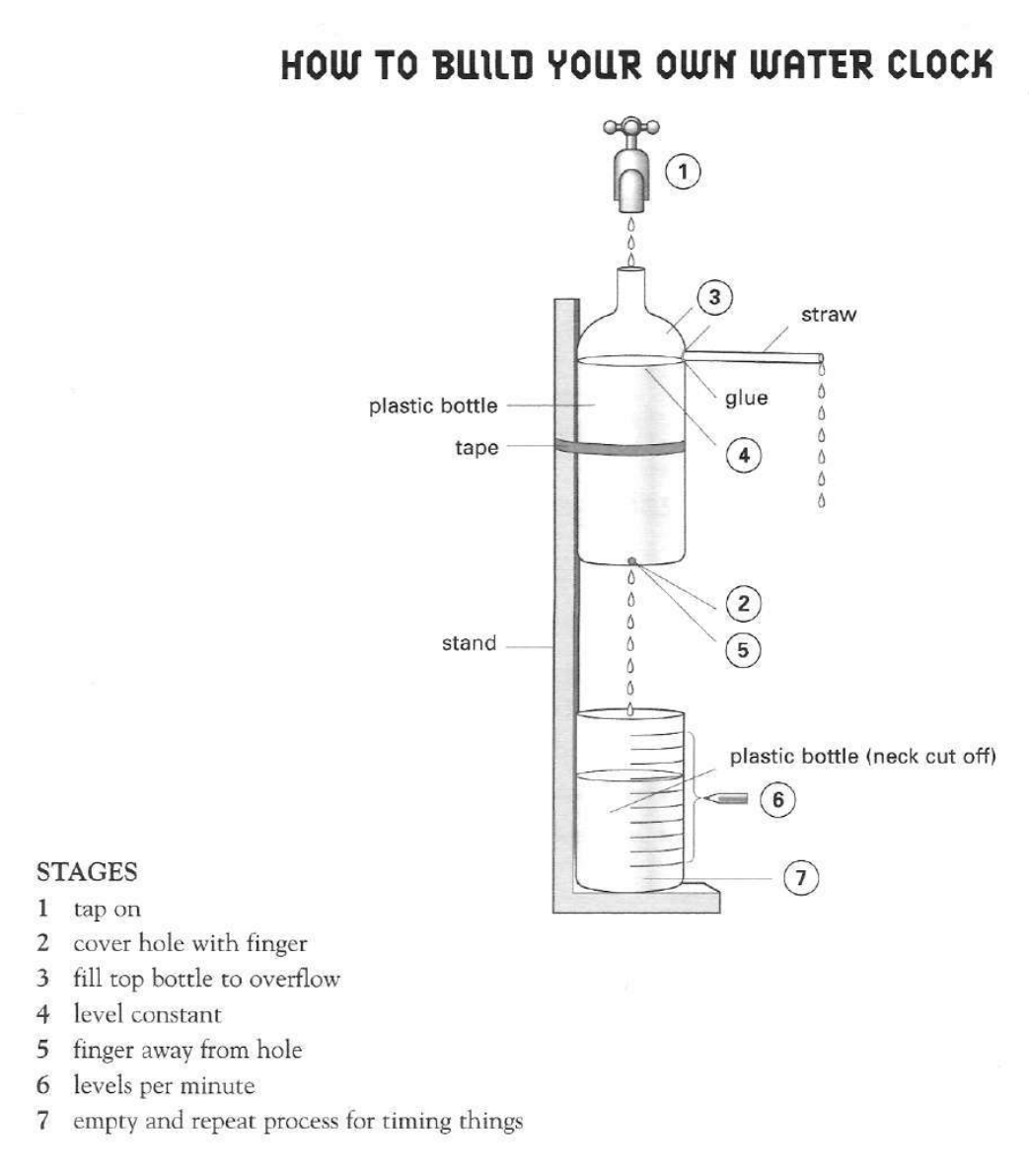
The diagram below shows the process for making a water clock.
Write a report for a university lecturer describing the information below.
HOW TO BUILD YOUR OWN WATER CLOCK
Student answer (Band 5.0)
in this diagram , i will demostrate that how to make water clock. first you can see the tap on the top , when i on it it will start to flow, and water will pass from the mini hole. if we cover hole with finger, thn water get stops and water level will flow according to instructions and water level will be uniform.but if we remove finger water will overflow for this their is alarm if water level at per minute get continue to flow then it will go in plastic beaker after that , i have set down the alar connections in that bottle so when water overfolws then this bottle indicates the information to the alarm then it will start to rang. through this whole process we can easily be active when water flows and fro this process we can save our water from more wasting it.
AI examiner evaluation
| Criterion | Band |
|---|---|
| Task Achievement / Task Response | 4.5 |
| Coherence and Cohesion | 4.5 |
| Lexical Resource | 5.0 |
| Grammatical Range and Accuracy | 5.0 |
| Overall | 5.0 |
Task Achievement / Task Response: Band 4.5
The response recognises that the diagram concerns making a water clock and mentions a tap, a hole, a finger, water levels and a lower container. However, it does not give a clear, accurate account of the illustrated stages. For example, the diagram shows the upper bottle being filled until water overflows through a straw, then the water level being kept constant before the finger is removed; these steps are confused or omitted. The claims about an alarm, alarm connections and saving water are not shown in the diagram and take the report away from describing the process. To improve, give a brief overview of the apparatus and explain the numbered stages in order, using only information supported by the visual.
Coherence and Cohesion: Band 4.5
There is a basic attempt to move through the process using sequence markers such as “first,” “after that” and “then.” This gives the reader some sense of order, but the response is presented as one long, loosely connected passage, and the sequence is difficult to follow because several stages are combined or described inaccurately. The repeated use of “and” and “then” creates mechanical links rather than clear progression. The shift to an alarm and water conservation also interrupts the explanation. Organise the report into a short introduction and a logically ordered description of the stages, with each sentence covering one or two related actions and clear references to the upper and lower bottles.
Lexical Resource: Band 5.0
The response uses a small set of relevant process words, including “tap,” “hole,” “water level” and “plastic beaker,” so the general subject is recognisable. However, vocabulary is limited and several choices are inaccurate or unclear: “plastic beaker” does not match the labelled lower plastic bottle, while “alarm connections” and “water will overflow” do not describe the apparatus as shown. Spelling errors such as “demostrate,” “overfolws” and “rang” also make parts harder to understand. Build a more precise process vocabulary and check spelling; useful terms include “attach,” “overflow straw,” “container,” “mark” and “calibrate.”
Grammatical Range and Accuracy: Band 5.0
The response attempts some longer sentences with time and conditional clauses, for example, “if we cover hole with finger” and “when water overfolws then this bottle indicates…”. These attempts show some range, but many sentences are faulty or run together, and punctuation does not reliably separate ideas. There are problems with articles and verb forms, as in “cover hole” and “when i on it,” as well as inconsistent tense and agreement in “water level will flow.” Capitalisation is also inconsistent. Use simple present tense for a process description, such as “When the tap is turned on, water flows into the upper bottle,” and check each sentence for a complete, correctly punctuated structure.
See this exact question answered at other band scores. The same prompt compared across bands.
Browse more IELTS Writing model answers or get your own writing scored by the same AI examiner.