Band 5.0 IELTS Writing Task 1 Model Answer
Overall Band Score: 5.0 · IELTS Complete Catalyst · 2026-11-21
IELTS Writing Task 1 question
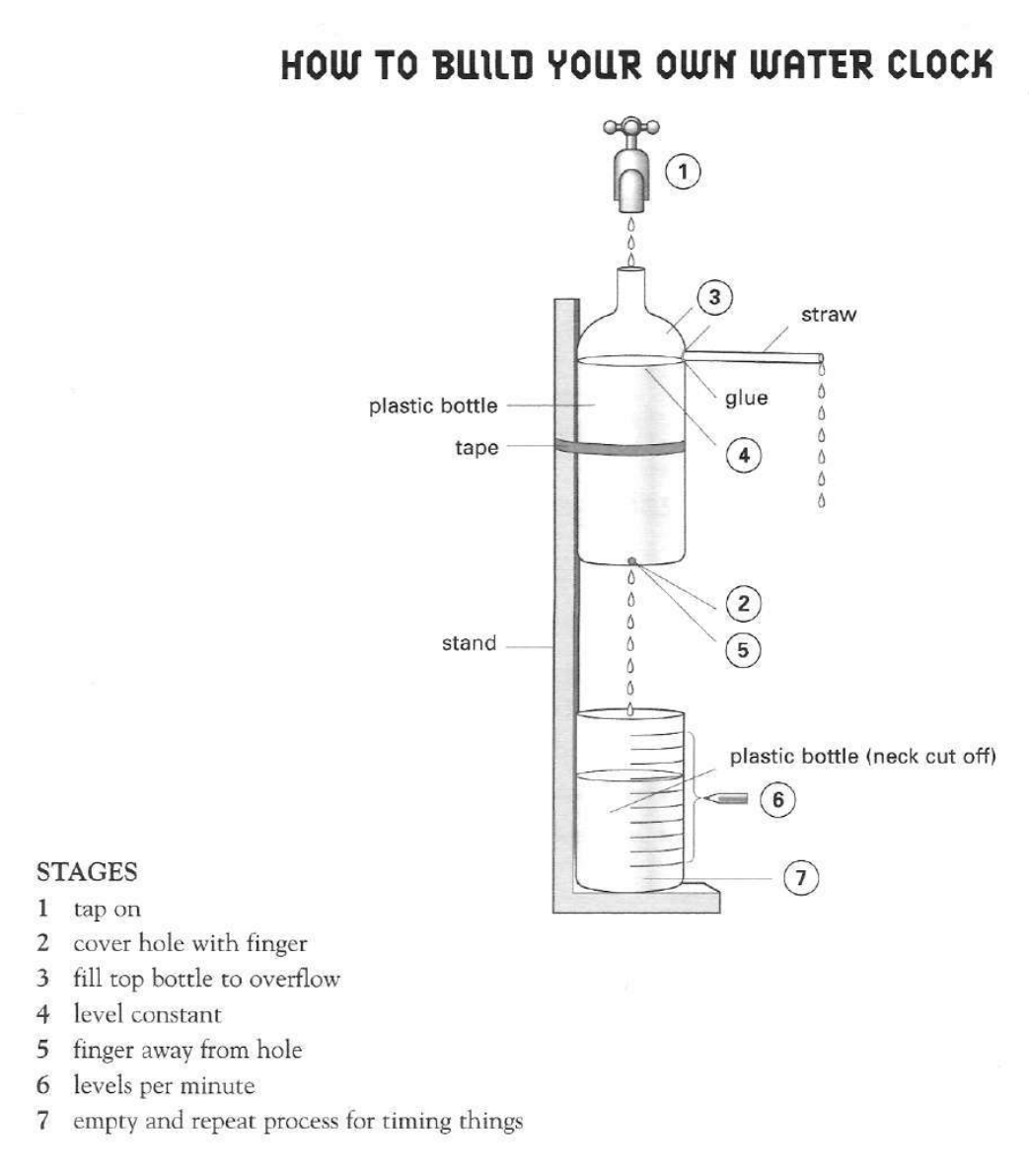
The diagram below shows the process for making a water clock.
Write a report for a university lecturer describing the information below.
HOW TO BUILD YOUR OWN WATER CLOCK
Student answer (Band 5.0)
The process diagram illustrates how to make a water clock.
Overall, it consists of seven stages, begins with tapping on, and ends with emptying, and repeats the process for trimming things. In between these, A hole is covered, and a bottle is filled to overflow.
In the initial stages, water is allowed to pour by tapping; after that, a hole in the bottle is covered by a finger, and following this, the bottle is filled to overflow. When the level is constant, the finger is removed from the hole
AI examiner evaluation
| Criterion | Band |
|---|---|
| Task Achievement / Task Response | 4.0 |
| Coherence and Cohesion | 5.5 |
| Lexical Resource | 5.5 |
| Grammatical Range and Accuracy | 5.5 |
| Overall | 5.0 |
Task Achievement / Task Response: Band 4.0
The opening identifies the diagram’s purpose, and the overview recognises that it has seven stages. However, the report covers only the early steps and omits key information shown in the diagram: the upper bottle is attached to a stand, water drains through a hole into the lower bottle, and the lower bottle is marked to show levels per minute. The final stage is also misreported: the diagram says to empty and repeat the process for timing things, not “trimming things.” The response is substantially below the required 150 words, which leaves the process minimally described. Include the apparatus and explain the later stages accurately to address the task more fully.
Coherence and Cohesion: Band 5.5
The response has a recognisable structure: an introduction, an overview, and a paragraph describing the initial stages. Sequencing phrases such as “In the initial stages,” “after that,” and “following this” help the reader follow the order. However, progression stops before the process is completed, and the overview repeats some details rather than summarising the full sequence. The final sentence also ends abruptly, without describing the later stages or providing a concluding account. Develop a complete sequence from setting up the bottles through marking the levels and repeating the timing process, using clear paragraphing and references to connect each stage.
Lexical Resource: Band 5.5
The vocabulary is adequate for identifying the general process, with relevant terms such as “water clock,” “bottle,” “overflow,” and “hole.” The phrase “level is constant” also conveys one of the labelled stages. However, the range is limited and some choices are inaccurate or imprecise: “trimming things” does not match the diagram’s purpose of “timing things,” while “tapping on” is unclear without specifying that the tap is turned on. Use more precise process vocabulary, such as “release the water,” “mark the water level,” and “measure elapsed time.” Naming the stand, straw, and lower container would also make the description more specific and informative.
Grammatical Range and Accuracy: Band 5.5
The response uses a mixture of simple statements and longer clauses, and most of the meaning is understandable. For example, “When the level is constant, the finger is removed from the hole” uses a subordinate time clause and passive voice appropriately. However, the range is narrow, and there are some errors in sentence construction and punctuation. In “Overall, it consists of seven stages, begins with tapping on, and ends with emptying,” the subject of “begins” and “ends” is not clearly expressed; a clearer structure would be “The process consists of seven stages: it begins…” Also, “A hole” is incorrectly capitalised after a comma, and the final sentence has no closing punctuation. Vary sentence patterns and proofread punctuation.
See this exact question answered at other band scores. The same prompt compared across bands.
Browse more IELTS Writing model answers or get your own writing scored by the same AI examiner.