Band 4.5 IELTS Writing Task 1 Model Answer
Overall Band Score: 4.5 · IELTS Complete Catalyst · 2026-11-22
IELTS Writing Task 1 question
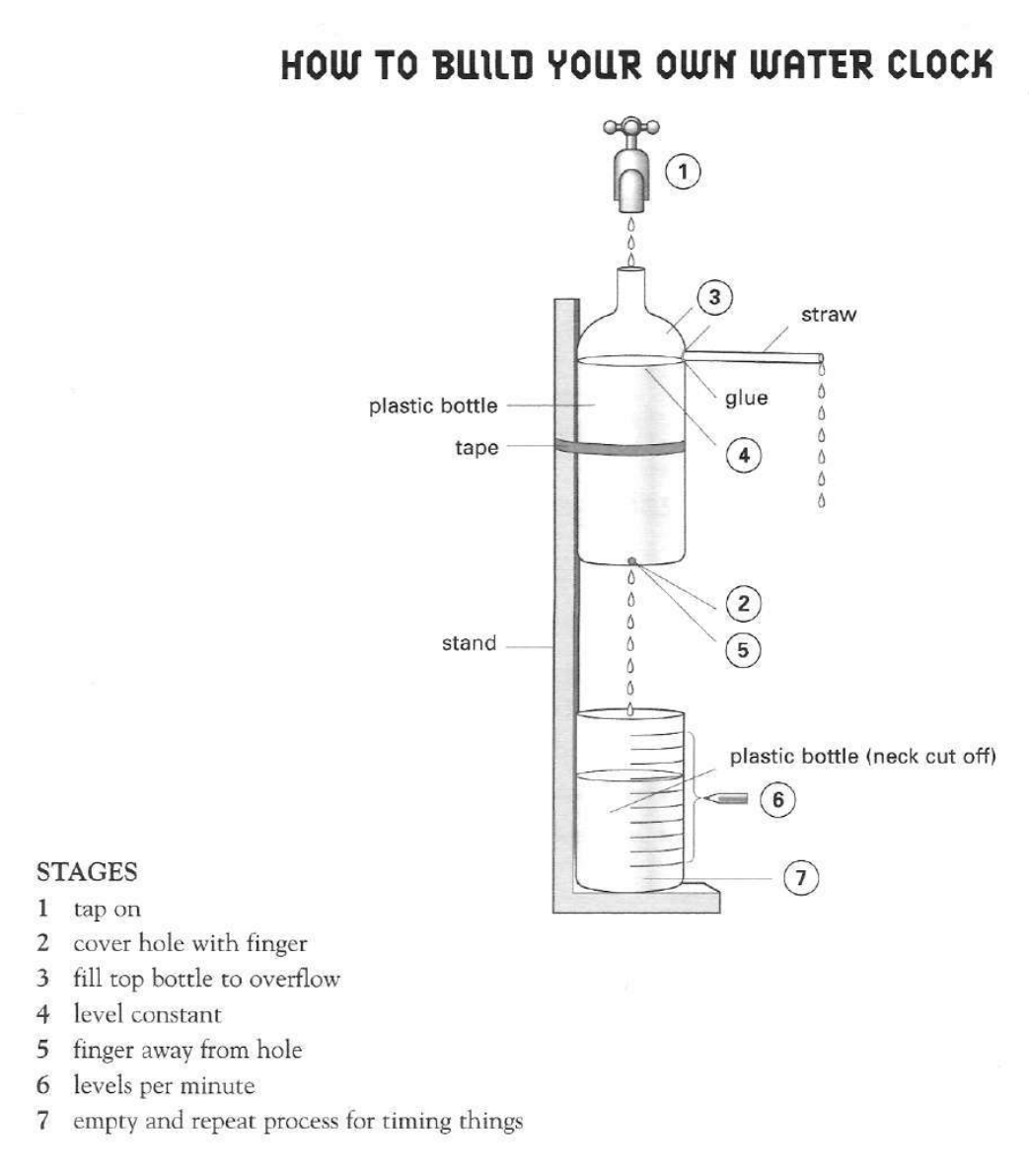
The diagram below shows the process for making a water clock.
Write a report for a university lecturer describing the information below.
HOW TO BUILD YOUR OWN WATER CLOCK
Student answer (Band 4.5)
The diagram illustrates the step by step process of are constructing a simple homemade water clock
Overall , this aliner cylcing liner procces consisting of seven main stage .it beging with preapering the nessary materials and concludes with measuring time using the flow of water.
Body 1 it can seen that in the initial stage are use water most people in the university a plastic bottle is cut in half a small hole is made in the bottle cap using a nail or screw .the top half of bottle inverted and placed into the bottom hal.
BODY2 moving TO THE NEXT PHASE
AI examiner evaluation
| Criterion | Band |
|---|---|
| Task Achievement / Task Response | 3.5 |
| Coherence and Cohesion | 4.5 |
| Lexical Resource | 4.5 |
| Grammatical Range and Accuracy | 4.5 |
| Overall | 4.5 |
Task Achievement / Task Response: Band 3.5
The opening identifies the diagram as a process for making a homemade water clock, and the overview correctly notes that it has seven stages and is intended to measure time. However, the account then describes a different or unsupported construction: the diagram does not show a bottle cut in half, a nail or screw making a hole in the cap, or the top half being inverted into the bottom half. It instead shows an upper bottle fixed to a stand, a lower bottle with its neck cut off, and a straw used as an overflow drain. The response also stops before explaining the numbered stages, including filling to overflow and marking levels per minute. The required minimum length is not met. To improve, report the actual apparatus and describe the sequence through to emptying and repeating the process.
Coherence and Cohesion: Band 4.5
There is a basic attempt to organise the report: an introduction and overview are followed by sections labelled “Body 1” and “BODY2,” and the phrase “moving TO THE NEXT PHASE” signals progression. The overview also gives the reader a general sense of the process. However, the body does not develop a clear sequence: the second section contains only a heading-like phrase, and the first mixes an unclear opening with construction details. The transitions therefore do not connect a complete set of stages, while inconsistent capitalisation and spacing distract from the organisation. Use paragraphs to group the apparatus and the numbered steps, then connect them with precise sequencing language such as “first,” “next,” and “finally.”
Lexical Resource: Band 4.5
The response attempts some task-relevant vocabulary, including “water clock,” “materials,” “plastic bottle,” “hole,” and “measuring time.” These choices show an effort to describe a process rather than simply repeat the prompt. However, spelling and word-form errors are frequent and sometimes make the intended meaning difficult to identify, as in “aliner cylcing liner procces,” “beging,” and “preapering.” Some wording is also inaccurate for the diagram: “cut in half” and “inverted” do not describe the apparatus shown. Build a reliable set of process terms and check spelling carefully; use the diagram’s labels, such as “stand,” “straw,” “overflow,” and “calibration lines,” to make the description more precise.
Grammatical Range and Accuracy: Band 4.5
There is an attempt to use more than isolated simple statements, including the overview sentence beginning “it beging with…” and the sequence of actions in the body. However, sentence structures are often incomplete or difficult to follow. For example, “Overall, this … consisting of seven main stage” lacks a clear finite verb, while “it can seen that in the initial stage are use water” has missing auxiliaries and an unclear subject. Agreement and articles are also unreliable in phrases such as “seven main stage” and “a plastic bottle is cut.” Punctuation and sentence boundaries need attention, particularly where several ideas run together. Practise writing complete subject–verb sentences first, then combine them with accurate clauses to show sequence.
See this exact question answered at other band scores. The same prompt compared across bands.
Browse more IELTS Writing model answers or get your own writing scored by the same AI examiner.