Band 5.5 IELTS Writing Task 1 Model Answer
Overall Band Score: 5.5 · IELTS Complete Catalyst · 2026-11-22
IELTS Writing Task 1 question
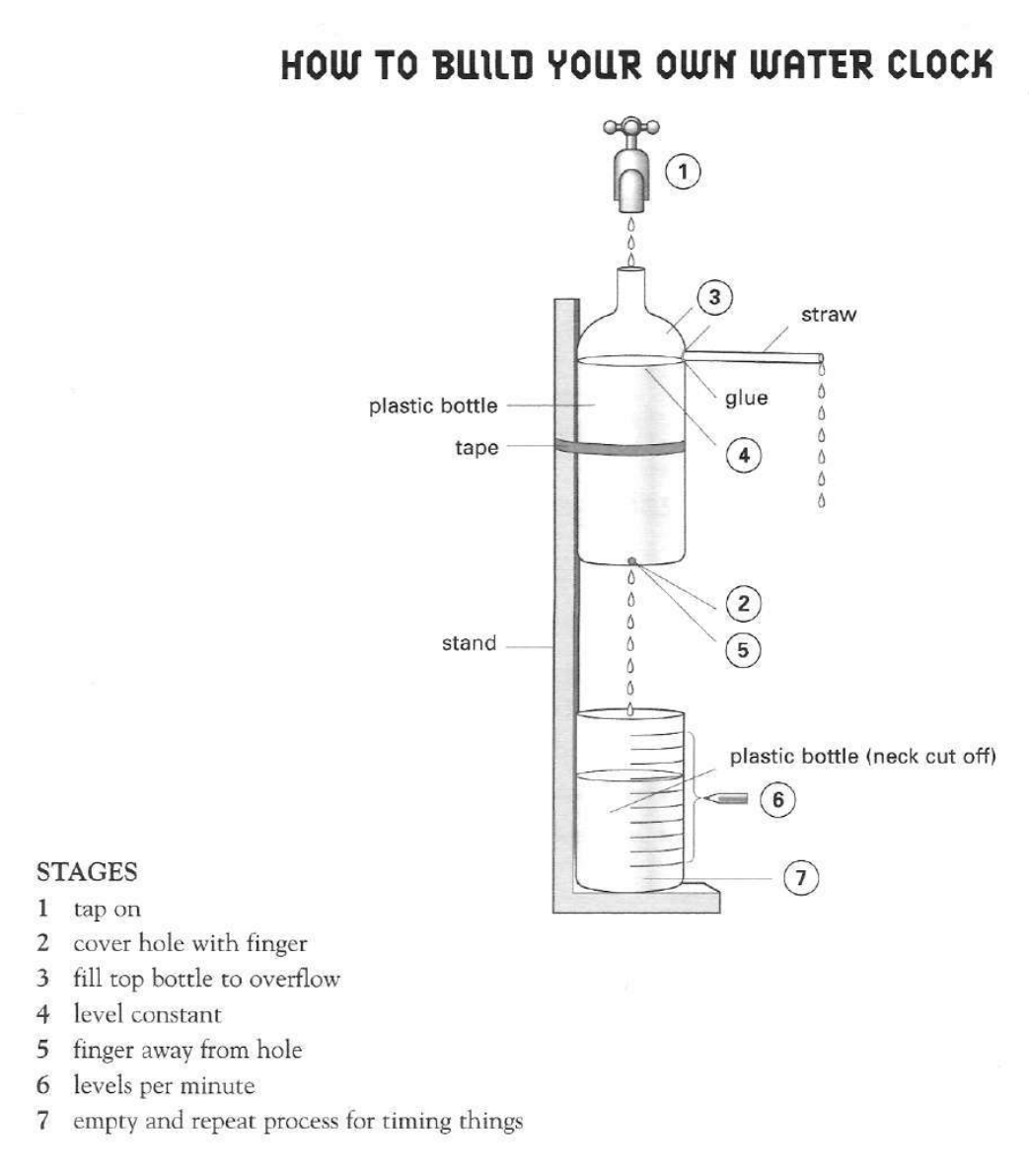
The diagram below shows the process for making a water clock.
Write a report for a university lecturer describing the information below.
HOW TO BUILD YOUR OWN WATER CLOCK
Student answer (Band 5.5)
A detailed picture is given taht demonstrate the method for building yourself a water clock.
For the start we will need materials like plastic bottle, straw,glue, tape,stand,tap and a plastic bottle with its neck cut off.For a better veiw the diagram given and place materials as shown. We need to take the plastic bottle with a hole in the bottom,near the bottle neck make a hole that a straw can fit into that.Below the bottle align half cut bottle.
Tape the plastic battle with hole at the top of the stand right below the water tap.Glue the straw in the hole neat the neck.To bregin the process turn on the water tap cover the hole at the bottom with finger before starting the water.Fill the bottle to overflow from the straw and make the level constant.Move your finger from the hole which allows the water to flow as per the timing which levels per minute.
AI examiner evaluation
| Criterion | Band |
|---|---|
| Task Achievement / Task Response | 5.0 |
| Coherence and Cohesion | 6.0 |
| Lexical Resource | 5.0 |
| Grammatical Range and Accuracy | 5.0 |
| Overall | 5.5 |
Task Achievement / Task Response: Band 5.0
You identify the main purpose and several relevant components, including the tap, bottles, straw, stand, and the sequence of filling the upper bottle before releasing the water. However, the report only partially describes the diagram. It does not clearly explain that the straw is an overflow drain, that water drips through a hole in the upper bottle’s base into the lower container, or that the lower bottle is used to mark water levels. The final stages are also unclear: “levels per minute” does not explain the calibration, and the instruction to empty and repeat the process is omitted. Some construction details, such as making a hole near the neck, are not shown. A fuller, more accurate account of the apparatus and all stages would strengthen the response.
Coherence and Cohesion: Band 6.0
The information follows a broadly sensible order: you introduce the materials, describe assembling the apparatus, and then explain how to start the clock. This gives the reader an overall progression. However, the response is presented as one paragraph, and transitions between construction and operation are abrupt. Phrases such as “For the start” and “To bregin the process” signal sequence, but the links between individual actions are sometimes unclear; for example, “Fill the bottle to overflow from the straw and make the level constant” combines two stages without explaining their relationship. Use separate paragraphs for the apparatus and its operation, and clearer sequencing language such as “Once assembled” and “Finally” to make the process easier to follow.
Lexical Resource: Band 5.0
You use relevant task vocabulary, including “plastic bottle,” “straw,” “overflow,” “stand,” and “water tap,” so the reader can identify many components and actions. However, the range is limited and several word choices or collocations are inaccurate, which sometimes makes the instructions difficult to interpret. For instance, “align half cut bottle” is unclear, “levels per minute” does not convey the idea of marking water levels at regular intervals, and “as per the timing” is unnatural in this context. There are also noticeable spelling errors, including “taht,” “veiw,” “battle,” and “bregin.” Choose precise process terms such as “position,” “attach,” “drip,” and “mark,” and check spelling carefully.
Grammatical Range and Accuracy: Band 5.0
You attempt both simple instructions and longer sentences, such as “Tape the plastic battle with hole at the top of the stand right below the water tap.” However, the range is limited, and errors in sentence construction and grammatical forms occur often enough to make some instructions hard to follow. For example, “A detailed picture is given taht demonstrate” has a subject–verb agreement problem, while “near the bottle neck make a hole that a straw can fit into that” is an incomplete and awkwardly structured instruction. Articles and sentence boundaries are also inconsistent, as in “Fill the bottle to overflow from the straw and make the level constant.” Practise writing complete, direct process sentences, with a clear subject and verb, and use punctuation to separate each stage.
See this exact question answered at other band scores. The same prompt compared across bands.
Browse more IELTS Writing model answers or get your own writing scored by the same AI examiner.