Band 5.0 IELTS Writing Task 1 Model Answer
Overall Band Score: 5.0 · IELTS Complete Catalyst · 2026-11-23
IELTS Writing Task 1 question
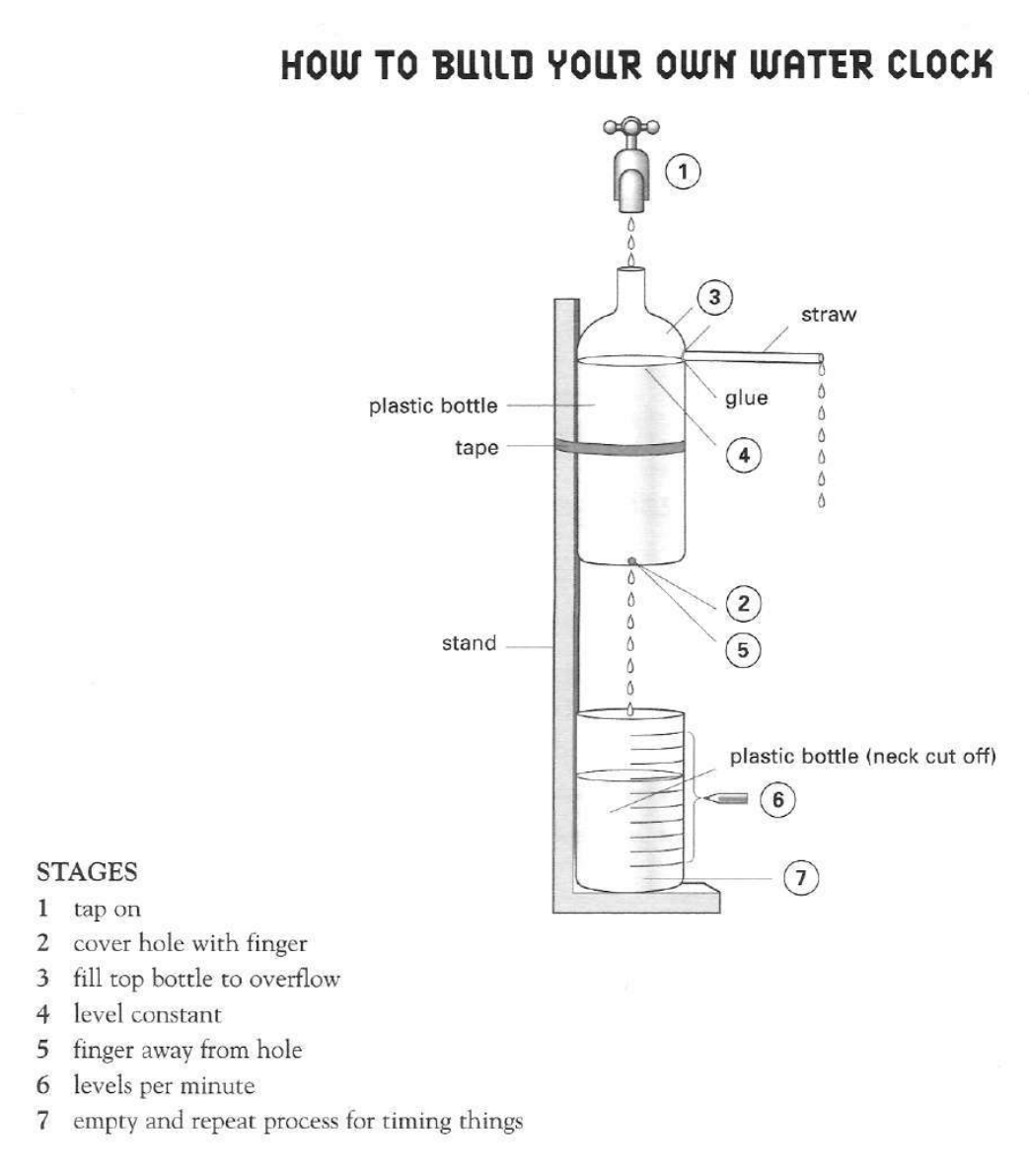
The diagram below shows the process for making a water clock.
Write a report for a university lecturer describing the information below.
HOW TO BUILD YOUR OWN WATER CLOCK
Student answer (Band 5.0)
The diagram shows the process for making a water clock .
Overall , the process involves assembling a water container and allows a water to flow into the other second container .
First of all openning the cap of the plastic bottle and attached the straw with glue and then attaching the bottle with stand to make the bottle secure and cover the hole with fingers after that place another palstic bottle to cutt off the neck .
Finally water flows from upper container to the other container when the fingers removed from the bottle holes . The water level is recorded every minute and the process can repeated to measure the time .
In conclusion , the water clock is used to measure the time by observing the gradually flows of water from one container to another container .
AI examiner evaluation
| Criterion | Band |
|---|---|
| Task Achievement / Task Response | 5.0 |
| Coherence and Cohesion | 5.5 |
| Lexical Resource | 5.0 |
| Grammatical Range and Accuracy | 5.0 |
| Overall | 5.0 |
Task Achievement / Task Response: Band 5.0
You identify the diagram as a water-clock process and mention several relevant features, including attaching a straw, water moving between containers, recording the level each minute, and repeating the process. However, the account is only partial: it does not clearly describe the numbered sequence, and important details such as filling the upper bottle until it overflows and the constant water level are missing or unclear. The opening instruction to open the bottle cap is not supported by the diagram, which shows an open bottle beneath a tap. The response also falls 18 words short of the 150-word minimum. To develop the report, describe the construction and all stages in order, using the diagram’s labels accurately.
Coherence and Cohesion: Band 5.5
The response has a basic overall shape: an introduction, an overview, a description beginning with “First of all,” and a concluding sentence. Sequencing expressions such as “Finally” help signal movement through the process. However, the stages are compressed into long sentences, so the order and relationship between actions are sometimes difficult to follow. For example, the sentence beginning “First of all” combines opening, attaching, securing, covering the hole, and placing the lower bottle without clearly separating the steps. “Overall” and “In conclusion” also introduce overlapping summaries. Use separate, logically ordered sentences or paragraphs for construction and operation, and make references such as “the other container” more precise.
Lexical Resource: Band 5.0
You use some relevant process vocabulary, including “container,” “stand,” “straw,” “flows,” and “recorded,” so the reader can recognise the general subject. However, the range is limited and several word choices or forms are inaccurate, which makes parts of the description unclear. For instance, “water container” is vague when the diagram distinguishes upper and lower bottles, and “the water level is recorded every minute” does not clearly convey that the levels are marked on the lower bottle. Spelling errors such as “openning,” “palstic,” and “cutt” are also noticeable. Build a more precise set of terms for the apparatus and stages, and check spelling and collocations before submitting.
Grammatical Range and Accuracy: Band 5.0
The response attempts to connect several actions in longer sentences, and the final sentence communicates the general purpose of the device. However, the range of sentence structures is limited, and errors occur frequently enough to make some steps difficult to interpret. The opening sequence, “First of all openning … and attached … and then attaching,” lacks a clear grammatical subject and consistent verb forms. There are also problems with articles and agreement in “allows a water to flow” and “the process can repeated.” The sentence about water flowing when “the fingers removed” is missing a necessary verb form. Use complete sentences with a consistent present-tense pattern, such as “The user removes a finger, allowing water to drip into the lower bottle.”
See this exact question answered at other band scores. The same prompt compared across bands.
Browse more IELTS Writing model answers or get your own writing scored by the same AI examiner.