Band 5.0 IELTS Writing Task 1 Model Answer
Overall Band Score: 5.0 · IELTS Complete Catalyst · 2026-11-23
IELTS Writing Task 1 question
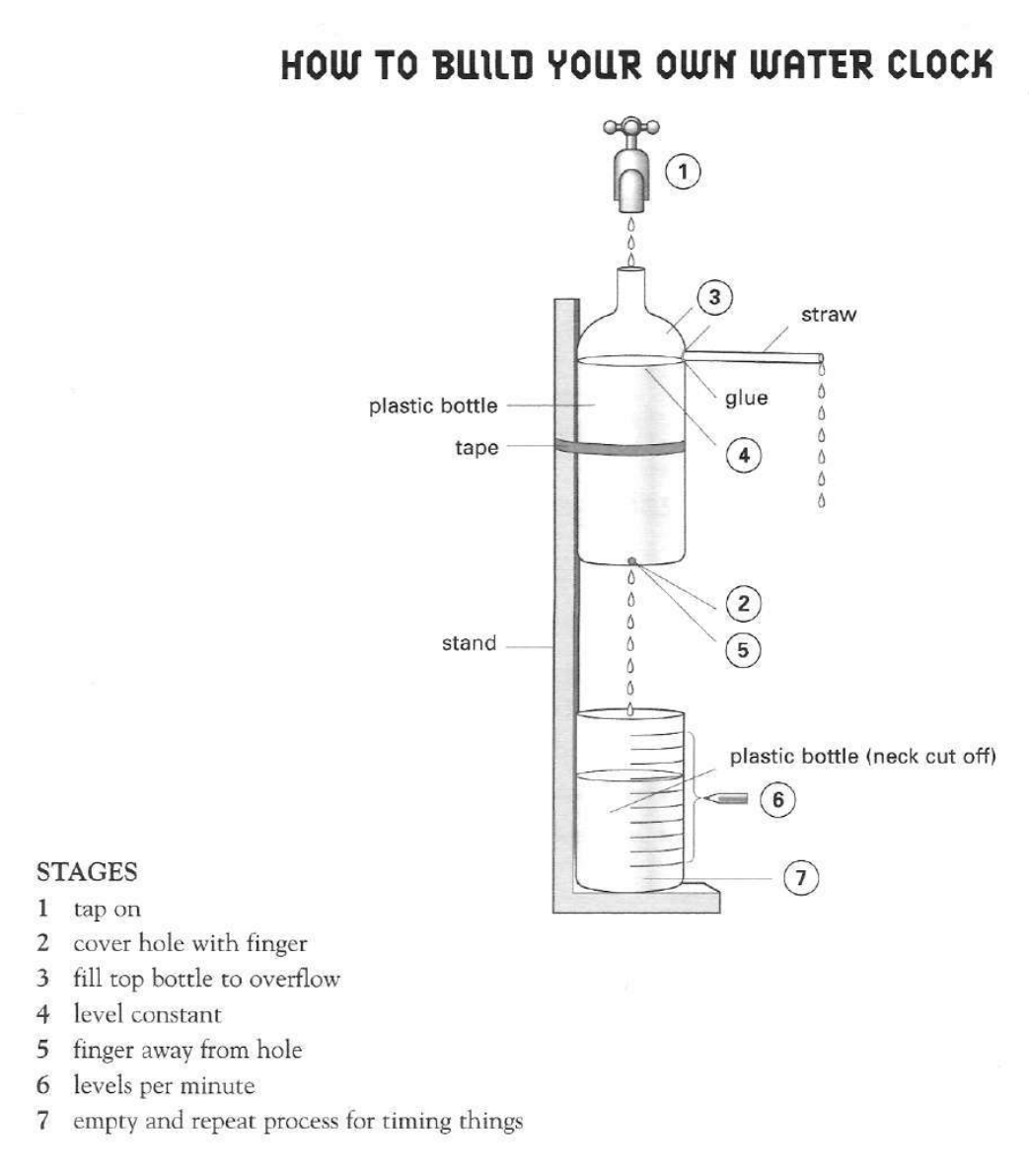
The diagram below shows the process for making a water clock.
Write a report for a university lecturer describing the information below.
HOW TO BUILD YOUR OWN WATER CLOCK
Student answer (Band 5.0)
The given diagram shows the process for making a water clock
First of all, we need stand, tape, plastic bottle, glue, straw and plastic bottle(nect cut off) for making our own water clock. To begin with the, we have to on the tap. After that, cover hole with finger which is on the bottom of the bottle. The next step is fill top bottle to overflow than, constant the level of water in the bottle. Thereafter, finger away from hole that is on the bottom of the bottle.
Secondly, at sixth point measure the levels per minute. Subsequently, at final stage empty the bottle and repeat process for timing things.
Overall, The point is on the tap than fill the bottle until it will overflow then put the neck cut off bottle below the upper bottle and now measure the levels per minute.This is the basic process for making your own water clock.
AI examiner evaluation
| Criterion | Band |
|---|---|
| Task Achievement / Task Response | 5.0 |
| Coherence and Cohesion | 5.5 |
| Lexical Resource | 5.0 |
| Grammatical Range and Accuracy | 5.0 |
| Overall | 5.0 |
Task Achievement / Task Response: Band 5.0
You identify the diagram as a water-clock process and include several relevant stages, such as turning on the tap, covering the hole, filling the upper bottle to overflow, and repeating the process for timing. However, the account is only partial: it does not clearly explain how the bottles are assembled, how the straw is used as an overflow drain, or how the lower bottle is marked to record water levels. The overview repeats some steps rather than summarising the process as a whole, and “constant the level” does not clearly convey the stated constant water level. The response is also 145 words, below the 150-word minimum; the eight words copied from the prompt are excluded from that count. Add the missing construction details and a clearer overview.
Coherence and Cohesion: Band 5.5
There is some sequence in the report, supported by transitions such as “First of all,” “After that,” and “Thereafter,” and the reader can follow several stages in order. However, progression is uneven: “Secondly” introduces stage six without clearly connecting it to the preceding steps, while “Overall” begins a recap that repeats earlier information rather than providing a concise overview. The materials list and process description are placed together, and the stages would be easier to follow if each were presented in a clear sequence, with the construction of the apparatus separated from its operation. Use linking expressions sparingly and make references such as “the bottle” precise when two bottles are involved.
Lexical Resource: Band 5.0
The response uses relevant task vocabulary, including “tap,” “overflow,” “hole,” “levels per minute,” and “timing,” so the basic subject is recognisable. However, the range is limited and several word choices or forms make the description unclear or unnatural. For example, “constant the level” does not express the idea of keeping the water level constant, and “the point is on the tap” is not an appropriate way to describe the first stage. “Nect cut off” also contains a spelling error and makes the equipment label harder to understand. Aim for precise process verbs and accurate names for the apparatus, such as “attach,” “mark,” and “container,” and check spelling before submitting.
Grammatical Range and Accuracy: Band 5.0
You attempt to connect steps in longer sentences, for example, “After that, cover hole with finger which is on the bottom of the bottle,” but the response relies mainly on simple structures and these attempts are often inaccurate. Missing articles and subjects occur in phrases such as “cover hole with finger” and “we have to on the tap”; the latter also has an incorrect verb pattern. Other problems include “The next step is fill” and “then fill the bottle until it will overflow,” where the verb forms do not fit the sentence. Capitalisation and punctuation are inconsistent, including the capital letter after “Overall” and the run-on final sentence. Practise accurate imperative instructions and use a wider range of correctly formed sentences.
See this exact question answered at other band scores. The same prompt compared across bands.
Browse more IELTS Writing model answers or get your own writing scored by the same AI examiner.