Band 5.5 IELTS Writing Task 1 Model Answer
Overall Band Score: 5.5 · IELTS Complete Catalyst · 2026-11-23
IELTS Writing Task 1 question
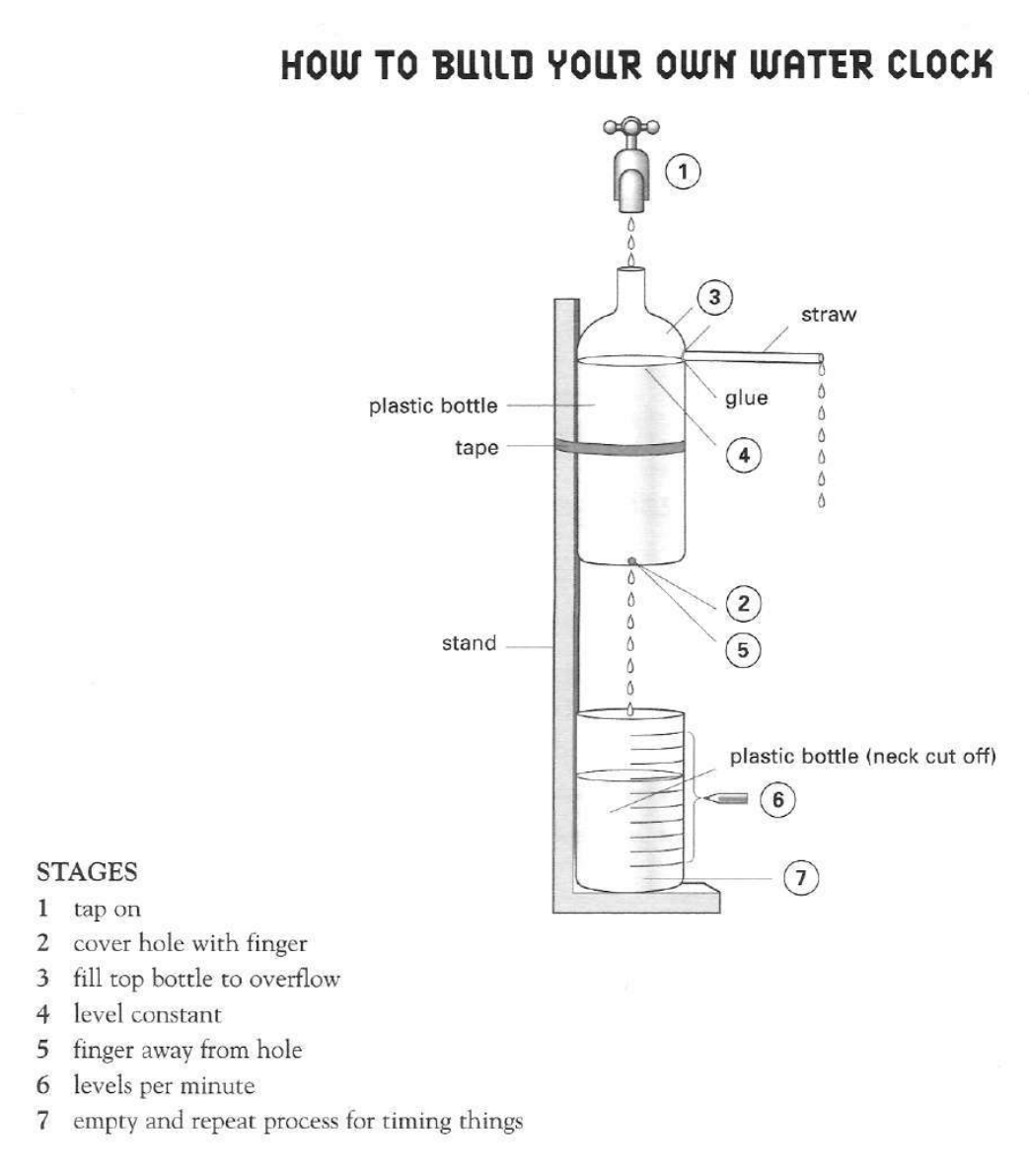
The diagram below shows the process for making a water clock.
Write a report for a university lecturer describing the information below.
HOW TO BUILD YOUR OWN WATER CLOCK
Student answer (Band 5.5)
The diagram demonstrates the steps which are involved for making a water clock. Overall, the process requires multiple equipments and steps to be follwed.
The making starts from attaching the bottle on the top side of the stand with the help of tape. Therafter, one straw will be installed near the neck of the bottle with glue. Once done, the process begins with collecting water in the plastic bottle covering the bottom hole with the fingure. Further, the bottle will be filled until it gets full and water overflows through the straw.
Coming lower step up, putting one measuring jar collecting the water. Laslty, the process start uncovering the hole and allowing the water to flow drop by drop and traking the level of the water increased per minute. The process work in repetation for meaning the time.
AI examiner evaluation
| Criterion | Band |
|---|---|
| Task Achievement / Task Response | 5.0 |
| Coherence and Cohesion | 5.5 |
| Lexical Resource | 5.5 |
| Grammatical Range and Accuracy | 5.0 |
| Overall | 5.5 |
Task Achievement / Task Response: Band 5.0
You identify the diagram as a process and describe several relevant stages, including attaching the upper bottle, adding the straw, filling it until water overflows, and then allowing water to drip. However, the report only partially covers the process: it omits the tap being turned on, the initial constant water level, and the final instruction to empty the lower bottle and repeat the timing process. The overview, “multiple equipments and steps,” is too general to summarise how the clock works. Some details are also inaccurate or unclear, such as calling the lower container a “measuring jar.” The response is 12 words below the required minimum, which limits the opportunity to explain the stages fully. Add a clear overview and cover the sequence more completely.
Coherence and Cohesion: Band 5.5
The response has a basic overall order: it begins with construction, moves to filling the upper bottle, and ends with water flowing into the lower container. Paragraphing also separates the introduction from the process description. However, progression is not consistently clear. “Coming lower step up” is difficult to interpret, and the transition from filling the upper bottle to placing the lower container is abrupt. Connectors such as “Further” and “Lastly” signal sequence, but some are used awkwardly or do not make the relationship between steps clear. Organise the stages in the diagram’s order and use straightforward links such as “Next,” “Once the water reaches the overflow straw,” and “Finally.” Clearer references to the upper and lower bottles would also help readers follow the process.
Lexical Resource: Band 5.5
You use some relevant process vocabulary, including “attaching,” “overflow,” “uncovering,” and “per minute,” so the reader can recognise the general subject. However, the range is limited and several word choices or forms are inaccurate, sometimes making the meaning difficult to follow. “Multiple equipments” is not a natural expression, “measuring jar” does not match the labelled lower plastic bottle, and “traking the level of the water increased” is unclear. There are also noticeable spelling errors, including “fingure,” “Laslty,” “repetation,” and “follwed.” Use precise terms from the diagram, such as “lower bottle” and “calibration marks,” and check spelling and collocations. This would make the description more accurate and easier to understand.
Grammatical Range and Accuracy: Band 5.0
You attempt some longer structures, for example, “Once done, the process begins with collecting water in the plastic bottle covering the bottom hole with the fingure.” However, the sentence structure is often faulty, and several verb forms and grammatical patterns make the sequence hard to follow. “The making starts from attaching” uses an awkward construction, while “the process start uncovering the hole” lacks the correct verb form and pattern. The final sentence, “The process work in repetation for meaning the time,” also has problems with subject–verb agreement and sentence construction. Most sentences need more reliable control of basic forms. Practise describing each stage with a clear subject and verb, for example, “The user removes a finger from the hole, allowing water to drip into the lower bottle.”
See this exact question answered at other band scores. The same prompt compared across bands.
Browse more IELTS Writing model answers or get your own writing scored by the same AI examiner.