Band 5.5 IELTS Writing Task 1 Model Answer
Overall Band Score: 5.5 · IELTS Complete Catalyst · 2026-11-24
IELTS Writing Task 1 question
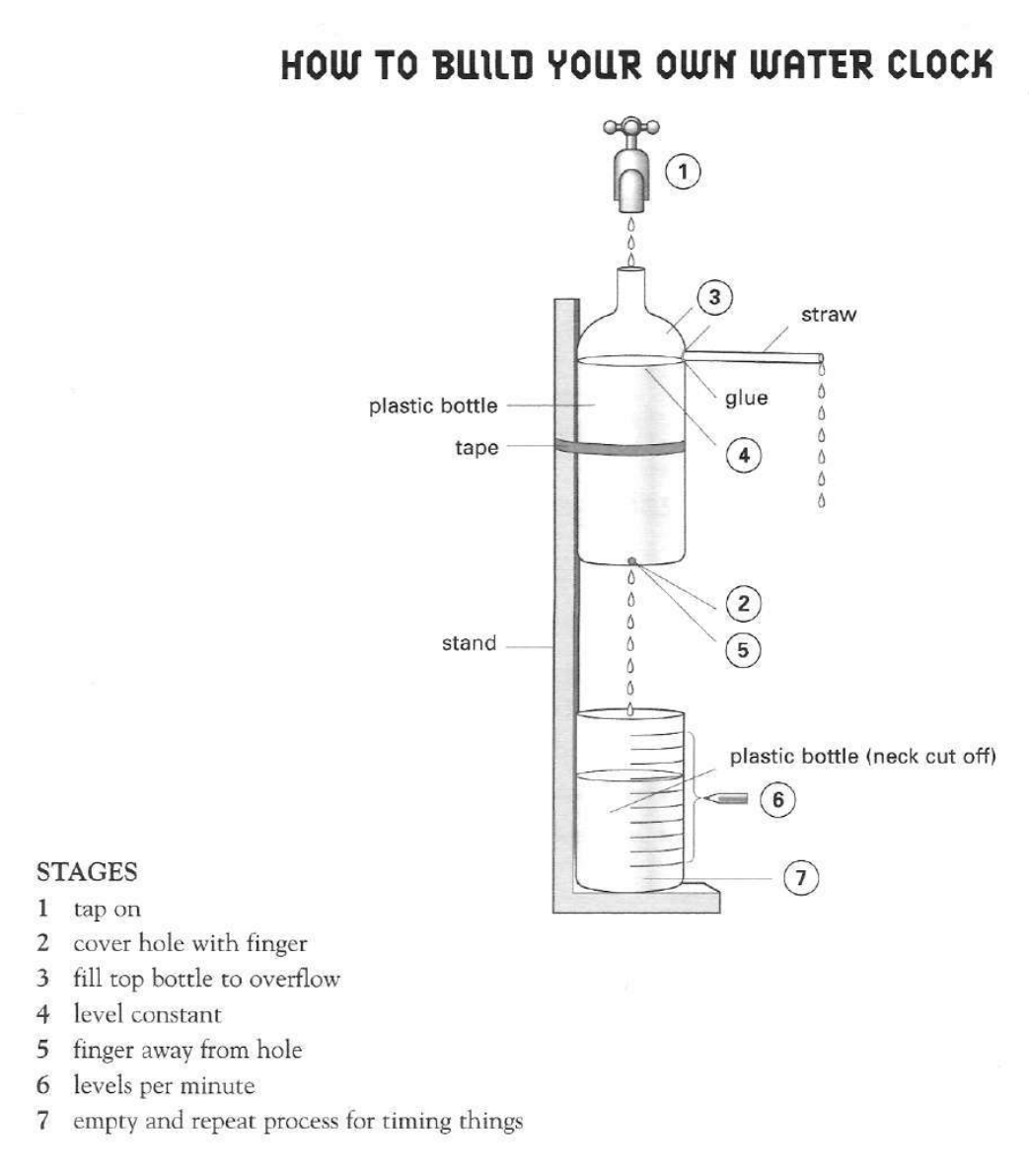
The diagram below shows the process for making a water clock.
Write a report for a university lecturer describing the information below.
HOW TO BUILD YOUR OWN WATER CLOCK
Student answer (Band 5.5)
The given diagram illustrates the information about the process for making a water clock.
Overall, there are 7 stages to make the water clock. Initially, filling the plastic bottle with water from the tap and end with empty the bottle and repeat the process again.
To begin, tap on stage in which the bottle filed with water then covering the hole with finger on the bottom after that again fill the bottle to overflow next the measuring the level corespond with straw.
The last three stages is that, finger away from the hole then checking the level per minute in the bottom bottle after that empty the bottle and again repeat the process for timing things. These seven stages make the water clock through a simple method in which the two bottle are use above the bottle with tiny hole in the bottom and second is the neck cut off that collect the water and also measure the level per minute.
AI examiner evaluation
| Criterion | Band |
|---|---|
| Task Achievement / Task Response | 6.0 |
| Coherence and Cohesion | 5.5 |
| Lexical Resource | 5.5 |
| Grammatical Range and Accuracy | 5.0 |
| Overall | 5.5 |
Task Achievement / Task Response: Band 6.0
The report identifies the diagram as a seven-stage process and gives a relevant overview, from filling the upper bottle to emptying it and repeating the process. It also mentions the key actions of covering and uncovering the hole, measuring the water level, and using the lower bottle to collect water. However, some stages are unclear or inaccurately described: “the bottle filed with water” does not clearly distinguish the initial tap being turned on from filling the bottle, and “the measuring the level corespond with straw” misrepresents the constant-level stage. The apparatus description at the end is relevant but underdeveloped. To make the account more complete, describe the straw’s overflow function and explain that water drips into the lower, neck-cut bottle, where levels are marked.
Coherence and Cohesion: Band 5.5
The response has a recognisable structure: an introduction, an overview, and paragraphs describing the stages and equipment. The sequence is generally understandable, and expressions such as “To begin” and “The last three stages” help signal progression. However, several steps are crowded into long, loosely connected sentences, especially the paragraph beginning “To begin,” so the reader has to work to separate the actions. Linking phrases such as “after that” are repeated, and the overview’s “Initially … and end with” construction does not connect its ideas smoothly. Use one sentence per group of stages, with clear sequencing words such as “Next,” “Once the bottle is full,” and “Finally,” and make paragraph transitions more precise.
Lexical Resource: Band 5.5
The response uses relevant process vocabulary, including “stages,” “overflow,” “hole,” “level,” and “repeat the process,” which allows the main subject to be understood. It also attempts more specific terms such as “neck cut off” and “timing things.” However, several word choices and collocations are inaccurate or unclear: “the bottle filed with water,” “the level corespond with straw,” and “checking the level per minute” do not express the diagram’s actions precisely. Spelling errors such as “corespond” also reduce control. Build a more accurate range of process verbs and equipment terms—for example, describe water as “dripping,” the straw as an “overflow outlet,” and the lower bottle’s markings as “calibration lines.”
Grammatical Range and Accuracy: Band 5.0
The response attempts both simple and more extended sentence forms, and the overall meaning can usually be followed. However, complex sequences are often assembled without complete or well-controlled clauses. For example, “To begin, tap on stage in which the bottle filed with water then covering the hole…” lacks a clear subject and consistent verb forms, while “The last three stages is that” has a subject–verb agreement error. Other problems include “end with empty the bottle,” “the two bottle are use,” and missing articles in phrases such as “with finger.” These errors sometimes make the process difficult to follow. Use complete clauses with consistent passive forms, such as “The hole is covered” and “The bottle is filled,” and check agreement, articles, and punctuation when joining steps.
See this exact question answered at other band scores. The same prompt compared across bands.
Browse more IELTS Writing model answers or get your own writing scored by the same AI examiner.