Band 5.5 IELTS Writing Task 1 Model Answer
Overall Band Score: 5.5 · IELTS Complete Catalyst · 2026-11-26
IELTS Writing Task 1 question
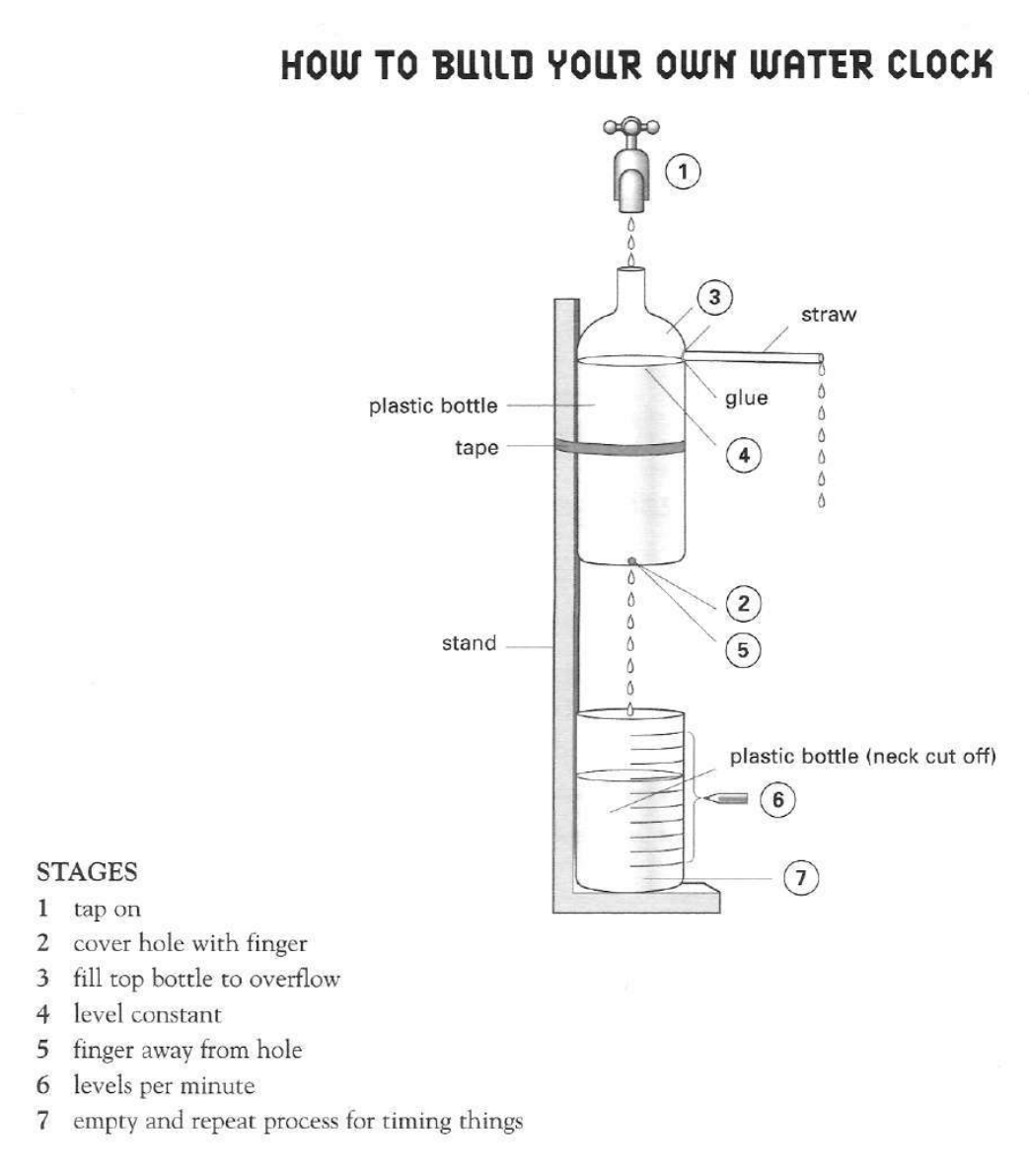
The diagram below shows the process for making a water clock.
Write a report for a university lecturer describing the information below.
HOW TO BUILD YOUR OWN WATER CLOCK
Student answer (Band 5.5)
The diagram illustrates that how to build your own water clock.
Overall, six steps are required to build your own water clock. Steps include taking up two plastic bottles and attaching it with the stand one above other. Second bottle is made up of plastic but it's neck is cutt off.Stand is situated under the water tap for further process.
Intially, tap is on and water starts filling in first plastic bottle. After make an hole under the bottle it is cover with the finger so bottle can be fillied. A straw is glued at the top right of bottle to have an idea of filling. After filling the bottle to level needed finger is put off so water can flow down.
Finally, Water flows into second bottle.Levels per minute is observed using the measurement on the bottle. This is whole procedure to build your own water clock.For observing time empty the bottles and repeat the same process.
AI examiner evaluation
| Criterion | Band |
|---|---|
| Task Achievement / Task Response | 6.0 |
| Coherence and Cohesion | 6.0 |
| Lexical Resource | 5.0 |
| Grammatical Range and Accuracy | 5.0 |
| Overall | 5.5 |
Task Achievement / Task Response: Band 6.0
The report covers the main construction and operating stages, including the two bottles, stand, tap, straw, water filling, release of the hole, minute markings and repeating the process. The closing explanation that the bottles are emptied and the process repeated for timing is relevant. However, the overview says there are “six steps,” whereas the diagram lists seven, and the sequence is not always reported accurately: the hole is covered before the upper bottle is filled to overflow, and the water level is then kept constant before the finger is removed. The straw’s role as an overflow drain is also described vaguely as giving “an idea of filling.” These omissions and unclear details leave some stages less fully explained than others.
Coherence and Cohesion: Band 6.0
The response has a clear overall arrangement: an introduction and overview are followed by paragraphs describing the initial setup, the filling process and the final timing procedure. Sequencing expressions such as “Initially,” “After,” and “Finally” help the reader follow the process. However, the progression is sometimes weakened by unclear links between actions. For example, “After make an hole under the bottle it is cover with the finger so bottle can be fillied” compresses several stages and makes the order difficult to follow. The overview also groups construction details with the process without clearly distinguishing them. Use one sentence for each key stage and refer consistently to the upper and lower bottles to make the sequence and references clearer.
Lexical Resource: Band 5.0
The response uses relevant process vocabulary, including “attached,” “stand,” “glued,” “measurement,” and “repeat,” so the reader can identify the main equipment and actions. However, the range is limited and some word choices are imprecise or unnatural for describing a diagram. “Taking up two plastic bottles” does not clearly express that the bottles are used, while “an idea of filling” does not explain the straw’s overflow function. There are also noticeable spelling errors, including “Intially,” “cutt,” and “fillied,” which reduce accuracy. Aim for precise process terms and check spelling: for example, describe the straw as an “overflow outlet” and the marked lines as “calibration marks.”
Grammatical Range and Accuracy: Band 5.0
The report attempts both simple and more complex sentences, including a purpose clause in “so water can flow down” and a time clause in “For observing time.” However, errors in sentence structure, articles, agreement and verb forms are frequent enough to make some passages difficult to read. Examples include “illustrates that how to build,” “attaching it with the stand,” and “After make an hole … it is cover.” The sentence “After filling the bottle to level needed finger is put off” also lacks clear grammatical links and articles. Use direct passive forms for process descriptions, such as “The hole is covered with a finger,” and check that each sentence has a clear subject and correctly formed verb.
See this exact question answered at other band scores. The same prompt compared across bands.
Browse more IELTS Writing model answers or get your own writing scored by the same AI examiner.