Band 4.5 IELTS Writing Task 1 Model Answer
Overall Band Score: 4.5 · IELTS Complete Catalyst · 2026-11-27
IELTS Writing Task 1 question
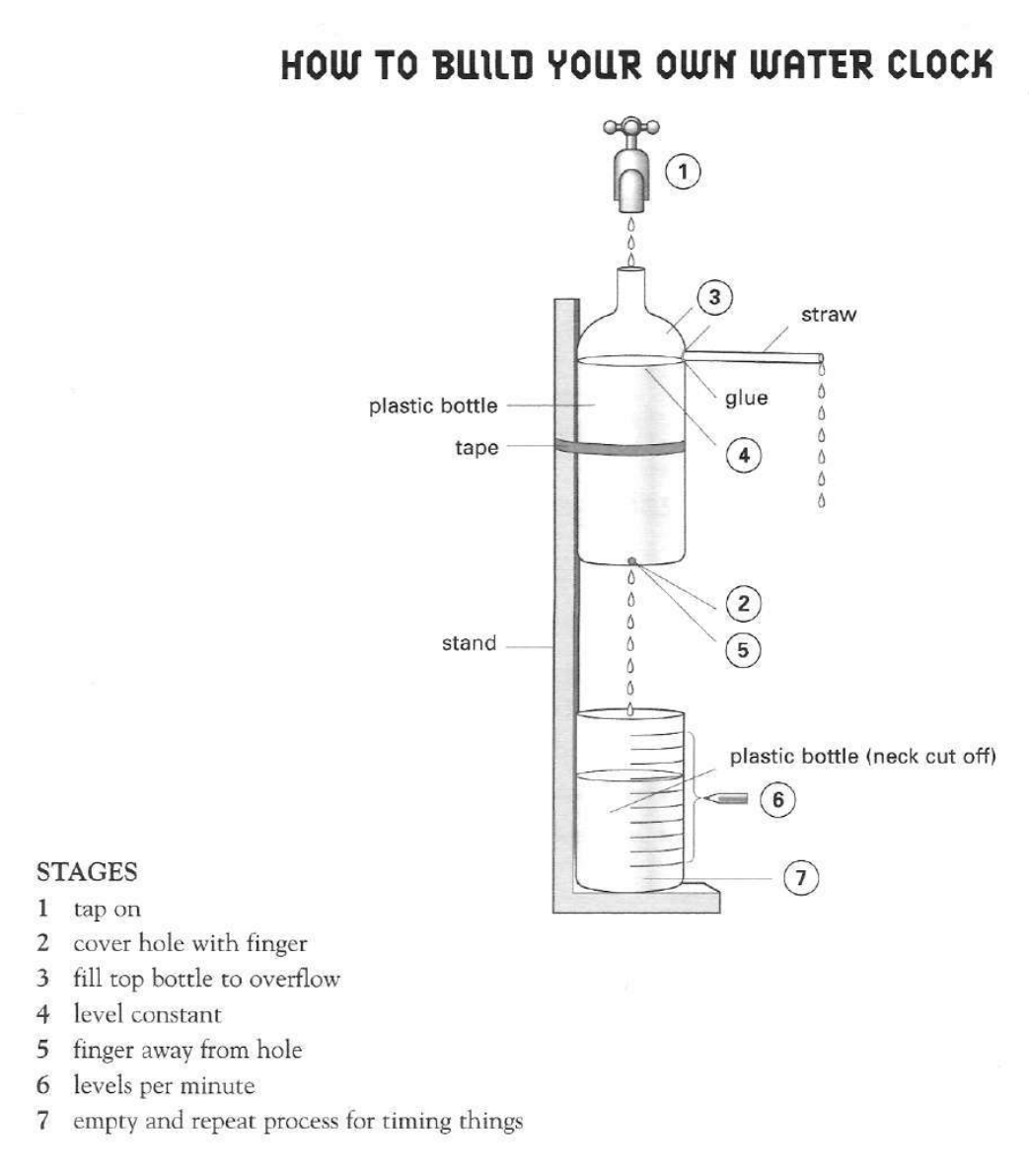
The diagram below shows the process for making a water clock.
Write a report for a university lecturer describing the information below.
HOW TO BUILD YOUR OWN WATER CLOCK
Student answer (Band 4.5)
The process shows the steps of build the water clock
Overall,the creation of water clock invloves 7 steps ,startes bt tap on,and finish by repeat the timing for timing tings.
Initially,tap on the water clock this is the basic stage and the most important ,next cover hole with using finger thats really easy , next step is fill top bpttle to overflow once this has been done the level will constant
Following this ,;ove your finger awaay from hole,subsequently,calculate levels per minute,finally, reapeat process for timing things
AI examiner evaluation
| Criterion | Band |
|---|---|
| Task Achievement / Task Response | 4.0 |
| Coherence and Cohesion | 5.0 |
| Lexical Resource | 4.5 |
| Grammatical Range and Accuracy | 4.5 |
| Overall | 4.5 |
Task Achievement / Task Response: Band 4.0
You identify the process as having seven stages and include the main actions, from turning on the tap to repeating the process for timing. However, the report only minimally describes the diagram: it omits how the clock is assembled, including the two bottles, stand, straw, glue and tape, and does not explain the water’s movement or the markings used to measure time. The overview is also unclear, and the final phrase “repeat the timing for timing tings” does not accurately express the purpose. The response is substantially below the required 150 words, which limits how fully you can cover the process. Add an overview and describe both construction and operation in sequence.
Coherence and Cohesion: Band 5.0
The stages are presented in roughly the correct order, and words such as “Initially,” “Following this” and “finally” help signal sequence. This gives the response some organisation. However, it is a single, very short block rather than a clearly structured report, and the progression is not always easy to follow: “once this has been done the level will constant” is joined to the filling step without explaining what becomes constant. The repeated use of “next” and the awkward punctuation in “Following this ,;ove” also interrupt the flow. Separate the introduction and overview from the ordered process description, and use clear links such as “After the upper bottle is filled…” to show how each stage relates to the next.
Lexical Resource: Band 4.5
The response uses basic vocabulary relevant to the diagram, including “tap,” “hole,” “overflow” and “levels per minute,” so the reader can recognise several stages. However, the range is narrow and repetitive, and some inaccurate or misspelled wording makes the report difficult to understand. For example, “bpttle,” “awaay,” “reapeat” and “tings” obscure otherwise relevant ideas, while “repeat the timing” is an unclear collocation. There is also no vocabulary for the construction materials or the water’s movement, which are important features. Use precise process language and check spelling; terms such as “attach,” “overflow tube,” “collect” and “calibration marks” would help describe the diagram more fully.
Grammatical Range and Accuracy: Band 4.5
You attempt a few connected sentences, including “once this has been done the level will constant,” but the grammatical range is very limited and errors occur frequently. The opening, “The process shows the steps of build,” needs an infinitive or noun form, such as “steps for building.” Articles and sentence boundaries are also problematic in “creation of water clock” and “Initially,tap on the water clock.” In “the level will constant,” the verb “be” is missing, and several stages are written as fragments rather than complete sentences. Punctuation spacing and comma use further reduce clarity. Practise writing complete sentences with a clear subject and verb, and use consistent present-tense forms to describe each stage.
See this exact question answered at other band scores. The same prompt compared across bands.
Browse more IELTS Writing model answers or get your own writing scored by the same AI examiner.