Band 5.0 IELTS Writing Task 1 Model Answer
Overall Band Score: 5.0 · IELTS Complete Catalyst · 2026-11-28
IELTS Writing Task 1 question
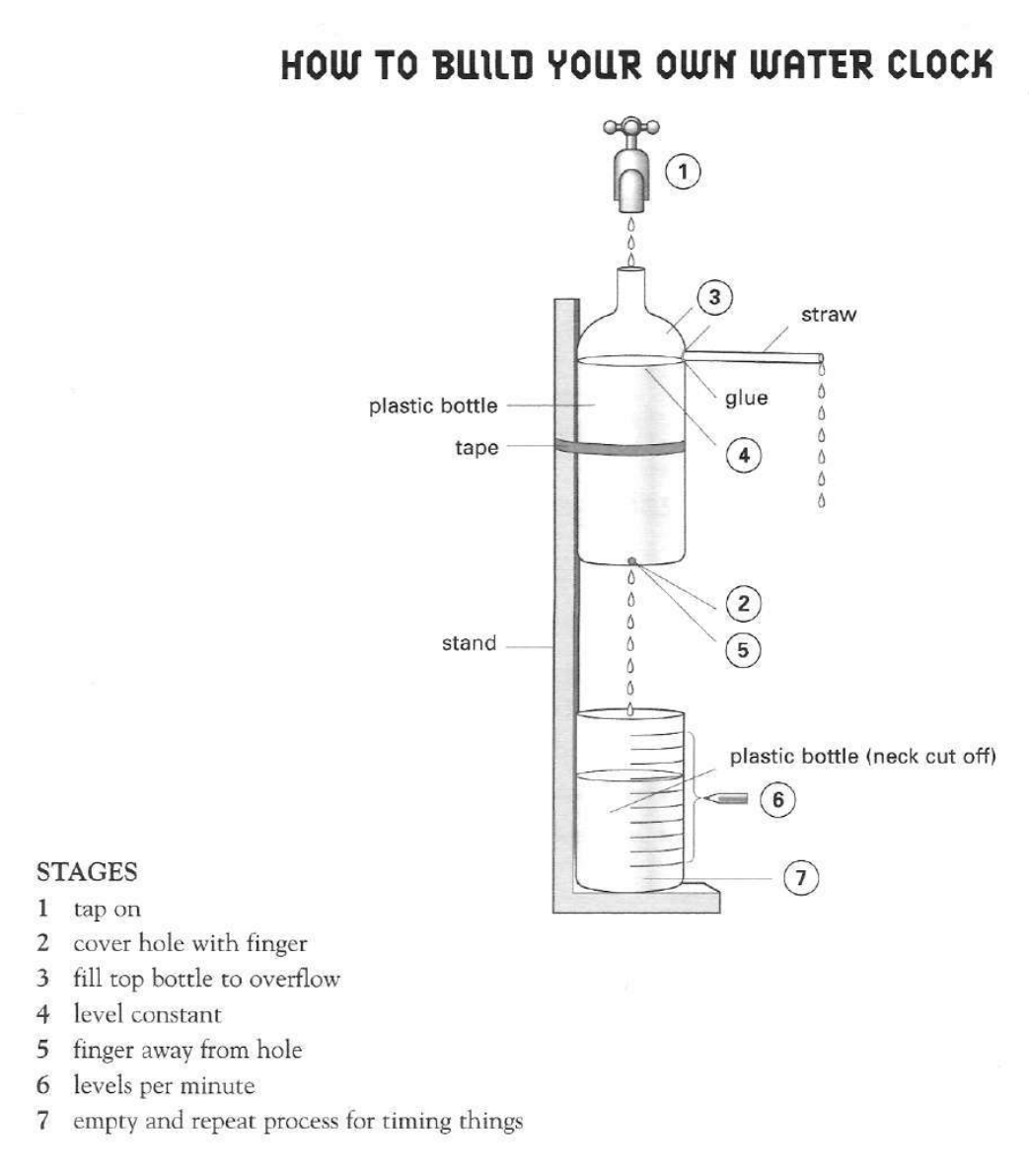
The diagram below shows the process for making a water clock.
Write a report for a university lecturer describing the information below.
HOW TO BUILD YOUR OWN WATER CLOCK
Student answer (Band 5.0)
The given below data illustrates the process for making water clock that how to build your own water clock.
Overall, it is evident that water divided in different stages first process starts with tap on and end with empty and repeat process for timing things.
After analysing, it clearly shows that how to build your own water clock first process starts with tap on. second cover hole with finger third filling top bottle to over flow the water through straw fourth process shows the level constant.
At the last fifth process stay finger away from the hole for safety sixth process decribes to water levels per minute last procedure shows empty and repeat process for timing things.
AI examiner evaluation
| Criterion | Band |
|---|---|
| Task Achievement / Task Response | 5.0 |
| Coherence and Cohesion | 5.5 |
| Lexical Resource | 5.0 |
| Grammatical Range and Accuracy | 4.5 |
| Overall | 5.0 |
Task Achievement / Task Response: Band 5.0
You identify the process as a water clock and give its broad sequence, from turning on the tap to emptying and repeating the process. This shows a relevant response, but the report only partially describes the diagram: it does not explain how the bottles, stand, straw, tape and glue are arranged, or how water drips into the lower bottle and is used for timing. The statement that the finger is moved “for safety” is not supported by the diagram; this step simply allows water to flow. The overview also repeats the start and end points rather than summarising the process’s main features. The response is 117 words, below the required 150, which further limits the detail provided. Describe the apparatus and explain the stages more fully.
Coherence and Cohesion: Band 5.5
The response has a basic overall structure: an opening, an overview and two paragraphs describing the stages. The sequence is generally easy to follow because you use “first,” “second,” “third,” and “at the last.” However, progression is repetitive: the opening and overview both say the process starts with the tap and ends by repeating the timing process, and the final paragraph restates the numbered stages. Some links are awkward or unclear, such as “After analysing” and “At the last fifth process.” Organise the report into a concise introduction and overview, followed by a clear, chronological description of the equipment and operation. Use linking phrases selectively so they guide the reader rather than simply repeat the stage numbers.
Lexical Resource: Band 5.0
You use relevant task vocabulary, including “tap,” “hole,” “finger,” “bottle,” and “levels per minute,” so the reader can recognise the general subject and sequence. However, the range is limited and several phrases are inaccurate or unnatural, which makes parts of the description difficult to interpret. For example, “water divided in different stages” does not clearly express that the process consists of stages, while “over flow the water through straw” misrepresents the overflow arrangement. “Decribes” is also misspelled, and “stay finger away” is not a natural way to describe the action. Build a more precise set of process verbs and equipment terms, and check spelling and collocations before submitting.
Grammatical Range and Accuracy: Band 4.5
The response relies mainly on short, simple statements and shows limited control of sentence structure. Errors occur frequently, including in the opening phrase “The given below data illustrates,” the clause “water divided in different stages,” and the sequence “first process starts with tap on.” Missing or incorrect articles and verb forms make these sentences awkward and sometimes obscure the intended meaning. The long sentence beginning “After analysing” also lacks clear punctuation between the stages, so the reader has to work out where one step ends and the next begins. Practise forming complete sentences with a clear subject and verb, and use consistent present-tense forms to describe the process. Careful punctuation between steps will improve readability.
See this exact question answered at other band scores. The same prompt compared across bands.
Browse more IELTS Writing model answers or get your own writing scored by the same AI examiner.